The First Six Weeks: Onboarding First-Years by Text

First-year student onboarding as a six-week sequence, not an event: a week-by-week table of what to ask, offer and watch for, from the welcome text through add/drop, the first quiz results and belonging.
Key takeaways
- Orientation front-loads information when students can absorb the least. Spread onboarding across the first six weeks, one question at a time.
- Before the first text, have consent where students already sign things, a defined cohort, accurate campus details, an owner for replies and a tested escalation path.
- The welcome should say who's texting, why, how often and how to stop, and use the goals the student gave you.
- Catch the moments that matter most: add/drop in weeks one and two, the first hard week, the first quiz results and belonging around week five.
- Adjust the sequence for commuters, working students, first-generation students, athletes and spring starters.
Most campuses plan first-year onboarding as an event, and it ends when orientation does. The student's real questions start after that: where the tutoring center is, what the hold on her account means, whether anyone notices if she skips a lab, whether she'll have a friend by October. She heard most of the answers once, in a crowded auditorium, along with a hundred other things.
First-year student onboarding works better as a sequence: a few well-timed messages and check-ins across the first six weeks of term, each one asking something the student can answer and offering something she can use that week. This playbook lays that sequence out week by week, with what to ask, what to offer and what to watch for, and covers the set-up that has to happen before the first text goes out.
Onboarding doesn't end at orientation
Orientation front-loads information at the moment students can absorb the least of it. They hear about the writing center in August and need it in October. They hear the add/drop deadline once and miss it. They're told counseling exists, and some will need it in week five.
Text is a good channel for the rest of onboarding because it can deliver one thing at the moment it matters and get an answer back. The rules that make it work are the same all term: a few texts a week at most, sent inside windows the student chooses, one question at a time, and someone reading every reply. Our complete guide to texting college students covers those in depth; this playbook applies them to the first six weeks.
Before the first text goes out
- Get consent where students already sign things. The orientation registration form or the housing form, with a plain line about who will text, why and how often.
- Define the cohort. All first-years, or a group you want to reach first: a first-generation program, students in a particular residence hall, commuters. Use the groups your campus already uses.
- Gather the campus details students will ask about. Hours, locations, which office handles what, links that work on a phone. Most of the questions in week one are logistics, and a wrong answer costs trust fast.
- Decide who reads replies, and how fast each kind gets a response.
- Write the escalation path for replies that raise a safety concern, with names and after-hours coverage, and test it.
- Plan the six weeks against your real calendar: add/drop, the first exams in gateway courses, the first big campus events, fall break.
The welcome
The first text decides whether the rest get read. It should say who's texting, why, roughly how often, and how to stop, and then ask something easy. If you collected goals during sign-up, use them in the first message. A student who sees her own words back is more likely to read the next text too.
 Journey
Text Message
Sun 5:30 PM
hey alicia, it's journey, texting with the student success office. you picked "keep my grades up" and "find my people" as your top two. a few texts a week, reply STOP anytime. first question: anything on campus you still can't find?
where do i print stuff
the library has printers on the main floor and your student id works on them. want the library's hours?
no im good
cool. i'll check in thursday about how week one's going.
An illustrative thread with a fictional student. The welcome names her own goals, says how to stop, and asks a question she can actually answer.
The first six weeks, week by week
| When | Moment | Ask | Offer | Watch for |
|---|---|---|---|---|
| Before classes | The welcome | "anything on campus you still can't find?" | Answers to logistics, any time | No reply to the welcome |
| Week 1 | Getting set up | "all set with wifi, your id and your classrooms? a) yes b) mostly c) no" | Where the one stop, IT help and tutoring are | No LMS login by Friday |
| Weeks 1 to 2 | Add/drop | "happy with your schedule? a) yes b) one class is wrong c) it clashes with work" | A one-tap advising link before the deadline | Below full time; schedule clashes with work |
| Week 2 | First check-in | "how's the first week landing? a) good b) ok c) rough" | One move matched to the answer | Any "rough" |
| Week 3 | The first hard week | "what's the heaviest thing on your plate this week?" | Tutoring hours, a study block, sleep | Missing assignments in one course |
| Weeks 4 to 5 | First quiz results | "how'd the first quiz go? a) good b) ok c) rough" | Office hours and tutoring before the next one | A rough score plus "didn't know how to study for it" |
| Weeks 5 to 6 | Belonging | "found your people yet? a) yes b) sort of c) not really" | One small event matched to what she said she likes | "not really" twice in a row |
That's roughly one question a week, plus whatever the student starts. Leave room for nudges toward the goals students chose; the whole sequence still fits inside a few texts a week.
The moments that need extra care
Add/drop
Schedule problems are the cheapest to fix in week one and the most expensive in week nine. A student whose 8 AM lab clashes with a closing shift at work will miss it, and the fix (another section, another term) is only easy before the add/drop deadline. Ask early, and make the advising link one tap.
The first hard week
Somewhere in week three or four, assignments in several courses land together. It's the first time many students find out that the study habits that worked in high school don't work here. Offer something specific and small: the tutoring center's hours tonight, a 25-minute block on the hardest assignment, a reminder that sleep counts.
The first grades
A first-year who gets a low score on the first quiz and tells no one is at a turning point. Asking how it went, with easy choices, finds those students while one tutoring session can still change the next result. Pair it with office hours, which many first-years have never used; see getting first-years to office hours and raising tutoring center use.
Belonging, around week five
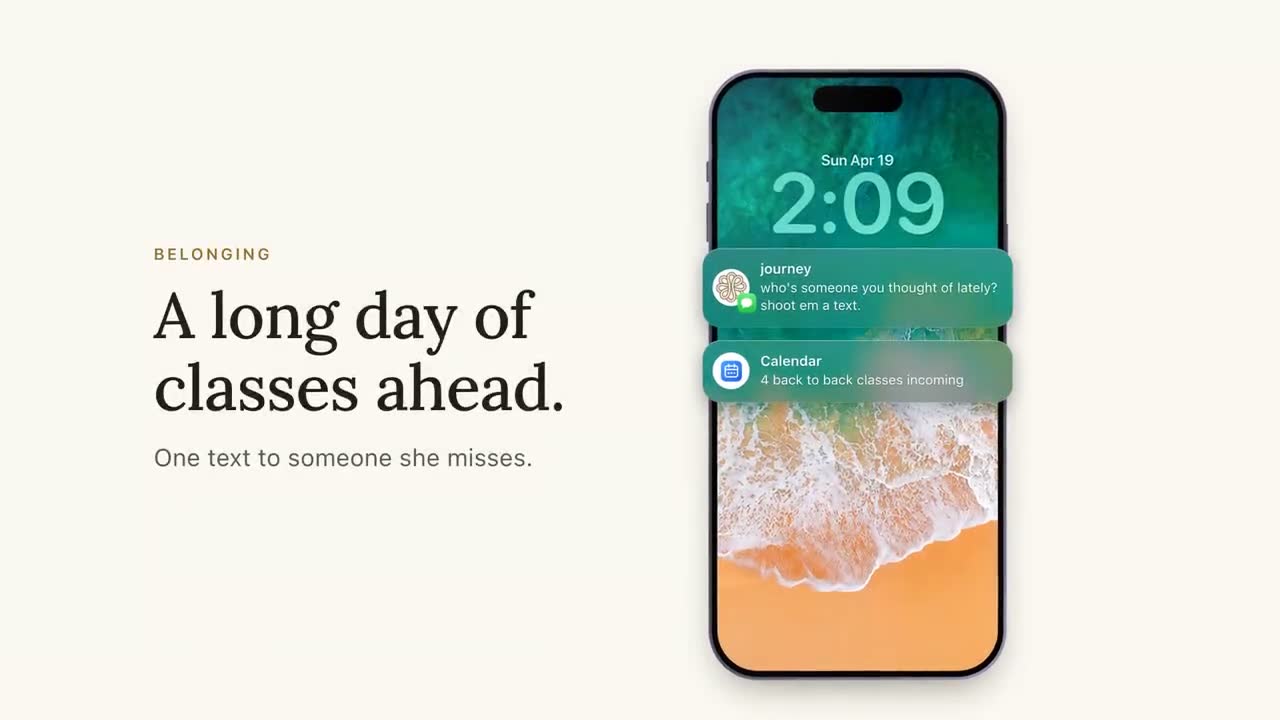
By week five many students have found a group or are starting to feel that they won't. Ask directly, once, and offer something sized to the student: a small group if she said she's shy, something at 6 PM if she commutes. More in building a sense of belonging at scale and homesickness in the first semester.
Adjusting the sequence for different students
The table above is the default. Some students need it changed.
- Commuters. Their first-week questions are about parking, where to wait between classes and where to eat, and evening events miss many of them. Ask what hours they're on campus and offer things inside those hours. See engaging commuter students.
- Students who work. Ask about work hours alongside the schedule question in week one. A clash caught before add/drop is fixable; the same clash in week six is a missed lab every week.
- First-generation students. Explain the words nobody explains: office hours, the bursar, a hold, add/drop, credit hours. A one-line definition inside the text saves a question they might not ask. See supporting first-generation students.
- Student-athletes. Practice and travel set their windows, which are narrow and change by season. Time texts around them. See supporting student-athletes.
- Spring starters and transfers. They often miss the fall sequence entirely and arrive to a campus where everyone else already knows where things are. Run a shorter version of the same six weeks for them.
What to watch for
The replies matter, and so does who isn't replying. Keep an eye on:
- Students who never answered the welcome. Check the number, then try a different messenger: an RA, an orientation leader, an advisor.
- Students whose answers slide. A "good" in week two and a "rough" in week four is a conversation worth having.
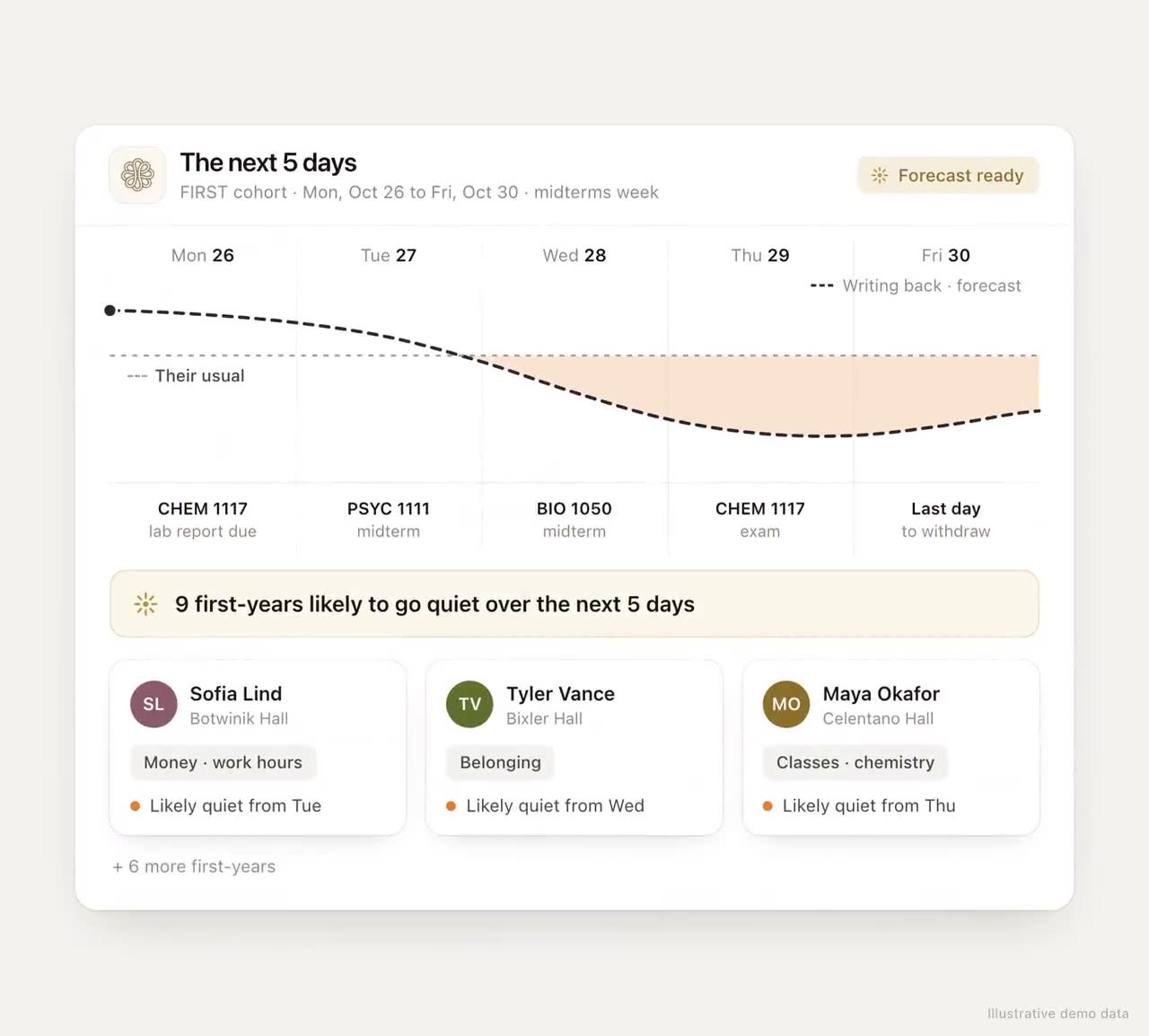
- Students who go quiet after replying. A change from a student's own usual is often the earliest sign; see how to identify at-risk students before midterms.
- Money signals. Holds, a missing aid document, "can't afford the textbook". Send these to financial aid early; see clearing registration holds.
- Any reply with safety language. To a person, immediately, through the escalation path you wrote before launch.
Running the six weeks by text with Journey
Journey runs this sequence by text. A student signs up by texting in about 90 seconds: her name, her goals ranked, a follow-up question on the top one, and when she wants nudges to arrive. In week one she can text a screenshot of her class timetable, and from then on nothing is sent during a class. From there the welcome, the weekly check-ins and the nudges are built from her own goals and words, arrive inside the windows she chose, and stay at a few texts a week. She can text any campus question and get an answer from the resource base gathered at setup. When a reply is about money, coursework or wellbeing, Journey points her to the office that handles it with a one-tap scheduling link, and your team sees the theme on the dashboard. Anything that sounds unsafe goes to a person through your escalation process.
Our six-week demo fits a campaign to one campus's real calendar, and two things in it aren't shipped: audiences pulled from enrollment and housing records, and booking an advising slot the same day from the text. Its class-aware send times also work differently today: they come from the timetable screenshot the student sends, not from the student record. Campaigns built from templates and scheduled against your calendar are live; see campaigns planned around your calendar.
How to start, and what to measure
Pick one cohort for one fall: a first-generation program, one residence hall, or the commuters. Write the six weeks against your calendar in August, then measure:
- The share of the cohort who replied to the welcome, and the share who'd replied at least once by week two.
- Schedule problems fixed before the add/drop deadline.
- Tutoring and office-hours visits in weeks three to five, against last year's cohort.
- Answers to the belonging question in week five or six, and how many "not really" students went to something afterwards.
- Fall-to-spring persistence for the cohort, against the year before.
Once the six weeks are done, the next stretch is the hardest of the term. Weeks 6 to 9: a playbook for the midterm slump picks up where this one ends.
Frequently asked questions
What should first-year student onboarding include after orientation?
A short sequence across the first six weeks: a welcome before classes, help finding things in week one, a schedule check before add/drop, a check-in in week two, support in the first hard week, a question about the first quiz results and a belonging check around week five.
How long should first-year onboarding last?
Longer than orientation. The first six weeks of term set habits like asking for help and going to office hours, so onboarding works best as a light sequence through that period, handing off to midterm support after.
Should colleges text incoming first-year students?
Yes, with consent and restraint. Ask for permission where students already fill in forms, say who's texting and how to stop, keep it to a few texts a week, and have someone read every reply. Text reaches students who don't read campus email.
What questions should you ask first-year students in their first weeks?
Short ones with lettered choices: whether they can find everything, whether their schedule works with their job and other commitments, how the first week is landing, how the first quiz went, and whether they've found their people yet.