Weeks 6 to 9: A Playbook for the Midterm Slump

A week-by-week playbook for midterm student support: what to look for in weeks 6 to 9 as first-years go quiet, what to text and when, how to time check-ins inside students' own windows, and when to bring in a person.
Key takeaways
- In weeks 6 to 9, struggling first-years tend to go quiet before their grades show it. Treat silence as the signal.
- Run a cohort pulse check in week 6 and offer one concrete step to anyone who says they feel shaky.
- Send midterm nudges the evening before, inside the student's own window, never in quiet hours and never the morning of.
- Withdrawal questions, two weeks of silence, safety language and a low midterm plus a money worry all go to a person the same day.
- Hold back advising slots and add tutoring hours for weeks 7 and 8, because the playbook creates appointments when staff are busiest.
Week six is when it turns. The welcome-week energy is gone, the first grades are back, and three midterms are stacked into eight days. A first-year who answered every text in September starts replying a day late, then not at all. She's sleeping at 3 AM, skipped her Thursday lab, and hasn't told anyone, because nothing has gone wrong yet that she can name.
Many campuses find these students in week nine, when midterm grades post. This playbook is about midterm student support that starts earlier: what to look for in weeks six to nine, what to text and when, when to bring in a person, and how to time check-ins so they land in the evenings students actually read them, not at 7 AM before an exam.
Why first-years go quiet in weeks 6 to 9
No single cause, which is why no single office catches it. Several pressures arrive together:
- The first real grades. A low score on the first exam in a gateway course can feel like a verdict to a student who has never struggled before.
- Midterms stacked together. Three exams and a paper in eight days, with no practice at college-pace studying.
- Sleep and illness. Late nights become a habit, and the first colds of the season go through the residence halls.
- Homesickness after the first trip home, or after seeing friends' lives online.
- Money and work. Hours at a job creep up, and so does the gap between what aid covered and what the term actually costs.
The common response is to withdraw a little: skip a class, stop replying, avoid the advisor who'll ask about it. Silence is the symptom. The playbook below treats it as one.
What the slump looks like before grades post
| Signal | Example | Why it matters |
|---|---|---|
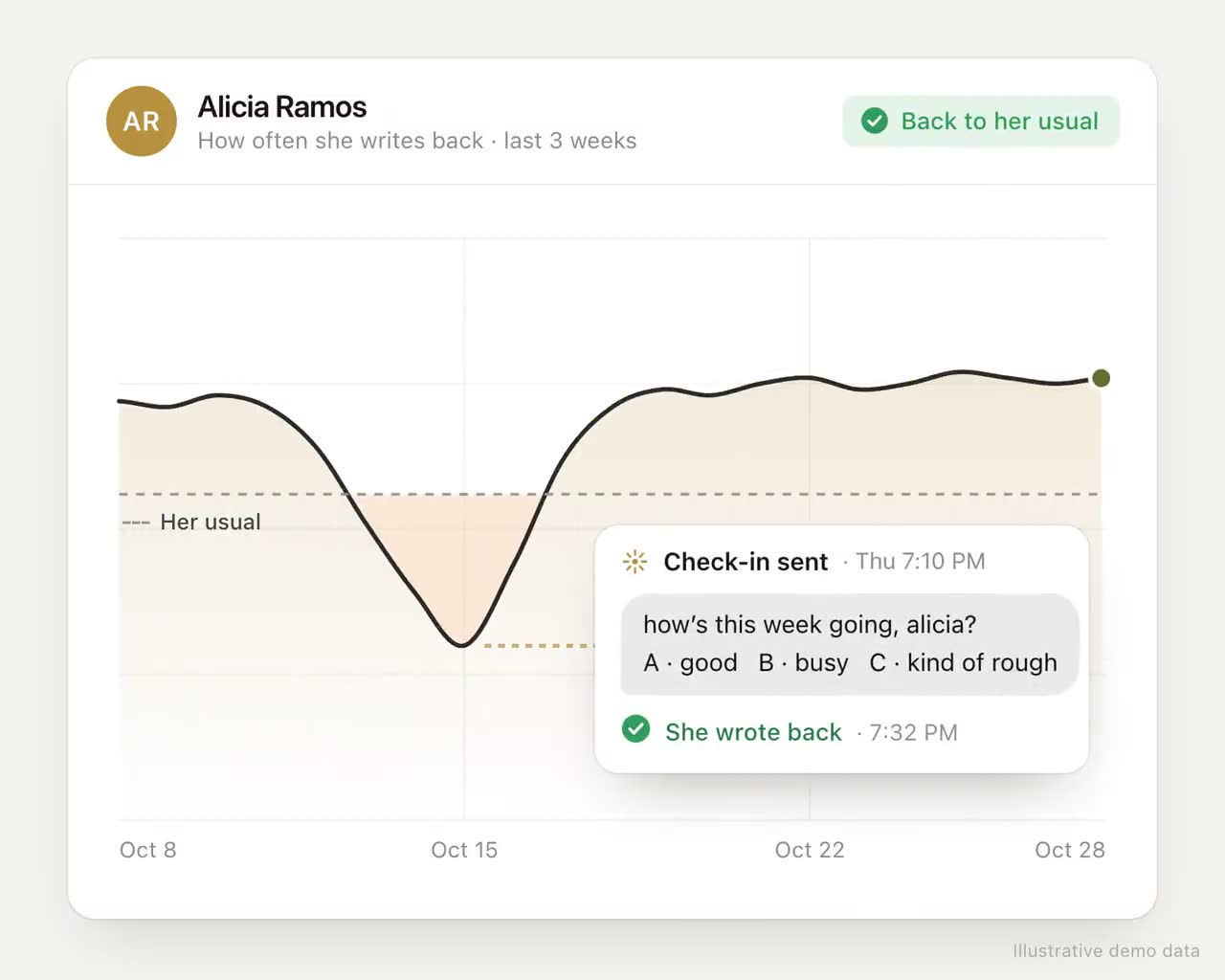
| Replies drop below the student's usual | Answered every week, now nine days of nothing | Often the earliest sign, ahead of any grade |
| Pulse answers slide | "behind but ok" two weeks running, then "not great" | The student is telling you directly |
| Missed work in one course | Two missing assignments, no LMS login since Thursday | Often one course slips first |
| A missed appointment | No-show to tutoring the week before an exam | Often avoidance rather than forgetting |
| A withdrawal question | "what happens if i drop chem" | Needs a person, soon |
For the full set of signals and how to weigh them, see how to identify at-risk students before midterms.
The playbook, week by week
Week 6: get ahead of it
Look for: students below their usual reply pattern, first-exam scores in gateway courses, open holds.
Text: a pulse check to the whole cohort ("midterms soon. how ready do you feel?" with lettered choices: good, shaky, not at all) and, for anyone who picks shaky or not at all, one concrete offer: tutoring hours this week, a study-group sign-up, office hours.
People: advisors get the short list of students with two or more signals.
Week 7: the first midterms
Look for: students who picked "not at all" and haven't booked anything, students still silent from week six.
Text: the evening before each student's exam, if you know it, a short nudge with one move: sleep, a 25-minute review of the part they skipped, breathing before the exam starts. Nothing the morning of.
People: anyone silent for two weeks gets a different messenger: a call from an advisor they've met, or their RA.
Week 8: the results
Look for: low midterm scores, especially paired with silence.
Text: ask how it went, with lettered choices running from "better than i thought" to "rough". A "rough" gets a plan, not sympathy alone: what to do this week to recover, and who can help.
People: advisors see everyone who answered "rough" or didn't answer, with what's already been offered.
Week 9: decisions
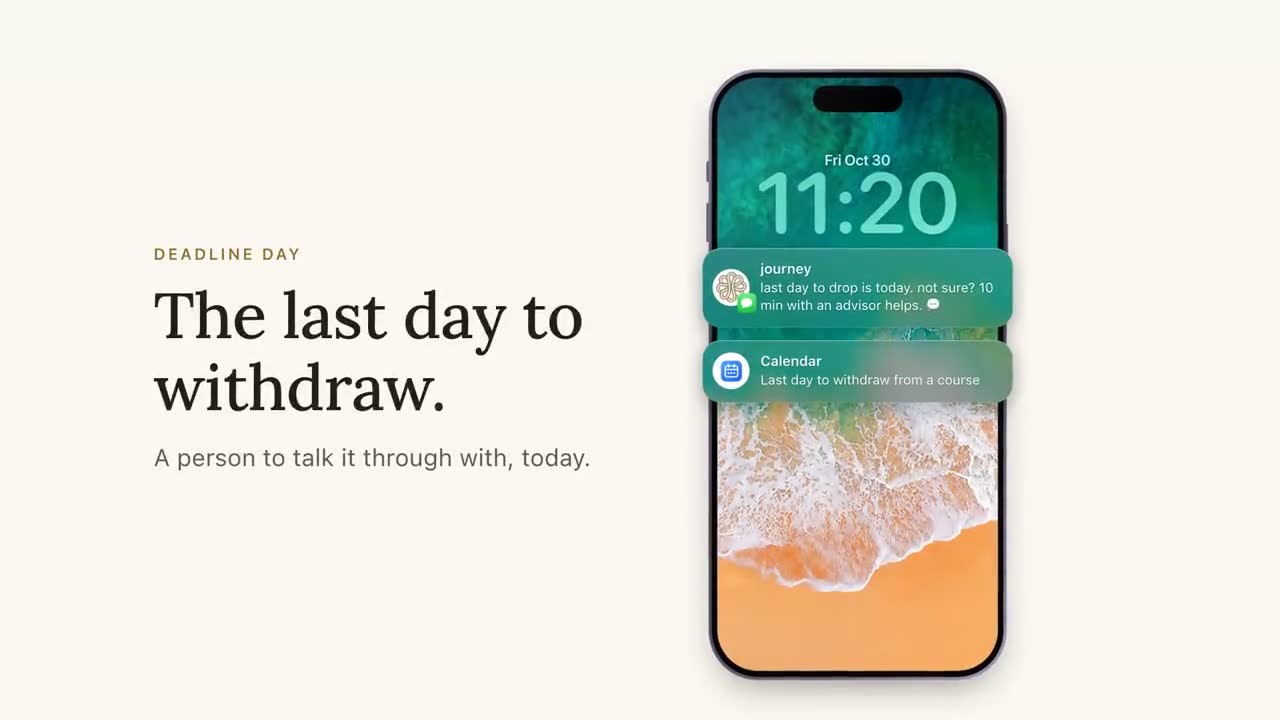
Look for: questions about dropping or withdrawing, a student failing more than one course. On many calendars the last day to withdraw falls around here; check yours.
Text: the deadline, plainly, a week ahead, with a one-tap link to talk to an advisor before deciding.
People: every withdrawal question gets a conversation with a person. A text can schedule it but shouldn't settle it. More in the last day to withdraw: a text, then a person.
Midterm support students will actually use
The texts that help in this stretch are short and specific, and they arrive the night before, not the morning of. A message at 8 PM the evening before an exam can change how a student spends the next three hours. The same message at 7:15 AM is noise in the rush out the door.
A few that work, and the moment each is for:
| Moment | Text |
|---|---|
| Two days before | "chem midterm thurs. what's the one topic you'd least like to see on it? that's tonight's 25 min." |
| The evening before | "you've put the work in. phone in the drawer by 11, sleep does more than one more hour of review." |
| After the exam | "how'd it go? a) better than i thought b) about what i expected c) rough" |
| After a rough one | "one exam isn't the grade. tutoring is open tomorrow 2 to 6, want the link?" |
And when a student brings the rough one to you, the reply matters more than the nudge. An illustrative exchange:
 Journey
Text Message
Thu 6:40 PM
how'd the calc midterm go? a) better than i thought b) about what i expected c) rough
c
like a 52
that stings. it's also one exam, not the whole grade. what would help more right now? a) a plan for next week b) just venting for a sec
a
ok, two steps. go over the exam with the prof at office hours tues, then one tutoring session before the next quiz. want the tutoring link?
yeah
An illustrative thread with a fictional student. Lettered choices, a two-step plan, and an offer that makes the first step easy.
Scheduling check-ins inside students' own windows
The best time to check in with a student who's about to go quiet is the evening before, inside the window she picked when she signed up. Four rules:
- Use the student's window, not the office's. A student who said evenings gets evenings, even if staff work days.
- Go the evening before the hard day. Before the exam, before the deadline, before the appointment.
- Never in quiet hours. Nothing scheduled between 10 PM and 7 AM, whatever the urgency in the office.
- Count it against the weekly budget. A check-in is one of the few texts that week, not an extra. Midterm week is when students least need a full inbox.
When to bring in a person
Texts carry most of this playbook. These go to a person, the same day:
- Any reply with safety language, at any hour, through your escalation process. See crisis language, 988 and escalation.
- A question about withdrawing, dropping below full time, or leaving.
- "thinking about transferring", which needs a real conversation, not a link. See when a student says they're thinking about transferring.
- Two weeks of silence from a student who used to reply.
- A low midterm plus a hold or a money worry.
For a team working through that list each week, the 30-minute CARE team review gives an agenda.
Plan staff time for weeks 7 and 8
A playbook that finds more struggling students creates more appointments, and they arrive in the same two weeks advisors and tutors are busiest. Plan for that in September, not in week seven.
- Hold back advising slots. Keep a few appointments a day in weeks seven and eight for students referred from check-ins, so a student who finally says yes isn't offered a slot after her exam.
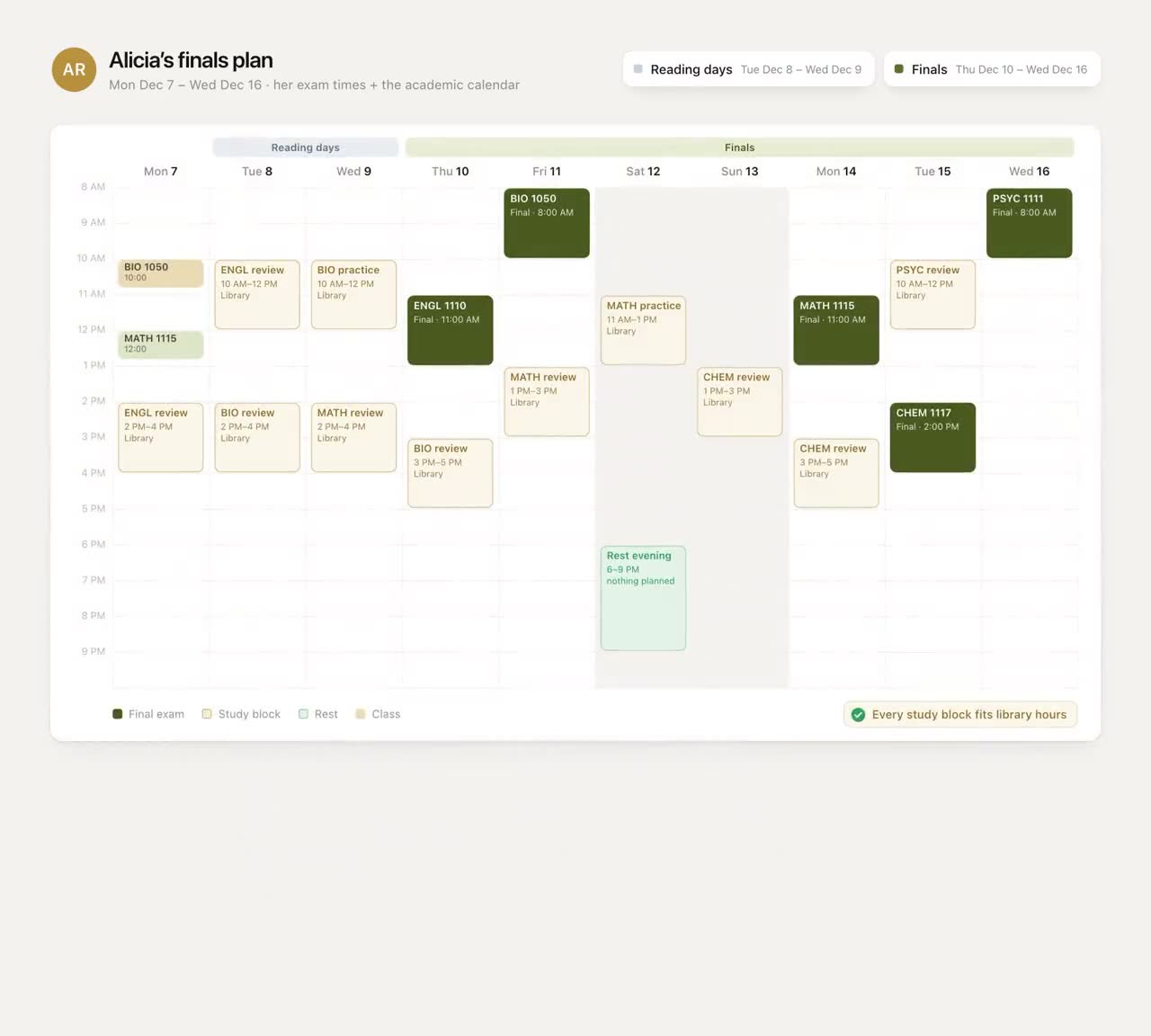
- Get the exam calendar early. Ask faculty in gateway courses for their midterm dates in week one, so the evening-before nudges and the tutoring push line up with the exams that matter most.
- Add tutoring where the exams are. Extra hours in the subjects with midterms that week, rather than longer hours across the board.
- Decide who calls the silent students. Advisor, RA or success coach, agreed in advance, so the list of students silent for two weeks doesn't sit in a queue.
- Check after-hours coverage. Stress runs high in this stretch. Make sure the on-call schedule is current and everyone knows who's on it.
Letting Journey carry the texts
Journey runs the text side of this playbook: pulse checks to the cohort, evening-before nudges inside each student's window, check-ins your staff send to students who've gone quiet, and replies sorted so advisors know which students to call before the weekend. Quiet hours are kept, sends are capped at a few a week, and once a student texts a screenshot of her class timetable, nothing lands during a class. Safety language goes straight to people, and a student who texts "talk" is told a staff member will reach out.
Where we're headed is a five-day forecast that flags first-years likely to go quiet before midterms, with the theme behind each one, and schedules their check-ins. It exists only in our demos so far, and the counts and the forecast line in them are illustrative. Today, these students surface through their own replies and pulse answers, and through the dashboard's list of who needs a person this week.
After week nine
When the stretch is over, take an hour to look back while it's fresh. Four numbers tell most of the story:
- Re-engagement. Students who went quiet in weeks six to nine, and the share who started replying again after a check-in.
- Reach before grades. Of students with a D or F at midterm, the share you'd reached before the grade posted.
- Message by message. The texts with the most replies, and the ones that drew opt-outs.
- Timing of withdrawal talks. Conversations held before the deadline, against those after it.
Then look at when the first signals showed up. If they came before your first step, move that step earlier next term.
Frequently asked questions
Why do college students struggle around midterms?
Several pressures land together: the first real grades, exams stacked into a few days, less sleep, homesickness, and money and work hours creeping up. Many first-years respond by pulling back quietly, which is why silence is often the first sign.
How can advisors support students during midterms?
Find struggling students before grades post, using pulse checks and drops in reply patterns, then offer one concrete step: tutoring before the next exam, office hours, a plan for the week. Keep appointment slots open in weeks seven and eight for students referred from check-ins.
When is the best time to text students before a midterm?
The evening before the exam, inside the window the student chose. A morning-of message arrives in the rush out the door, while an evening message can change how the student spends the next few hours.
When should a midterm concern go to a person instead of a text?
Any safety language, a question about withdrawing or leaving, two weeks of silence from a student who used to reply, or a low midterm combined with a hold or a money worry. A text can schedule the conversation, but a person should have it.