Engaging Commuter Students

Commuters aren't less interested in campus. They have less time on it. How to fit help, events and texts into the hours commuter students are actually there, and build belonging that doesn't depend on a dorm.
Key takeaways
- Commuter students usually have less time on campus, not less interest. Low turnout often means the timing is wrong.
- Send texts in the gaps between classes, treat logistics like parking as engagement, and pick one event in their window instead of sending a list.
- Belonging without a dorm needs a place, a person, a rhythm and a reason to stay an extra hour.
- Compare event attendance and persistence by residency status and time of day before you redesign anything.
Most campus engagement is built for students who sleep there. The involvement fair runs Thursday at 7 PM. The welcome cookout is in the residence hall quad. The flyer for a study group is taped to a door in a building some students never enter. None of it is meant to leave anyone out. It just assumes a student who is on campus all day and can walk back at night.
Commuter student engagement starts from a different day. A commuter might park at 9:40, sit in class at 10 and again at 12:30, and be back in the car by 2 for a shift at 3. They aren't less interested in campus. They have less time on it, more obligations off it, and fewer of the casual moments where residents find out what's happening. Engaging commuter students means fitting help, events and messages into the hours they're actually there, and building belonging that doesn't depend on a dorm.
What's different for commuter students
| Residents | Commuters | |
|---|---|---|
| Time on campus | Most of the day | Class hours, and a gap or two |
| Getting here | A walk | Parking, traffic, a bus schedule, gas money |
| Work | Often a few hours, often on campus | Often more hours, often off campus |
| Family | A call home | Sometimes caring for siblings, parents or children |
| Finding out what's on | Posters, the RA, the hallway | Whatever reaches their phone |
| Between classes | Their room | The car, the library, a hallway bench |
| A bad week | A roommate or RA notices | Nobody may notice |
The last row is the one to remember. A resident who stops going to class gets noticed by a roommate or an RA. A commuter who stops coming often just stops coming, and the first sign is an empty seat that nobody connects to anything.
Why commuter programs miss
- Events at night. A 7 PM event asks a commuter to drive back, park again, and find someone to cover a shift or a younger sibling.
- Once-a-term gestures. A commuter appreciation breakfast in October is nice. It isn't a place to belong.
- The weekly digest. It lists thirty things, and none of them say "between your 10 and your 12:30."
- Reading absence as disinterest. Low commuter turnout usually says more about the hour than about the students.
A commuter's first two weeks
Residents get a move-in day, a floor meeting and an RA. Commuters often get a parking permit and a map. The first two weeks set the pattern, so build them on purpose.
- Before day one, the trip. The parking permit or transit pass, the lot or stop nearest their first class, and how long the walk really is. A student who is late to the first class because the lot was full feels like a visitor from the start.
- Day one, a place. One spot to be between classes, such as a lounge, a library floor or a locker, named in a text before they arrive.
- Week one, a person. An introduction to a peer mentor or a staff member who commutes too, by name.
- Week two, one event in their window. Picked from what they said they care about, at an hour they're already on campus.
- End of week two, a check-in. How the commute is going, with lettered choices, and a person for anyone who answers that it's not going well.
Logistics are real questions. Among the things one first-year cohort texted Journey at night were whether a bus pass was ready to pick up, and how to use it once it was. Small questions, asked late, when no office was open to answer them.
Texts that fit a commuter's day
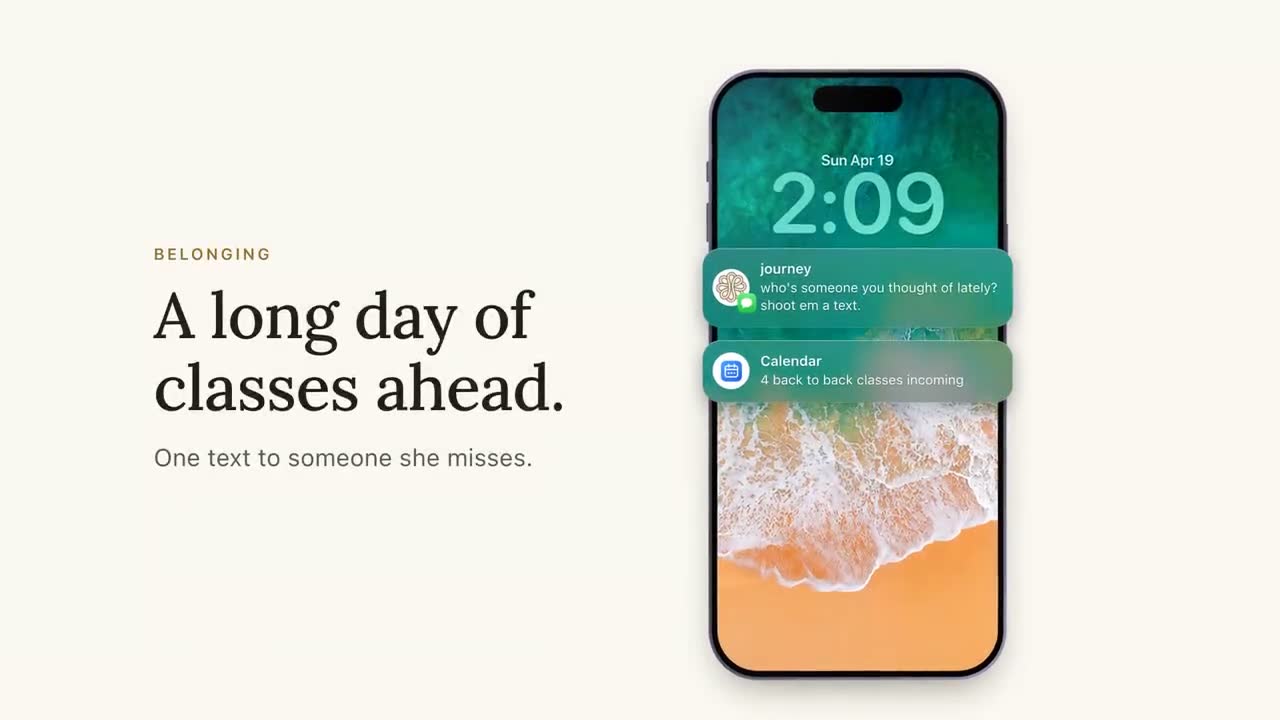
A good text for a commuter is useful first and social second, and it arrives when they can act on it.
- In the gaps, not at night. Between classes, or the hour before they usually arrive. Not at 9 PM, when they're at work or at home with family.
- Logistics count as engagement. A lot closed for a game day, a shuttle change, where to heat up lunch. Getting these right is how a commuter learns the campus is paying attention.
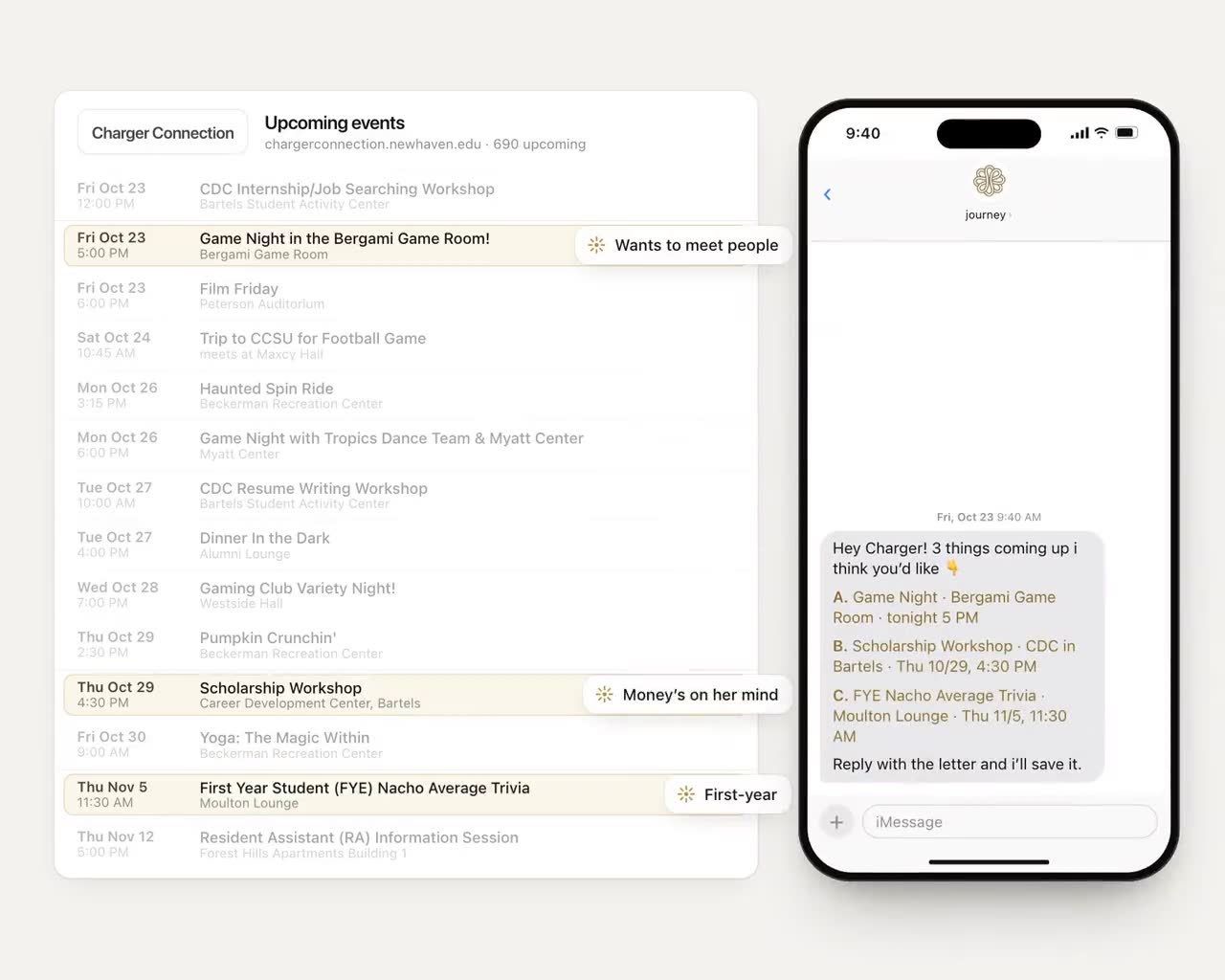
- One event, picked for them. "drop-in resume reviews at the career center today, 12 to 1" beats a list of thirty.
- One ask at a time, with an easy way to say no.
Commuters also ask the practical questions residents ask a roommate. Answer them by text, and the answer is a small act of belonging.
 Journey
Text Message
Wed 11:52 AM
is there anywhere on campus to heat up food
yes. the student center has microwaves on the lower level, and the commuter lounge on the second floor has a couple, plus lockers if you want somewhere to leave your stuff. want the lounge hours? a) yes b) no, i'm good
a
weekdays 7am to 9pm. lockers are first come, first served, so bring a lock.
An illustrative thread with a fictional student on a fictional campus. The answer comes from the campus details gathered at setup.
Belonging without the dorm
Residents get belonging partly by accident: the hallway, the dining hall, a roommate's friends. Commuters need it built on purpose, from four ingredients.
- A place. A commuter lounge with lockers, a microwave and outlets. Somewhere to be in the gap that isn't the car.
- A person. A peer mentor who commutes too, or a commuter assistant role modeled on the RA. Someone whose job includes noticing.
- A rhythm. The same table at the same lunch hour every Tuesday, so showing up takes no planning.
- A reason to stay an extra hour. An on-campus job, a study group that meets right after class, a club that meets at noon.
Research on sense of belonging links it to persistence, and much of what builds it is ordinary: the same faces at the same table, a staff member who knows your name, a place where you're expected. Commuters can have all of that. They just can't have it at 7 PM.
Reading what commuters tell you
When commuters answer a check-in, they often raise things residents rarely mention: parking, work hours, gas or bus money, family duties, and the feeling of being a visitor. Each has an owner on your campus.
| They say | It's about | Route to |
|---|---|---|
| "couldn't find parking, missed the quiz" | Getting here | Parking and transportation, and a note to email the professor |
| "work moved me to days" | A work conflict | An advisor, and the career center for campus jobs |
| "gas is killing me" | Money | Financial aid, or emergency aid |
| "had to watch my brother again" | Family | An advisor or the dean of students |
| "i just come for class and leave" | Belonging | A peer mentor, or one event in their window |
Reaching commuters in their own hours
Journey works by text, so it reaches commuters where they are rather than where the posters are. Onboarding takes about 90 seconds: students rank their goals, pick the kinds of events they care about, and choose the windows when Journey may text them, so a student who works evenings isn't texted in the evening. A commuter who texts a screenshot of their class timetable never gets a nudge mid-class, and one who is only on campus twice a week can text "nudges on tuesdays and thursdays" and have the change confirmed. They can ask anything about campus, from where to park on game day to when the library opens, and get an answer from your campus resource base, or a person when Journey doesn't know. Each reply is tagged with what it's about, so your team can see which students keep raising parking, work hours or money, without reading the messages.
Commuters getting their own version of a text, with events from your campus feed matched to their group, isn't live. Today your team can enroll a commuter cohort in its own campaign, written for their day.
What to measure
- Event attendance by residency status and by time of day. The time-of-day split often tells you more than the residency split.
- Reply themes for commuters versus residents. The difference is your to-do list.
- Use of commuter spaces, if you can count it.
- On-campus jobs held by commuters. Each one is hours on campus that didn't need an event.
- First-to-second-term persistence by residency status, from your institutional research office, as the long-run check.
Start with one group and one hour
Pick first-year commuters. Use the class schedule to find the hour most of them are on campus between classes, and move one recurring thing into it: a lunch, a drop-in, a study table. Text them about it once a week, inside their windows. After four weeks, ask the ones who never came what kept them away, and change the thing they name.
Frequently asked questions
How do you engage commuter students?
Fit engagement into the hours they're already on campus: events in the gaps between classes, a commuter space with lockers and a microwave, and short texts that arrive in their window. Treat practical help like parking and transit as part of engagement, not a separate thing.
What do commuter students need from their college?
A place to be between classes, information that reaches their phone, events at times they can attend, and someone who notices if they stop showing up. Many also need flexibility around work and family responsibilities.
When should events for commuter students be scheduled?
During the day, in the hours most commuters are already on campus, which your class schedule data will show. A recurring slot, such as the same lunch hour every week, works better than a one-off evening event.
Who counts as a commuter student?
Many campuses count any student who doesn't live in campus housing, which includes students living with family, students driving long distances, student parents, working adults and students in nearby apartments. Their needs differ, so look at your own data by group.
Are commuter students less connected to campus?
They can be, mostly because they spend less time on campus and miss the casual contact residents get there. Compare your own survey and persistence data by residency status to see whether that holds for your students.