The Last Day to Withdraw: A Text, Then a Person

The course withdrawal deadline catches students who didn't know the date or were afraid to ask. A timeline of texts before and on the day, and what advisors need to make a ten-minute withdrawal conversation count.
Key takeaways
- The withdrawal deadline catches students who didn't know the date, were afraid to ask, or were waiting on a grade that came back too late.
- Withdrawing can affect GPA, aid, academic progress, scholarships, a student visa and athletic eligibility, which is why a text should send students to a person rather than make the call.
- Text everyone two weeks out, check in personally with students who say a course is going badly, and send a plain "not sure? 10 min with an advisor helps" on the day.
- An advisor needs the grade picture, the student's enrollment rules, prerequisite timing and the reason behind the grade to do this well in ten minutes.
At 4:51 PM on the last day to withdraw, an advisor gets an email: "can i still drop bio??" The registrar's form closes at 5. The advisor sees it at 5:20. The student has a failing grade in the course and a scholarship that requires full-time enrollment, which makes withdrawing a real trade-off, the kind that takes ten minutes to think through with someone who has her record open. Instead, the clock made the decision.
The course withdrawal deadline catches the same students every term: the ones who didn't know the date, the ones who knew and were afraid to ask, and the ones waiting for a grade that came back too late. Good advising around the deadline comes down to two moves: a text before the deadline and on the day, and ten minutes with an advisor for anyone who isn't sure, with the information that makes those ten minutes count.
Who the withdrawal deadline catches
- Students who didn't know the date. It's in the academic calendar, which most of them have never opened.
- Students who are afraid to ask. Withdrawing feels like failing, and asking an advisor about it feels like admitting it.
- Students waiting on a grade. They want to see the midterm before deciding, and the midterm comes back the week after.
- Students working from hallway advice. "A W looks terrible." "An F is worse." "Just stop going." The last one is the expensive one.
- Students with rules attached. Aid, scholarships, a student visa or athletic eligibility can all depend on how many credits they carry.
The last group is why withdrawal is never a decision a text should make. The text's job is to make sure the student doesn't decide alone, or by default.
What withdrawing from a course can change
The details vary by campus and by student, so treat this as the list of questions to ask, not the answers.
| Area | What can change | Who to ask |
|---|---|---|
| GPA | At most campuses a W doesn't count in the GPA and an F does, but the W stays on the transcript | The registrar or an advisor |
| Financial aid | Dropping below full-time or half-time can change aid, and withdrawing from every course can mean returning part of it | Financial aid |
| Academic progress for aid | Withdrawn credits often count as attempted, which lowers the completion rate aid offices check | Financial aid |
| Scholarships | Some require full-time enrollment or a minimum number of credits each term | Financial aid or the scholarship office |
| Student visa | International students on a student visa generally need to keep a full course load, and dropping below it needs approval first | The international student office |
| Athletic eligibility | Full-time enrollment and progress toward a degree | Athletics compliance |
| Time to degree | A prerequisite dropped now can delay a whole sequence | An advisor |
That's a lot for a student to work out at 4:51 PM. It's ten minutes for an advisor who has the student's record open.
A withdrawal deadline timeline
Work backward from the deadline, and send each message only to the students it's for.
| When | Who gets it | What it says |
|---|---|---|
| Two weeks out | Every student | The date and time, one line on what a W means, and a link to book an advisor |
| One week out | Students who've said a course is going badly | A personal check-in: how's the course, want ten minutes with an advisor? |
| Two or three days out | Students who said "maybe" and haven't booked | The booking link, with times before the deadline |
| The morning of | Students still undecided | "last day to drop is today. not sure? 10 min with an advisor helps." |
| The week after | Students who withdrew, and students who stayed | A plan: a retake for one, a recovery plan for the other |
Two details catch campuses out. Know whether the deadline is 5 PM or 11:59 PM, and say which. "Today" means one thing to the registrar and another to a student who works until 10. And watch the weekend: if the deadline falls on a Monday, the useful text goes out the Thursday before, while offices are open to answer.
What the text says, and what it doesn't
The nudge should never say "you should drop." Its message is "don't decide alone." Two common versions miss in opposite directions:
- Too much: "Your grade in BIO 101 suggests you may want to consider withdrawing before Friday's deadline." It makes a recommendation a text has no business making, and it puts a grade on a lock screen.
- Too little: "Reminder: the last day to withdraw from a course is Friday." True, and easy to ignore.
This one is about right:
 Journey
Text Message
Tue 3:30 PM
friday is the last day to drop a class. if one's going badly, 10 min with an advisor before then helps you decide. want a time? a) yes b) i'm good c) not sure
c
that's a fine answer. here's the advising link, pick any time before friday. 10 min is enough, and bring whatever's worrying you.
An illustrative text to a fictional student, a few days before the deadline.
The "c" matters most. Students who answer "not sure" are exactly the ones the deadline was going to catch.
What advisors need for a ten-minute withdrawal conversation
With the right information open, an advisor can do this well in ten minutes. Without it, it takes three emails and misses the deadline.
- The real grade picture. The current grade and how much of the course is still to come. A failing grade with most of the points ahead is a different conversation from the same grade with only the final left.
- The rules attached to this student. Credits after the drop, aid status, scholarship terms, and any visa or athletic flags.
- Whether the course is a prerequisite, and when it's offered next. A spring-only course dropped in fall can cost a year.
- The reason behind the grade. Work hours, an illness, a family situation, a course at the wrong level. The reason decides what happens next term.
- The options besides withdrawing. Tutoring, a conversation with the professor, or an incomplete where your campus allows it and the circumstances fit.
Three questions get most of the way there: "What's going on in the course?", "What else is going on?" and "What would it take for this course to be passable?" Then lay out what changes either way, and let the student decide. For what a recovery can look like when a student keeps withdrawal as the backup, see Failing Math in April.
Running the deadline as a campaign
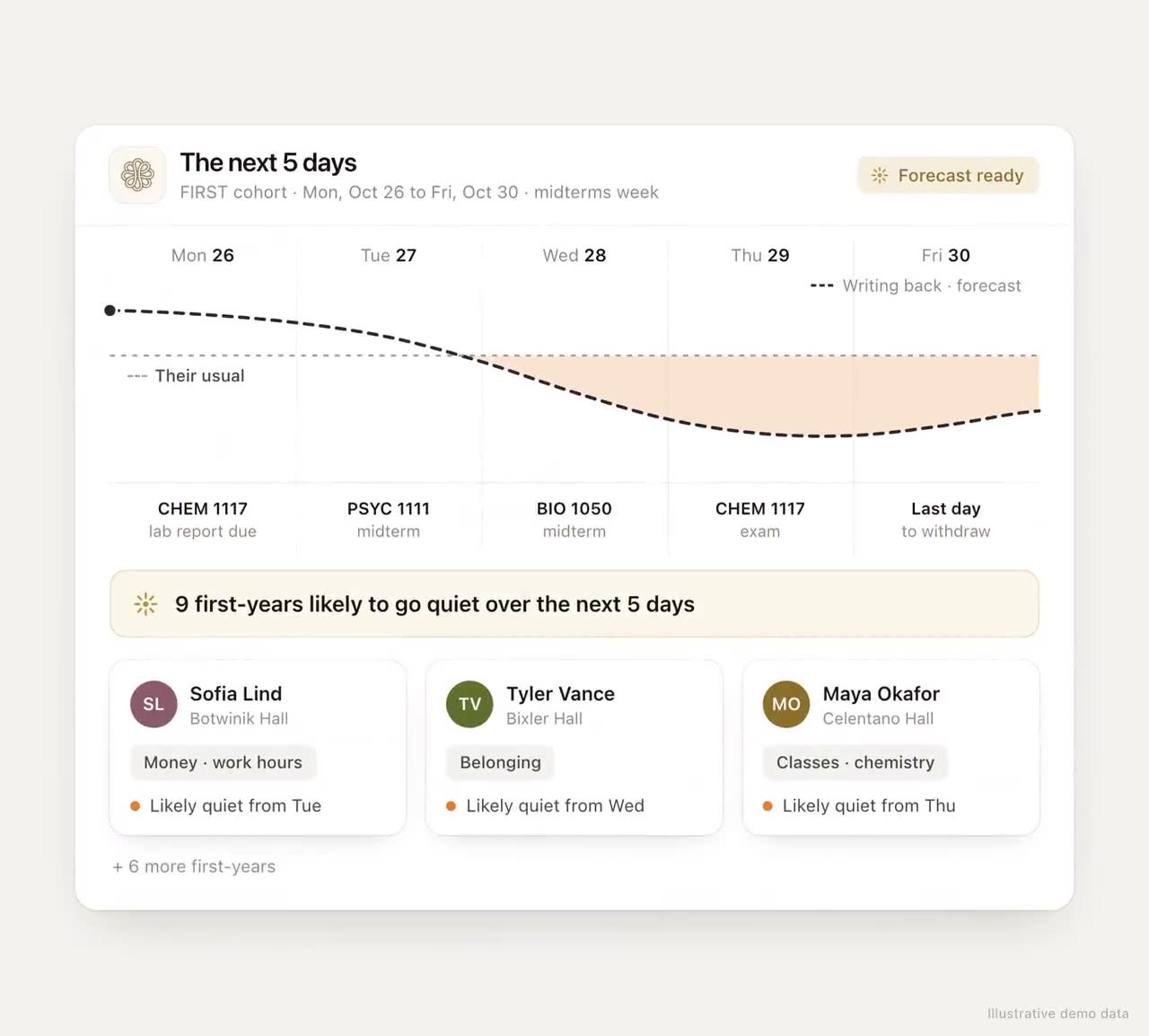
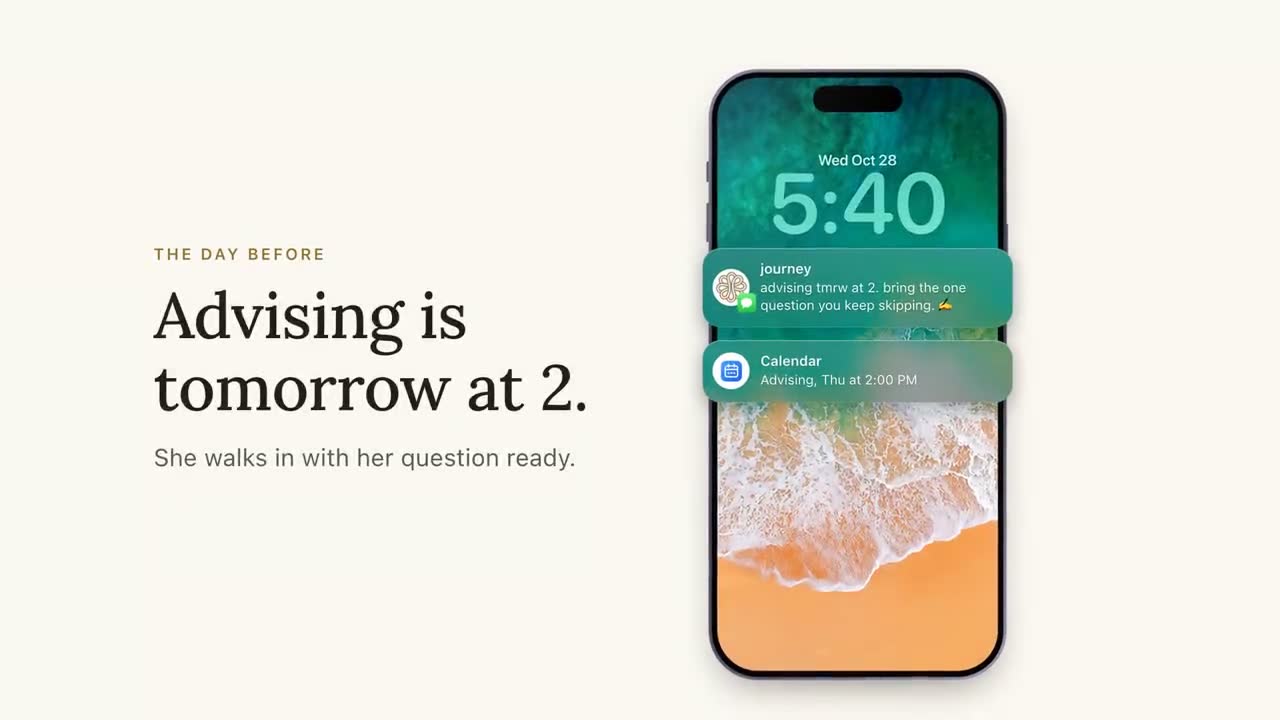
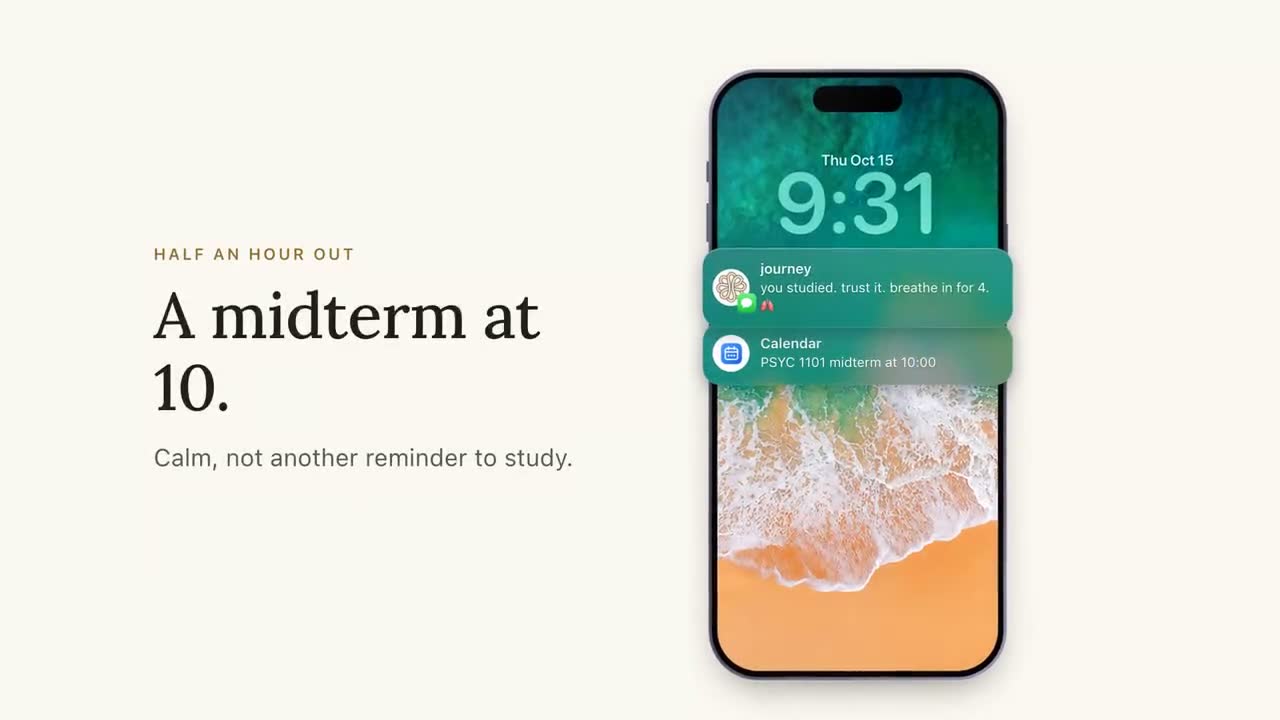
The withdrawal deadline is a natural campaign in Journey: a short sequence of nudges set to your academic calendar, sent inside each student's chosen windows, with quiet hours honored. "last day to drop is today. not sure? 10 min with an advisor helps." goes out as an ordinary text; the lock-screen phone in our video of it is a mockup. When a student writes back "i think i'm dropping chem," Journey reads it as a withdrawal question, the student shows up on your team's dashboard as someone who needs an advisor, and Journey can send a one-tap link to book.
Two parts of the video above aren't live: reading a slipping grade from Canvas, and booking straight into an advisor's calendar. Today the signal is what the student says in reply, and the booking is a link they tap.
What to measure
- Withdrawals preceded by an advisor conversation, as a share of all withdrawals.
- Late withdrawal petitions. These should fall, since each one is usually a student who missed the date.
- Fs among students who said they were thinking about dropping. These are the students the deadline caught.
- Advising appointments in the final week, and how many were booked days ahead rather than on the day.
- What happened next term. Did students who withdrew retake the course, and pass it?
Before the next deadline
Find your deadline and the exact time it closes. Write the three texts, the two-week, the personal and the morning-of, and give every advisor the five-item checklist above. Hold a few short appointment slots open in the last three days. A student who gets ten minutes with an advisor in week nine knows where to go in week twelve, and that is worth as much as the decision itself.
Frequently asked questions
What happens if a student misses the course withdrawal deadline?
Usually the student keeps the grade they earn, which can be an F if they stop attending. Many campuses have a late withdrawal petition for documented circumstances such as illness, so check your registrar's policy and make sure students know it exists.
Does withdrawing from a class affect financial aid?
It can. Dropping below full-time or half-time may change a student's aid, withdrawing from every course can mean returning part of it, and withdrawn credits often count toward academic progress standards. The details depend on the student and the campus, so send them to financial aid before they decide.
Is a W better than an F?
At most campuses a W doesn't count in the GPA and an F does, so a W is often less damaging. But several Ws can affect academic progress for aid, and dropping a prerequisite can delay a whole sequence. It's a decision worth ten minutes with an advisor.
Should advisors tell students to withdraw?
Advisors should lay out what changes either way and help the student decide. The useful questions are what's happening in the course, what else is going on, and what it would take for the course to be passable.
When should we remind students about the withdrawal deadline?
Two weeks out to everyone, a week out personally to students who've said a course is going badly, and on the morning of the deadline to anyone still undecided. Every message should give the exact time the deadline closes.