Crisis Language, 988 and Escalation: Rules for AI in Student Support

Any AI that texts students will meet crisis language. Eight rules for detecting it, showing 988 at once and handing off to people, a protocol table, and which parts each campus has to set.
Key takeaways
- Show 988, the campus crisis line and emergency numbers in the very first reply to crisis language, without a follow-up question or a delay.
- The AI's job is to alert people, not to decide or counsel. Your on-call staff take over under your protocol, at any hour.
- Detect indirect language as well as direct, and send anything ambiguous to a person rather than dismissing it.
- Separate late-night distress from crisis with your counseling center, so on-call pages stay rare enough to be answered fast.
- Test with sample messages before launch and each term, including at 2 AM on a Saturday, and review every real escalation.
Any AI that texts a whole first-year class will, sooner or later, receive a message a person needs to read right now. It might come at 2:40 on a Wednesday afternoon, or at 1 AM on a Saturday, when the counseling center is closed. That message will arrive. What a campus controls is what happens in the next ninety seconds and the next hour.
This guide sets out the rules we think any AI in student support should follow when it meets crisis language: how it detects it, what it says first, how 988 and campus crisis lines appear, how a person takes over under your protocol, and what gets logged and reviewed. It also says plainly which parts are fixed rules and which are set with each campus, because the second list is where most of the work is.
Why an AI needs written escalation rules
An assistant that answers instantly can also answer wrongly, instantly. Human staff learn escalation through training, supervision and judgment. A model has none of that unless you design it in, and a vague instruction like "be careful with sensitive topics" leaves the hardest decisions to chance.
Students also text in ways that make detection hard. They're indirect ("i don't really see the point anymore"), they joke ("this exam is killing me"), and they mention something serious in the middle of a question about the dining hall. Rules have to work for all of those, at any hour, without a person watching every message. They also have to keep staff trusting the alerts, which means not sounding the alarm for every bad day.
Eight rules for AI in student support
- Detect broadly, then let people judge. Look for direct and indirect language about self-harm, suicide, harm to others, abuse and immediate danger. Keyword lists alone miss indirect messages and fire on jokes, so pair them with a model reading the whole message, and route anything ambiguous to a person rather than dismissing it. A false alarm costs a staff member a few minutes. A miss can cost far more.
- Show 988 and campus crisis options in the first reply, every time. Not after a follow-up question, not after a delay. The reply names 988 (call or text, any hour), your campus crisis or after-hours line, and emergency services or campus police if the student is in immediate danger.
- Hand off to a person under the campus protocol. The AI's job is to alert, not to decide. The people your campus names, in the order it names them, take it from there, through the channel they actually monitor.
- Never counsel. In a crisis exchange, the AI does not coach coping skills, argue, interpret feelings or try to talk the student through it. Short, warm and direct: you matter, here is who can help right now, here is how to reach them.
- Never leave a student waiting without a path. Don't say "a counselor will text you shortly" unless that is truly set up and staffed. Give the numbers now. If the student keeps writing, keep replying with the same resources rather than going silent.
- Keep anything sensitive off the lock screen. Follow-up texts from staff or the AI should open with a neutral first line. The student's roommate shouldn't learn about a crisis from a banner.
- Log it, and review every case. Each escalation is recorded: the message, the reply, who was alerted and when, and what they did. Counseling reviews every one, and a sample of messages that didn't escalate, to find misses.
- Tell students the rule up front. In the first week, in plain words: "if you tell me you're not safe, i'll let campus staff know so someone can help." Then the escalation, if it ever comes, isn't a betrayal.
A protocol table for crisis escalation
Here is the shape of a protocol, by situation. The right-hand column is the one to fill in with your counseling center, dean of students and campus safety. Nothing in it should be the vendor's guess.
| Situation | First reply | Who is alerted | Follow-up | Set with each campus |
|---|---|---|---|---|
| Direct crisis language, any hour | Immediate: 988, campus crisis line, emergency number if in danger | On-call staff, right away, by phone or page | A person reaches out under the protocol; check-in the next day | On-call roles, contact method, response time, approved wording |
| Indirect or ambiguous language | The same resources, gently worded | Treated as the row above until a person decides otherwise | Staff review and decide next steps | Which phrases count; who reviews |
| Concern about someone else ("my roommate said...") | How to reach help for the friend, including 988 and campus safety | Staff, per the protocol for reports about others | Staff decide whether and how to reach the other student | Reporting routes; whether conduct or safety teams are involved |
| Threat of harm to others | Emergency numbers and campus police | Campus safety and the threat assessment process | Handled entirely by people | Who receives it; how fast; the threat assessment team's process |
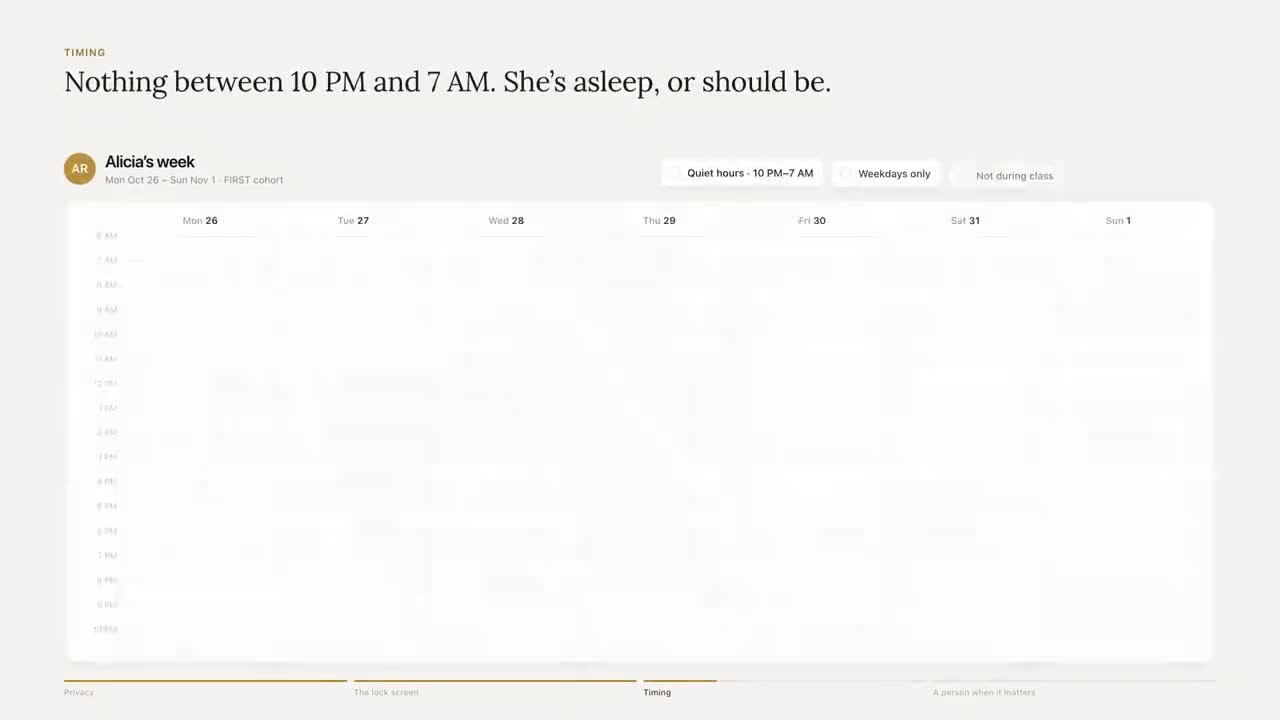
| Distress without crisis language at night | A calm reply, a small reset, a daytime option, 988 as an any-hour number | No overnight page; the theme reaches staff in the morning | Check back after the stressful moment | Which offices get the morning theme |
The bottom row matters as much as the top one. If every sleepless night pages an on-call counselor, the pages stop being answered fast. Separating distress from crisis, with counseling deciding where the line sits, is what keeps the top row working.
What's fixed and what each campus sets
Some rules shouldn't change from campus to campus. Others can only be set by the campus. Being clear about which is which prevents the most common failure: a vendor's default quietly standing in for a decision nobody made.
Fixed everywhere
- Crisis resources in the first reply, without delay
- No counseling, coaching or argument in a crisis exchange
- No promise of a callback that isn't staffed
- Neutral first lines on anything sensitive
- Every escalation logged and reviewed
Set with each campus
- Who is on call, in what order, by what channel, during and after business hours
- The campus crisis line, after-hours counseling number and campus police number in the reply
- Phrases counseling adds to the detection list, including local slang
- How quickly a person follows up, and who records it
- When a welfare check or emergency contact is involved. These are decisions people make under your policies, never the AI
- Who can see what about the exchange afterward
On that last point, sharing information in an emergency has its own rules. FERPA, for example, includes a health or safety emergency exception that can allow an institution to disclose information without consent when there is an articulable and significant threat, and it comes with recordkeeping duties. State law and professional obligations also apply. Your counsel and counseling director should decide how those work in your protocol; an AI should simply get the message to the people who make that call.
The law around AI and mental health is also moving. Several states have restricted AI from providing mental health care, and some have added crisis-referral requirements for chatbots. Ask counsel which apply to the tools you use.
What Journey does with safety language
Journey is not a crisis line: when a message raises a safety concern, it surfaces the right human path (counseling, 988, the on-call staff your team names) and follows the escalation process set up with your campus.
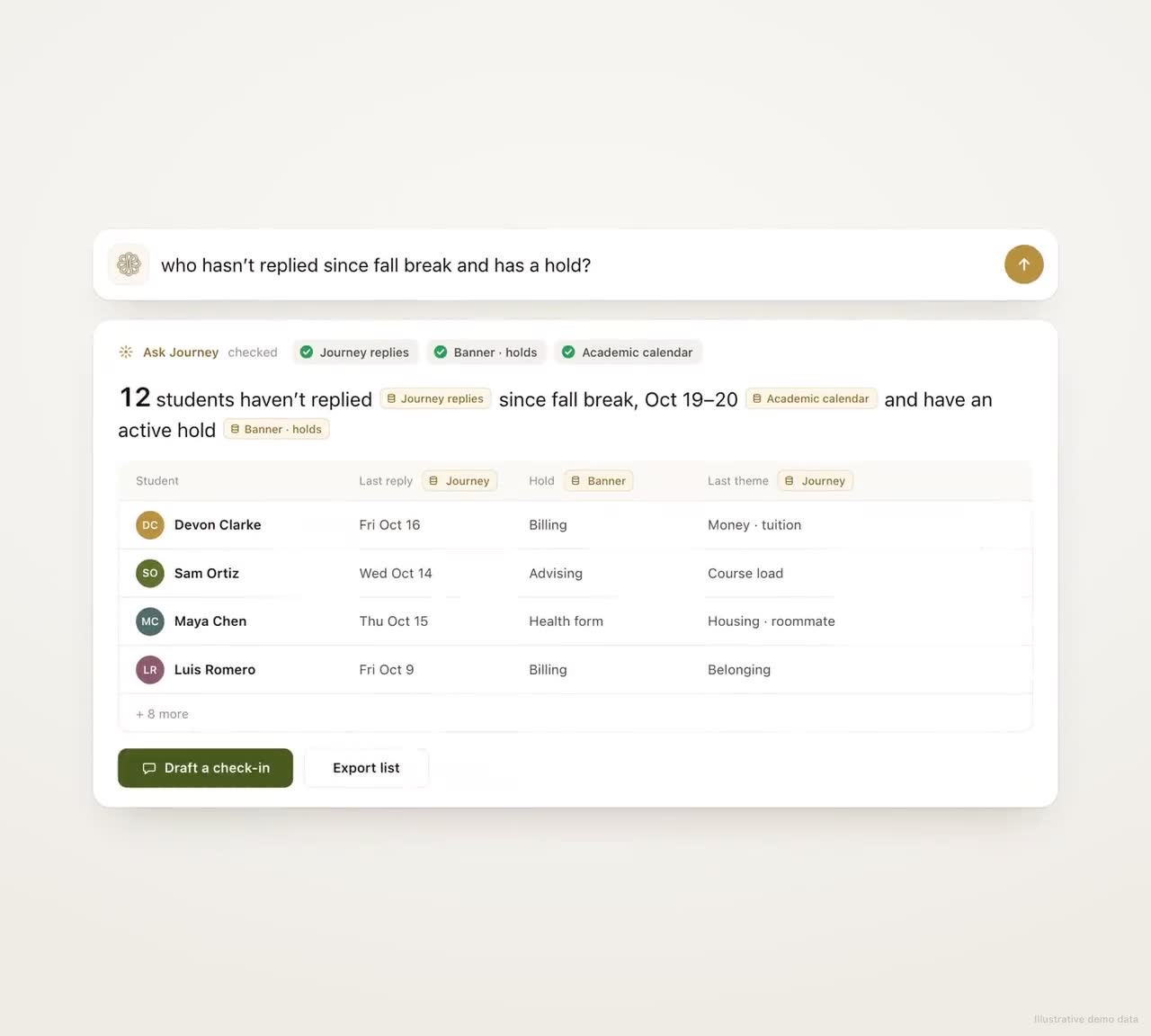
In practice, Journey checks every incoming message for signs of risk as it arrives, as well as for what it's about, so a disclosure tucked into a question about the dining hall still reaches a person. A message that shows a student in crisis gets an immediate reply with 988 and your campus health and wellness contacts, and your campus team is alerted. Signs that a student is struggling alert staff quietly, without the crisis reply. A student who texts "talk" is told a staff member will reach out as soon as possible.
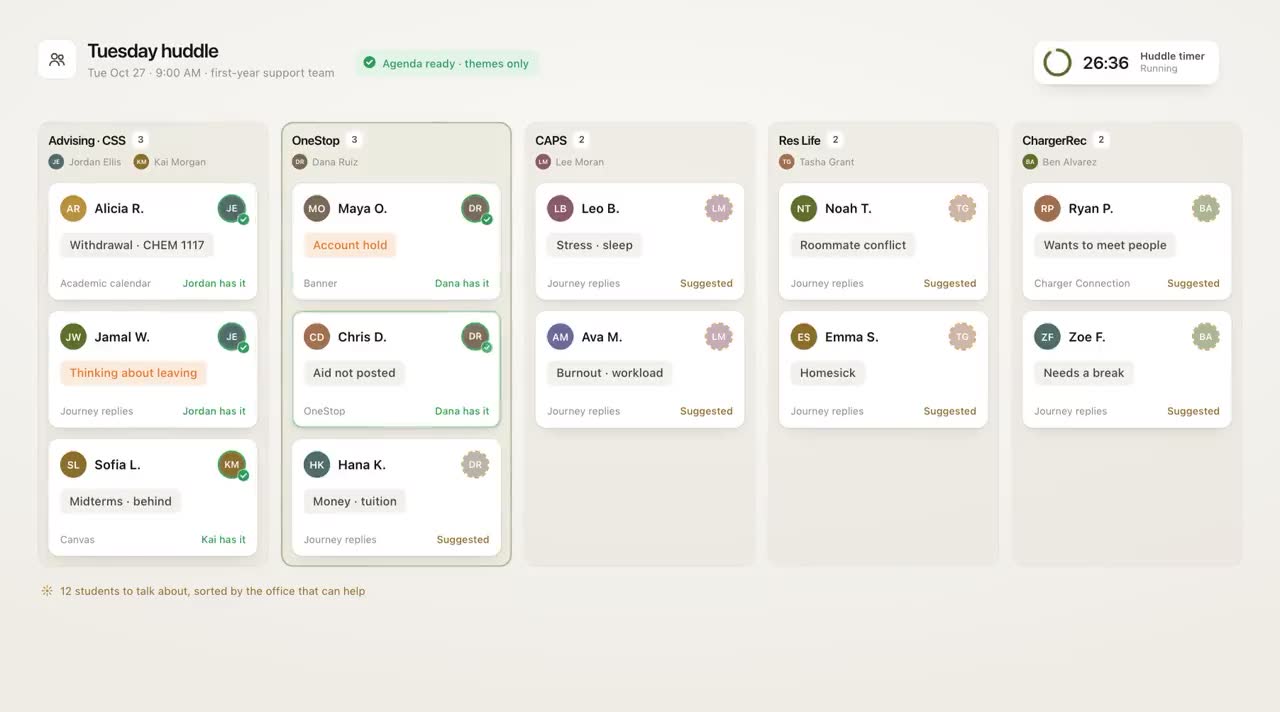
Who is alerted, and how they're reached, comes from the escalation process you set with us during setup. Today Journey's staff alerts arrive in your team's Slack, so if your on-call staff are reached by phone or pager, that step belongs in the protocol, and in the 2 AM test below. Outside that path, staff see a summary of what a student raised rather than their words, so a disclosure isn't passed around between offices.
Two pieces of the protocol above are still being built: the overnight triage our demo shows, where a sleepless 1:12 AM text gets a calm reply and reaches the student's coach as a theme at 8:00 AM, and the automatic lock-screen rewrite. Until they ship, safety language at any hour follows the escalation process your campus sets, and we'll show you which parts are live for your pilot.
How to test escalation before students do
Never let the first real crisis be the first test. Before launch, and again each term:
- Write test messages with counseling. A few dozen, across every row of the table: direct, indirect, joking, about a friend, buried in a routine question. Include local slang and misspellings.
- Run them through the live setup. Check the first reply's wording, whether an alert fired, who got it and how long it took.
- Test at the worst time. Run a test at 2 AM on a Saturday, and confirm a real person on the on-call schedule receives it and knows it's a test.
- Test the phone tree. Numbers change. Call every number in the reply.
- Review real cases monthly. Every escalation, plus a sample of messages that didn't escalate. Update the detection list and the wording from what you find.
Measure what tells you the system is trustworthy: time from message to crisis resources (it should be immediate), time from alert to human contact against what your protocol promises, misses found in review, and false alarms. If false alarms climb, staff will start to ignore the pages, and that's a safety problem too.
Questions to ask any AI vendor
- Show us the exact first reply to crisis language. Can our counseling center approve and change it?
- How do you detect indirect language, and what happens with ambiguous messages?
- Who gets alerted at 1 AM on a Saturday, through what channel, and how do you know they received it?
- Does the AI ever try to counsel a student in crisis? How do you prevent it?
- What appears on the lock screen when staff follow up?
- What is logged, who can see it, and how do we review misses?
- What do students hear at onboarding about when a person will be told?
A good vendor answers these with screenshots, written wording and a test you can run yourself. If the answer is "our AI is very careful", ask again.
Frequently asked questions
What should an AI chatbot do when a student mentions suicide?
Reply immediately with crisis resources: 988 by call or text, your campus crisis line and emergency services if the student is in danger. Then alert the on-call staff your campus names, and never try to counsel the student through it.
Should a student support chatbot include 988?
Yes. 988 can be reached by call, text or chat at any hour, and it serves anyone in emotional distress, not only people thinking about suicide. It belongs in the first reply to crisis language, and it can be mentioned calmly in replies to late-night stress.
Who should receive crisis alerts from a student texting platform?
The people your counseling center and dean of students name in your protocol, with separate roles for business hours and after hours and a channel they actually monitor. The vendor should never decide this.
How do we test crisis escalation before launch?
Have counseling write a few dozen test messages, from direct to indirect to joking, run them through the live setup, and check the first reply, who was alerted and how fast. Repeat at night and on a weekend, and re-test each term.
Can we share information with parents in a student crisis?
FERPA includes a health or safety emergency exception that can allow disclosure without consent when there's an articulable and significant threat, with recordkeeping duties. How it applies is a decision for people under your policies; check specifics with your counsel.