Running a 30-Minute Weekly CARE Team Review

A CARE team meeting agenda that fits in 30 minutes: new flags, open loops, closures and themes across the cohort, with the prep to do beforehand and what each person brings to the table.
Key takeaways
- The weekly review's job is to give every student of concern a named owner and a next step, not to discuss each case at length.
- A fixed 30-minute agenda works: a safety check, new flags, open loops over seven days, closures, themes across the cohort and a read-back of owners.
- One coordinator preps a one-line-per-student sheet the day before, so the meeting spends its time deciding, not catching up.
- Counseling shares only whether a referral connected, with the student's permission. Clinical detail stays in counseling.
- Formal behavioral intervention and threat assessment have their own process. Risk of harm never goes to a 90-second slot.
Many CARE team meetings run long for the same reason: the team discusses students instead of assigning them. Fourteen names go up on the shared spreadsheet, the first three get twenty minutes each, the counseling liaison leaves for an intake, and the other eleven roll over without an owner. The following week, most of the same names are back.
A weekly CARE team meeting doesn't need more time. It needs a fixed agenda, prep done before anyone sits down, and one rule above all: every student leaves the meeting with a named owner and a next step. This playbook gives you a 30-minute agenda, what to prepare, what each person brings, and how to tell whether the meeting is working.
What the weekly review is for
The weekly review has one job: make sure every student someone is worried about has a person working on it, and that loops opened last week are actually closing. It is not a case conference, and it's not the place to rebuild a student's whole story. Long discussions belong with the two or three people who need them, after the meeting.
If that sounds brisk, it is. Brisk is what lets you get through fourteen names and still have time to notice that four of them are worried about the same thing.
A 30-minute CARE team meeting agenda
| Minutes | Item | The question it answers |
|---|---|---|
| 0 to 3 | Safety check | Did anything escalate since last week, and is it with the right people? (Confirm the handoff, don't discuss the case.) |
| 3 to 13 | New flags | For each new student: who owns it, what's the next step, by when? |
| 13 to 21 | Open loops over seven days | What's stuck, and what will unstick it this week? |
| 21 to 25 | Closures | Which cases closed, and what actually helped? |
| 25 to 28 | Themes across the cohort | Is something affecting many students that no single case will fix? |
| 28 to 30 | Read-back | The coordinator reads every owner and date aloud |
The read-back feels redundant the first week. It's the two minutes that stop "I thought you had her" from becoming next week's opening line.
Prep before anyone sits down
A 30-minute meeting depends on about 30 minutes of prep by one person, usually the student success or case coordinator. Set a deadline, such as Monday at 3 PM, after which new names go on next week's sheet unless they're urgent.
The prep sheet has one line per student, in the same format every week:
- Who: name, ID, cohort or program
- What: the concern in one phrase ("missed two weeks of labs, says work hours changed")
- Since: the date the concern was first raised
- Tried: what's been done, by whom, and whether the student answered
- Ask: what the coordinator needs from the room (an owner, a decision, an office to call)
Sort the sheet: new flags first, then open loops by age, oldest first. Mark anything over 14 days. Send it to attendees by Monday evening so they can check their own systems before Tuesday, rather than during it.
What each person brings
Each seat at the table exists because that office can see or do something the others can't. Ask each one to bring the same small set of things every week.
| Seat | Brings |
|---|---|
| Coordinator | The prep sheet, last week's owners and dates, and the read-back |
| Advising | Registration status, holds, midterm grades where they're in, and who has an appointment booked |
| Financial aid | Whether flagged students have an aid issue in progress (status, not amounts) |
| Residence life | What RAs and hall staff have noticed that hasn't reached anyone else |
| Counseling liaison | Only whether a referral connected, and only with the student's permission. Clinical detail stays in counseling |
| Dean of students office | Holds, conduct matters that bear on support, emergency aid requests |
| Faculty liaison, if you have one | Patterns from early alerts, and what professors have been told back |
The counseling row deserves a word. Counselors are usually bound by confidentiality rules stricter than the rest of the table's, and a good CARE team never puts them in the position of choosing between those rules and being helpful. "She connected" or "no contact yet" is enough for everyone else to plan around.
Running the room
One owner, and it's a person
"Advising has it" is not an owner. "Marcus has it, and he'll call her by Thursday" is. If the student's issue spans offices, the owner is the person who keeps the thread, not the one who solves every part.
Ninety seconds per new flag
The coordinator reads the line, the room proposes an owner and a step, and you move on. If the discussion runs past two minutes, the owner and one other person take it offline that day.
Share the minimum that does the job
Under FERPA, sharing information within the institution generally depends on staff having a legitimate educational interest, as your institution defines it. In practice: say what the room needs to assign an owner, and keep the rest with the people working the case. Notes go into the shared student record, not personal notebooks, so the next person can see what happened. This is general information, not legal advice; your registrar or counsel can tell you how your policy reads.
Close cases out loud
Closures get four minutes on purpose. Hearing that a tutoring referral worked, or that an emergency grant kept a student enrolled, tells the team which moves to repeat. It's also the only good news some of these meetings get.
Spotting themes across the cohort
The last real agenda item is the one most teams skip, and it's where a CARE team earns its keep beyond individual cases. Look across this week's lines for anything that repeats:
- Three students mention a lab section that conflicts with the only evening shuttle.
- Several aid concerns trace back to the same refund timing.
- Students in one residence hall keep raising noise and sleep.
Those examples are illustrative, but every campus has its own versions. When one appears, assign it like a case: an owner, a next step, a date. A single fix to a shuttle schedule can close more loops than a month of individual outreach.
How Journey keeps loops moving between meetings
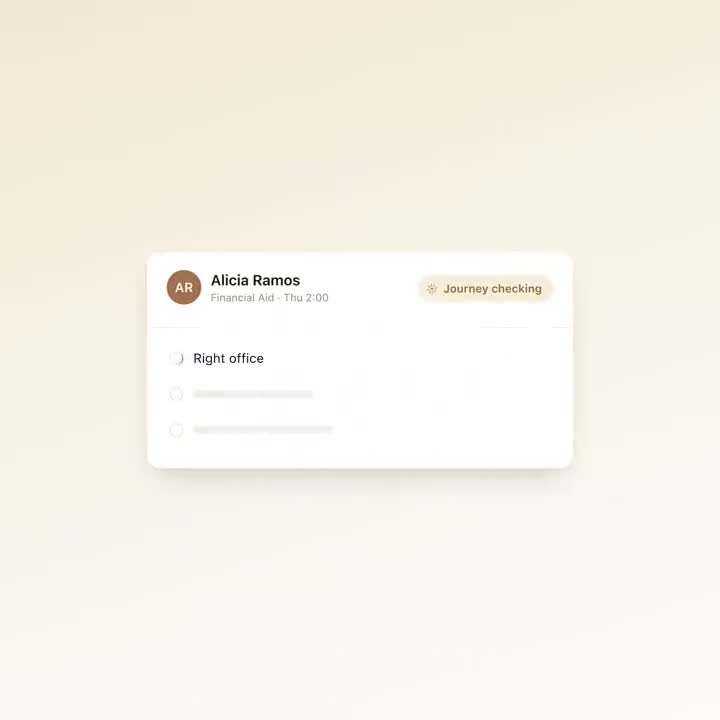
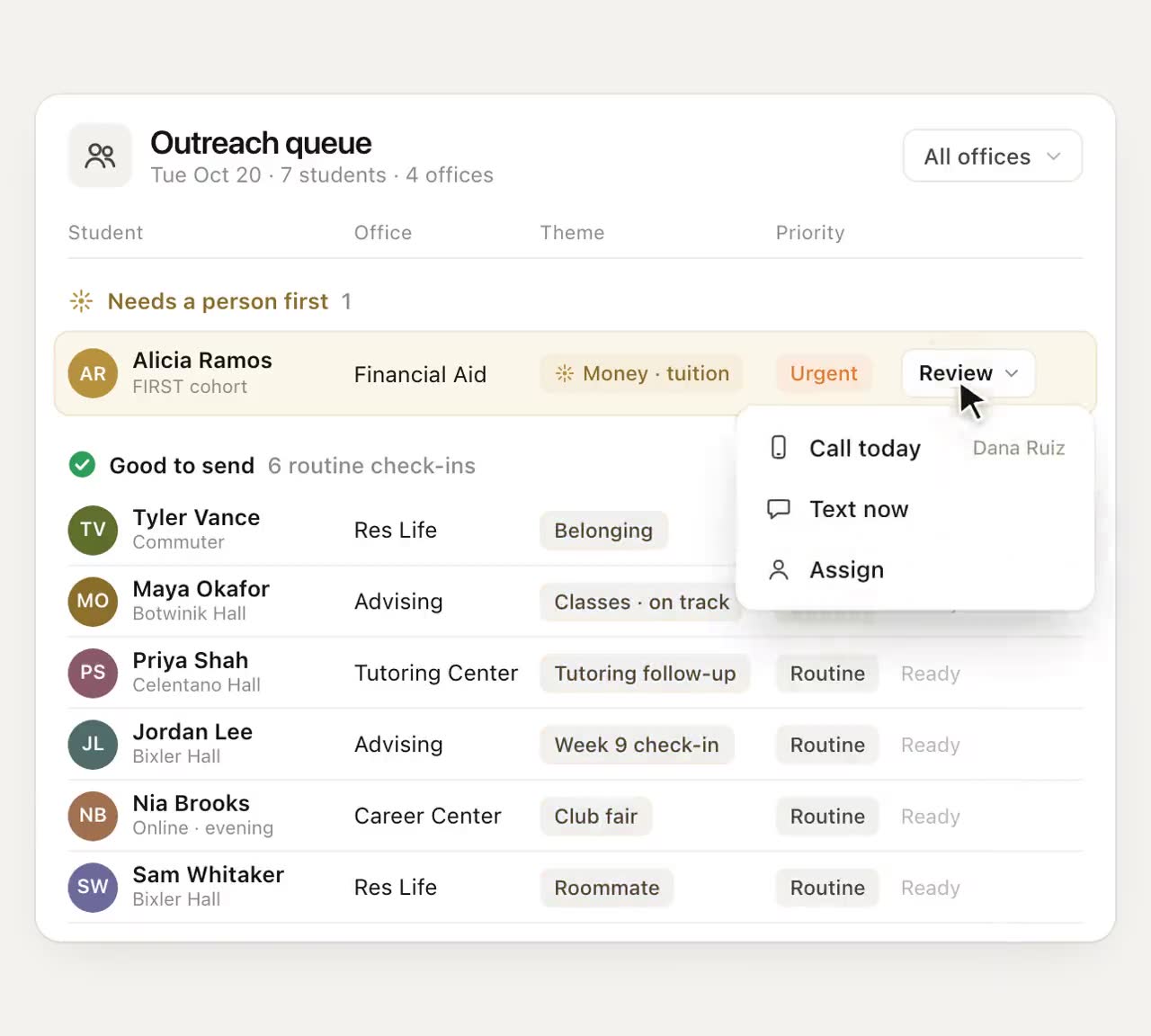
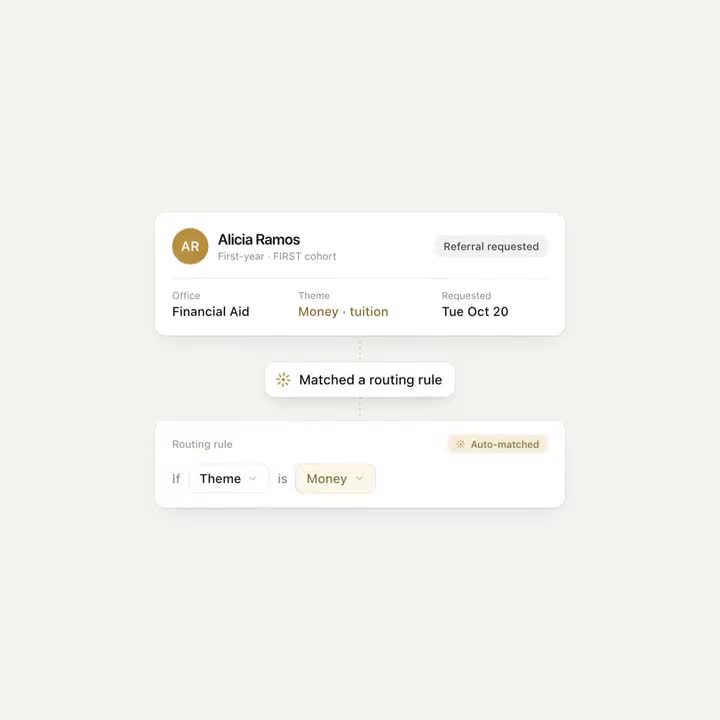
Journey does the part of the week that happens between meetings: it texts students first, notices which replies need staff and what each one is about, sends one-tap scheduling links for the office that can help, and checks back after. By the time the team meets, the partner dashboard lists the students whose replies need a staff member, each with a one-line summary of the concern rather than the messages themselves. Notes from any meeting go into the student's record, where the whole team can see them, and staff alerts arrive in your team's Slack.
An agenda that assembles itself before the huddle, with owners suggested, isn't something Journey does yet. Today the coordinator builds the prep sheet, with the dashboard supplying the who and the what for most of its lines. The format above works with or without it.
Switching an existing meeting to this format
Most teams already meet; the hard part is changing a meeting people are used to. A few things make the switch easier:
- Clear the backlog first. Spend one longer session assigning an owner to every open name, so the new format starts clean instead of inheriting forty open loops.
- Send the sheet format a week early, with one completed line as an example, so offices know what to bring.
- Name a timekeeper who isn't the coordinator. It's easier to cut off a colleague when it's someone's job.
- Agree on where notes live before the first meeting, and stop keeping a separate spreadsheet once they do.
How to tell the meeting is working
Track a few numbers from the sheet itself, week over week. They take minutes to count and tell you more than attendance does.
- Flags with an owner within one business day. The target is all of them.
- Open loops older than 14 days. This should shrink after the first month. If it grows, ownership is unclear or the owners are overloaded.
- Median days from flag to close. Break it out by office to find the bottleneck.
- Repeat names. Students who close and reopen within a term often had the referral, not the help.
- Themes acted on. How many cohort-wide issues got an owner and a fix this term.
Run the format for four weeks before changing it. Once people bring their line ready, the meeting often finishes early. Spend the spare minutes on themes. For what happens to each case between Tuesdays, our guide to closing the loop on early alerts covers the follow-through step by step.
Frequently asked questions
What should be on a CARE team meeting agenda?
A quick safety check on anything that escalated, new flags with an owner and next step for each, open loops older than a week, cases that closed and what helped, and themes affecting many students. End by reading every owner and date aloud.
How long should a weekly CARE team meeting be?
Thirty minutes is enough for a weekly student-of-concern huddle if one person preps a one-line summary per student beforehand. Longer case discussions should happen afterward with only the people who need to be in them.
What's the difference between a CARE team and a behavioral intervention team?
Many campuses use a behavioral intervention or threat assessment team, with its own training and risk rubric, for situations that may involve harm, and a lighter CARE or retention huddle for students of concern. Anything involving risk of harm belongs in the formal process.
What can a counselor share in a CARE team meeting?
Usually only whether a referral connected, and only with the student's permission, because counselors are bound by stricter confidentiality rules. A good CARE team plans around "she connected" or "no contact yet" without asking for more.