Why Journey Texts in Lowercase

A text that reads like a notice gets filed like one. Why a peer voice gets read, the four voices students choose from, the rules we write by, and when the casual tone steps aside.
Key takeaways
- Students sort texts by sender almost before reading them; an institutional register gets filed with email.
- Students choose the voice Journey uses at onboarding: hype man, gentle guide, funny friend or deep thinker.
- The writing rules matter more than the lowercase: short, one action, an easy reply, no lectures, no therapist language, no corporate speak.
- Safety, money and deadlines get written straighter: the facts first, no jokes.
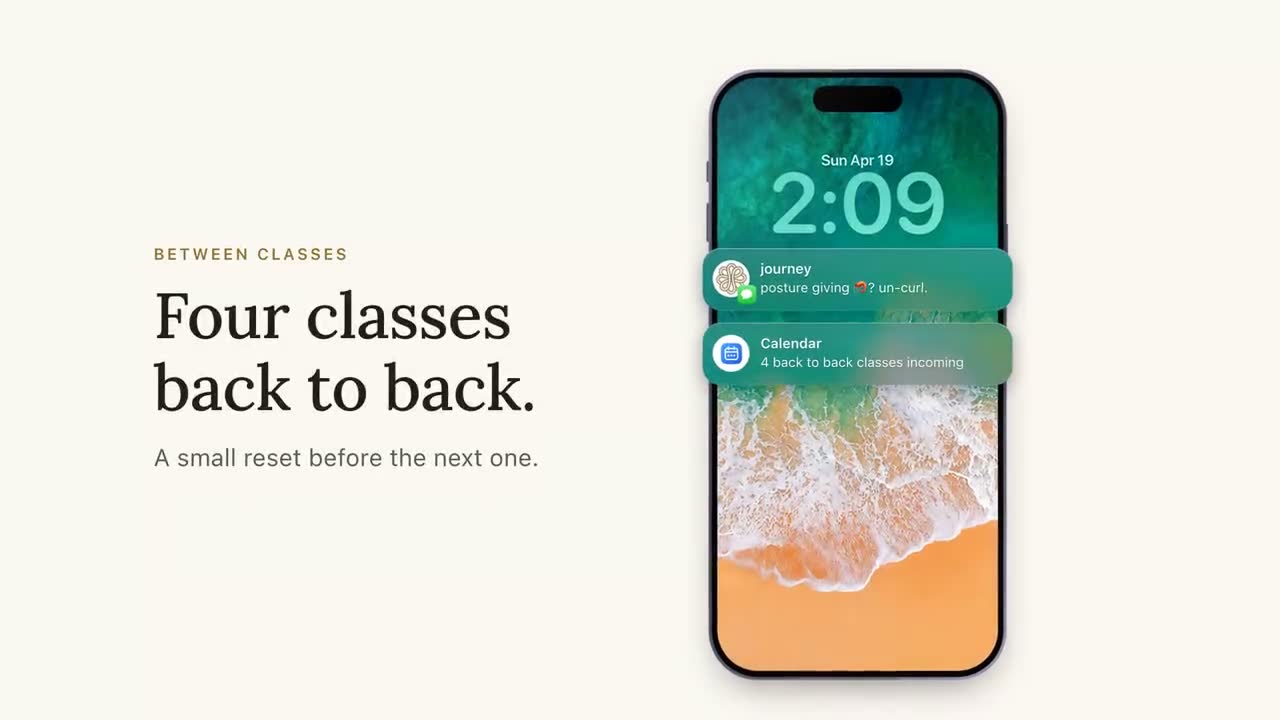
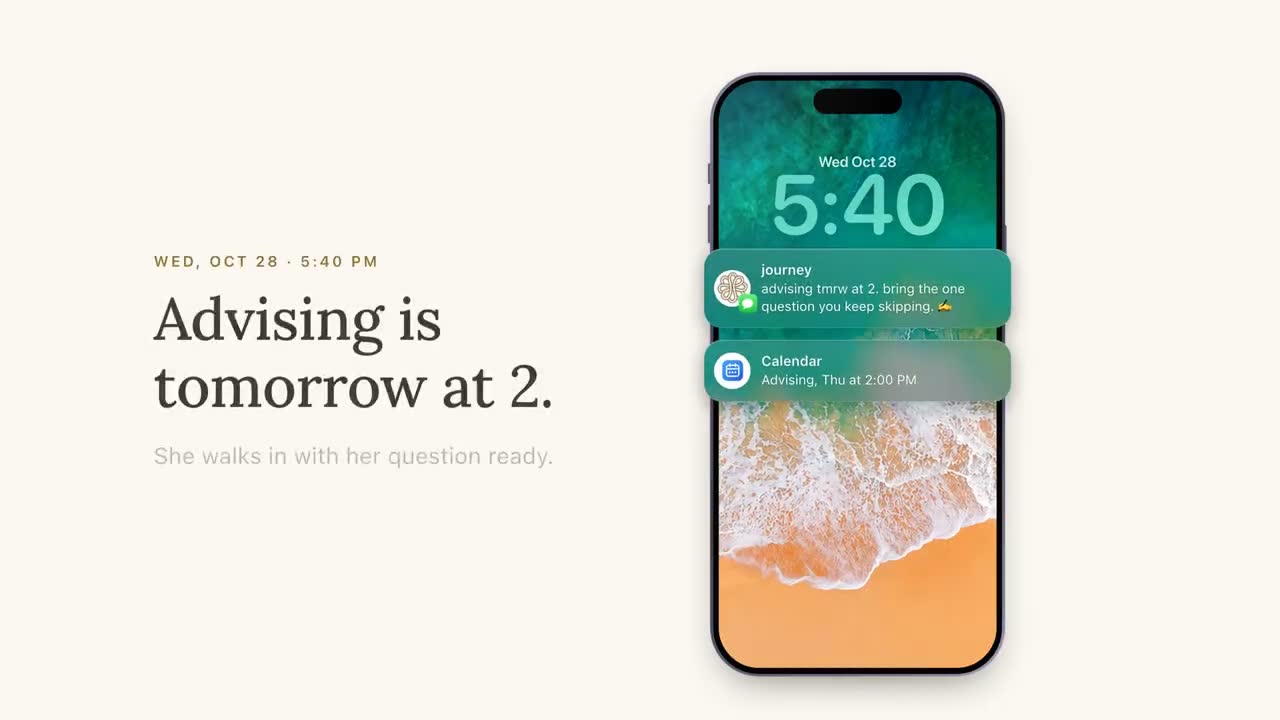
A text that reads like a notice gets filed like one. That's the whole reason Journey writes the way it does: lowercase, no sign-off, one or two sentences, the occasional emoji. "shoulders up by your ears? drop 'em like it's hot." wouldn't get past a lot of campus style guides. It gets read, which is the job.
People at universities ask us about it often, usually with a raised eyebrow. Here's the answer: why a peer voice gets read when an institutional one doesn't, how students choose the voice they get, the rules we write by, and the moments when the casual tone steps aside.
Peer voice beats authority
Students sort texts by sender almost before they read them. A message that opens "Dear Student," with an office name in capitals and a signature block, gets sorted with email: official, probably a form, deal with it later. A lowercase message, one sentence long, gets read the way a friend's text does. The content can be identical. The register often decides whether it gets read at all.
That's the idea behind "a friend that texts first." Journey doesn't pretend to be a classmate, and students know what it is. But it writes the way a thoughtful older student would: short, specific and plainly on their side.
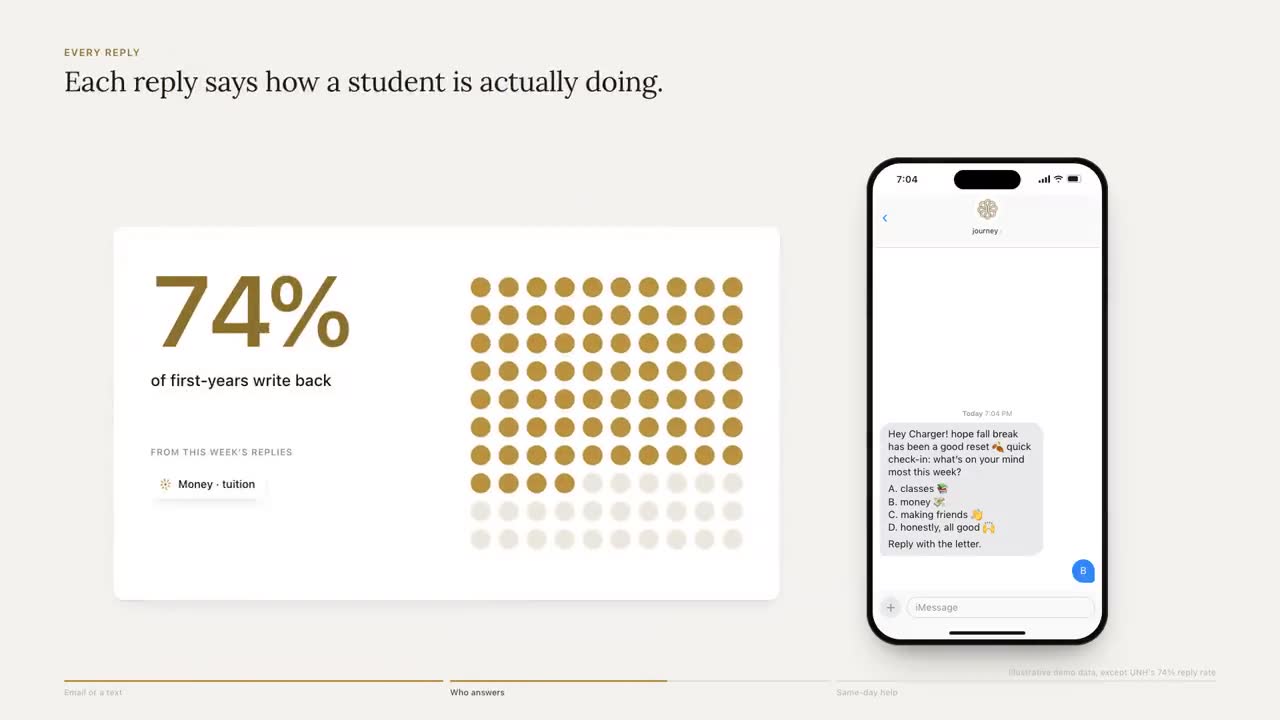
In a typical week of the University of New Haven pilot, 74% of students replied to Journey or acted on a nudge. Lowercase letters don't earn that on their own. Timing and relevance matter more. But a message has to sound like it's meant for the student before any of the rest can work.
Students pick the voice
Onboarding takes about 90 seconds. Each student ranks their goals, picks the kinds of events they care about and chooses the voice Journey texts them in. There are four, and they write differently.
| Voice | How it writes | The night before a midterm (illustrative) |
|---|---|---|
| Hype man | Bold and punchy, short declarative sentences | "you put the hours in. walk in like it." |
| Gentle guide | Warm and unhurried, more questions than statements, never pushes | "big one tomorrow. what's one thing you want to feel good about walking in?" |
| Funny friend | Witty, casual and self-aware, never corny | "midterm tomorrow. your notes have seen things. let them help." |
| Deep thinker | Reflective and spare, questions that stay with you | "what would you tell a friend who studied as hard as you did?" |
The examples in the last column were written for this note. The point is that one moment can be met four ways, and the student, not the campus, picks the one that sounds like help.
The rules we write by
- Short. One or two sentences. If it needs a third, it's two texts, or it's an email.
- One action. Not "go to tutoring and also email your professor". One thing, small enough to do today.
- An easy reply. When Journey runs a check-in, it offers lettered choices, each on its own line, so answering takes one character.
- No lectures. We don't explain why a student should do something. They know why.
- No therapist language. "how are you feeling about your stress levels today" is a sentence nobody answers.
- No corporate speak. "circle back", "at your earliest convenience" and "resources are available" are out.
- No toxic positivity, no over-enthusiasm. Honor how hard the thing is before suggesting a move. A string of exclamation points and "you've got this" reads as not listening.
The rules are stricter than the lowercase. Plenty of messages are casual and still useless: chatty, vague, three asks long. The lowercase gets the text opened. The rules are what make it worth opening.
When the casual tone steps aside
Lowercase isn't a costume Journey wears no matter what. Three kinds of message get written straighter.
- Safety. No jokes, no emoji, and a clear path to a person. Journey is not a crisis line: when a message raises a safety concern, it surfaces the right human path (counseling, 988, the on-call staff your team names) and follows the escalation process set up with your campus.
- Money. Amounts, dates and office names exactly as they are. "your balance with student accounts", not "money stuff".
- Deadlines. The date, the time and the one step come first. Any warmth comes after.
 Journey
Text Message
Wed 3:30 PM
last day to withdraw is friday at 5 pm. if you're weighing it for chem, talk to your advisor before then. want the link to book? a) yes b) not withdrawing
a
An illustrative thread with a fictional student. Still lowercase, but the date and time come first and there's nothing to decode.
Testing which wording students answer
Today a student's voice comes from their own choice at onboarding and the rules above, applied with judgment. Testing two wordings against each other and keeping the one more students answer would replace some of that judgment with evidence.
What this means for your own office's texts
You don't need Journey to borrow any of this. If your office texts students:
- Write like the person on your team students like most. Read the draft aloud in their voice.
- Put the date, place or amount in the first line.
- Ask for one thing, with a reply that takes one character.
- Drop the signature block. Name the office once, in plain words.
- Skip all caps. It reads as shouting, and students have learned to tune shouting out.
- Keep the formal register for messages that need it: conduct, policy and anything legal. Those deserve precision, and students can tell the difference.
For more on the craft, see how we write a nudge and why students don't read email.
Sounding like someone on the student's side has little to do with sounding young, and any office can learn it.
Frequently asked questions
What is peer voice in student communication?
Writing to students the way a thoughtful older student would: short, specific and plainly on their side, rather than in the formal register of an office notice. It often decides whether a message gets read at all.
Should universities text students in a casual tone?
For most messages, a plain, friendly tone tends to get read more readily than a formal one. Keep a straighter register for safety, money, deadlines, conduct and anything legal, where precision matters more than warmth.
How should a campus office write a text to students?
Put the date, place or amount first, ask for one thing, make the reply easy, drop the signature block and skip all caps. Write it the way the staff member students like most would say it.
Can students choose how Journey talks to them?
Yes. During onboarding, which takes about 90 seconds, each student picks a voice: hype man, gentle guide, funny friend or deep thinker. The nudges they get are written in that voice.