How We Write a Nudge

The rules Journey writes nudges by: one action, one or two sentences, a reply that costs one character, timing that does half the work, four voices, and before-and-after rewrites of typical campus messages.
Key takeaways
- A nudge asks for one small action the student can take in the next few hours, in one or two sentences.
- Most good nudges follow a few shapes: trigger and action, question and command, observation and redirect.
- Lettered choices on their own lines let a student reply with a single letter.
- Timing and voice matter as much as wording. The same text lands or vanishes depending on when it arrives and how it sounds.
A nudge has one job: get one student to do one small thing in the next few hours. Every one of our writing rules follows from that, and most of the texts students ignore break at least one of them. Here are the rules from our internal writing guide, with nudges written to them, and a few rewrites that show what changes when you apply them.
One action, one or two sentences
If a nudge asks for two things, the student does neither. If it explains why something matters, the student reads the explanation and skips the ask. So every nudge names one action, small enough to do now, and stops.
- "lab at 9. breakfast first? 🥯"
- "career fair at 11. one hello is enough. 🤝"
- "done > perfect. every time."
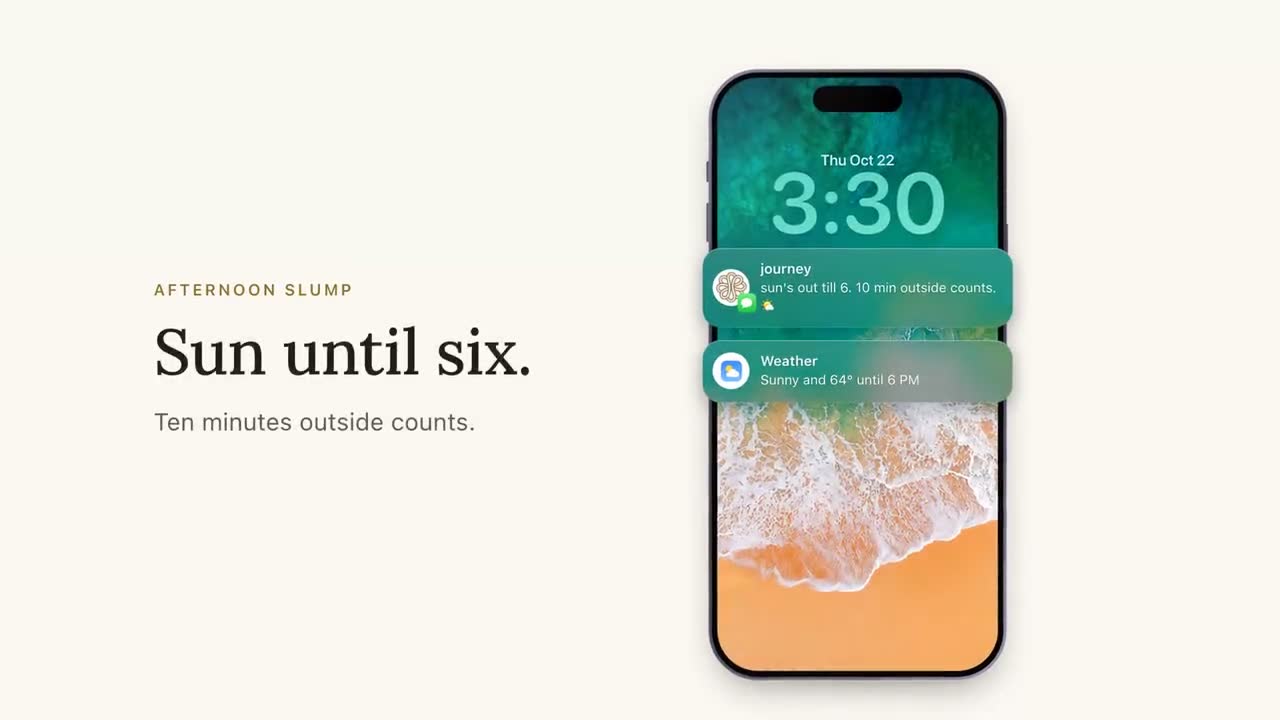
"One hello is enough" is doing a lot of work in the second one. A career fair is a big, vague ask for a first-year. One hello is a small, specific one, and it's the step that gets her through the door. Specific beats general every time: "10 min outside" over "get some fresh air", "breathe in for 4" over "try to relax".
The patterns we reach for
Most of our nudges follow one of a few shapes. They're not templates so much as habits that keep a text short and pointed at an action.
| Pattern | Example |
|---|---|
| Trigger + action | "rain at 3. umbrella in the bag? ☔️" |
| Trigger + action, with a person in it | "last day to drop is today. not sure? 10 min with an advisor helps. 💬" |
| Question + command | "posture giving 🦐? un-curl." |
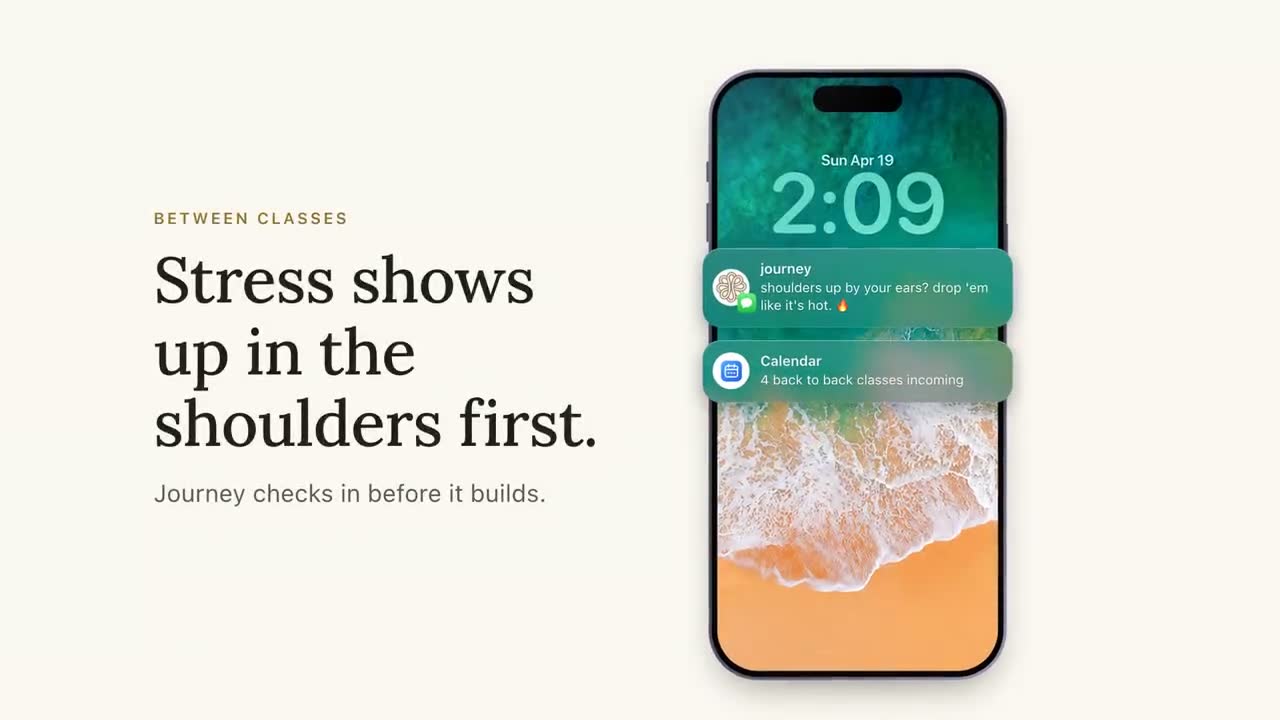
| Observation + redirect | "shoulders up by your ears? drop 'em like it's hot. 🔥" |
We also use identity + action, which speaks to the kind of student someone told us they are, and challenge + reward, a small dare with something in it for the student. Whatever the shape, the trigger is something true about the student's day: the rain, the lab, the fair, the deadline.
Make replying cost one character
When a nudge asks a question, the answer should take a single tap. That's why Journey offers lettered choices, each on its own line, so a student can reply with one letter while walking between classes. An open question like "how are you feeling about the semester?" asks for an essay. A lettered one gets an answer.
 Journey
Text Message
Thu 6:02 PM
how'd tutoring go? a) helped b) meh c) didn't make it
c
no stress. want the link for monday instead? a) yes b) not this week
a
An illustrative thread with a fictional student. Lettered choices, one letter back.
Timing does half the writing
The same text lands or vanishes depending on when it arrives. Our rules of thumb: event nudges go out the day of, a few hours before. Focus and task nudges land in the morning or at the start of a free window. Reflection goes out Friday evening or Sunday. Posture and stretch nudges aim for the mid-afternoon slump. A reminder about an appointment, like the one below, can go the day before, while there's still time to prepare.
All of it happens inside the windows each student chooses, a few texts a week, inside the windows the student chooses, never more than one proactive text a day and never in quiet hours. A student who texts a screenshot of their class timetable never gets a nudge during class, and anyone can move their nudges in plain words ("can my nudges come at 7pm", "only 2 nudges a week"). Journey says each change back, so the student knows it took. A perfectly written nudge at 7 AM on a Saturday is a perfectly written reason to text STOP.
Four voices, one nudge
During onboarding, students choose the voice Journey texts them in. The rules stay the same; the sound changes. Here's one nudge about posture, written four ways:
| Voice | The nudge |
|---|---|
| Hype man | "posture check. shoulders back. spine up. go." |
| Gentle guide | "notice your shoulders. if they're creeping up, let them drop." |
| Funny friend | "posture giving 🦐? un-curl." |
| Deep thinker | "what's your body holding right now? stress likes to sit in the shoulders." |
A student who picked the gentle guide and gets the hype man feels shouted at. A student who picked the hype man and gets the deep thinker feels lectured. Matching the voice is how a text from a platform starts to sound like a text from a friend who knows you. (We wrote separately about why it's all lowercase.)
What kills a nudge
- Length. Past two sentences, it gets skimmed.
- Vagueness. "Take care of yourself this week" gives a student nothing to do.
- Preaching. "You should" and guilt land as a lecture from someone who isn't their parent.
- Several asks at once. Water, stretch and breathe is three nudges pretending to be one.
- Therapist language. "What I'm hearing is…" makes students stop talking.
- Office language. "Circle back", "touch base", "at your earliest convenience".
- Toxic positivity. "Everything happens for a reason" tells a struggling student their struggle doesn't count.
- Over-enthusiasm. Three exclamation marks read as a brand trying too hard.
- A broken placeholder. "hey {first_name}" tells a student exactly what they are to you. Journey never sends a nudge with an unfilled placeholder; a clean one goes out instead and staff are told.
Before and after
We wrote the "before" versions below for this piece, in the style most campus messages arrive in. The "after" versions are nudges in Journey's voice from our demo set.
| Before (written for this article) | After |
|---|---|
| "Reminder: the Career Fair is today from 11 AM to 3 PM in the Student Center. Employers from many industries will attend. Bring copies of your resume and dress professionally." | "career fair at 11. one hello is enough. 🤝" |
| "Your advising appointment is scheduled for tomorrow at 2:00 PM. Please come prepared with any questions you may have about your academic plan." | "advising tmrw at 2. bring the one question you keep skipping. ✍️" |
| "Today is the last day to drop a course without a W. Students considering a drop should review the registrar's website and consult their academic advisor." | "last day to drop is today. not sure? 10 min with an advisor helps. 💬" |
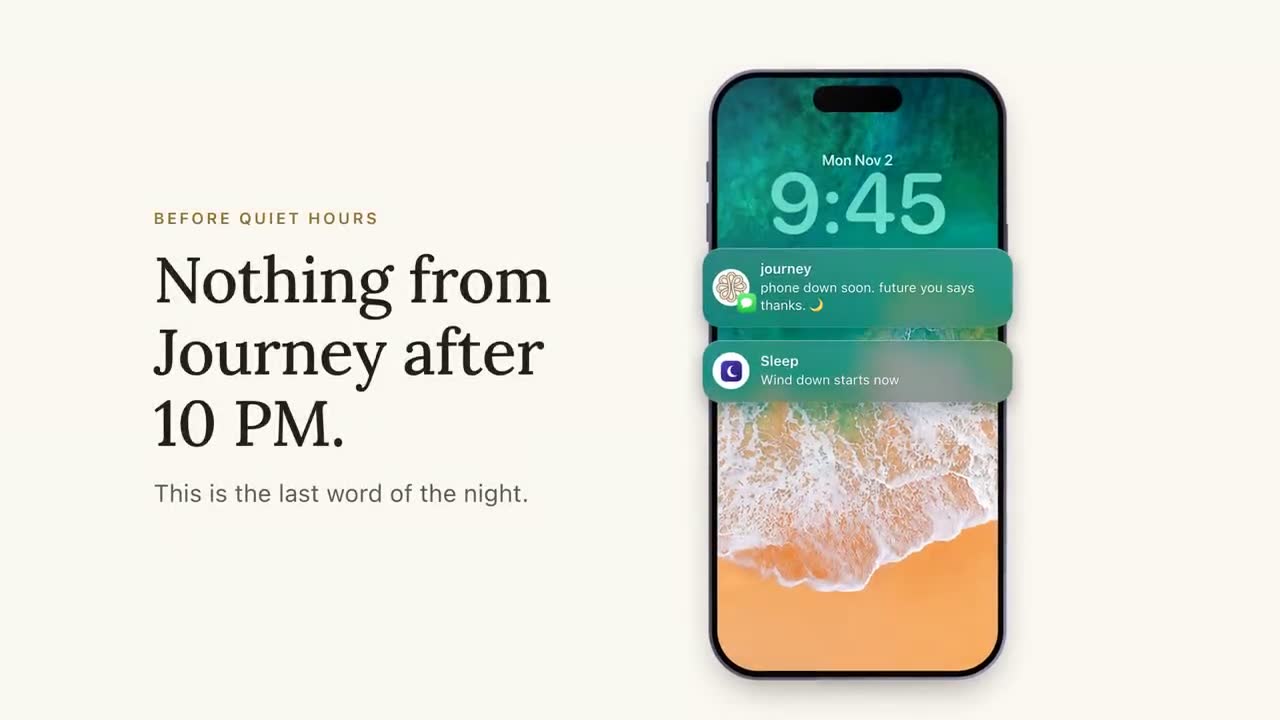
| "Getting enough sleep is important for your wellbeing and academic performance. Try to limit screen time before bed." | "phone down soon. future you says thanks. 🌙" |
Look at what got cut: the end time, the location, the dress code, the explanation, the "please". None of it is wrong. A student can find all of it once she's decided to go. The nudge's job is the decision. The advising rewrite adds something the original didn't have, which is a reason to show up prepared: the question she keeps skipping.
If you write texts to students, try the test we use. Read the draft and ask what the student will do in the next three hours because of it. If you can't name one thing, it isn't a nudge yet.
Frequently asked questions
How do you write a nudge message for students?
Ask for one small action, keep it to one or two sentences, tie it to something true about the student's day, and make replying take one tap. Send it inside the student's own windows, a few hours before the moment it's about.
How long should a text message to students be?
One or two sentences. Past that, students skim. Leave out details they can find once they've decided to act, such as the end time or the dress code.
What makes students ignore campus texts?
Length, vagueness, several asks at once, preaching, office language, therapist phrasing, forced cheer and texts that arrive at the wrong time.