Why Journey Sends a Few Texts a Week, Not a Few a Day

How often to text college students, and why more texts tend to mean fewer replies. The checks every Journey nudge passes, the timing rules we use, quiet hours, and STOP and PAUSE.
Key takeaways
- Text any one student a few times a week at most, never more than once a day unprompted, never overnight, and always tied to a moment in their week.
- When a sender texts whether or not it matters, students learn its texts can wait, and the important text that follows goes unread.
- Frequency limits are the guardrail; timing is what keeps texts welcome. Events 2 to 4 hours before, reflection on Friday or Sunday, focus in the morning.
- Count texts per student across every office, not per office, and retire recurring texts nobody answers.
When a campus starts texting students, every office has something to say. Financial aid has a deadline, the career center has a fair, residence life has a fire drill, and the tutoring center would like to be remembered. Each text is reasonable on its own. Together they're a feed, and students mute feeds.
Journey sends a few texts a week, inside the windows the student chooses. That's fewer than most people expect, and we think it's a large part of why students answer. This note is about how often to text students, and why we hold the line even when an office asks for one more.
How often to text students
The short answer, for any one sender: a few times a week at most, never more than once a day unprompted, never overnight, and each text tied to something happening in the student's week. When a student writes back, answer them; replies aren't the problem. What needs a limit is how often you start the conversation.
Attention is the scarce thing
A student's phone competes for their attention all day. Every text you send spends a little of it, and the spending compounds. When a sender texts whether or not it matters, students learn that its texts can wait, and then they learn to stop opening them. That's why more texts tend to mean fewer replies. The first casualty is the important text that comes after the extra one.
When students tire of a sender, the instinct is to cut volume. That helps a little. Timing helps more: a text that lands at the moment it's useful doesn't feel like one too many. Frequency limits are the guardrail, and timing is what keeps texts welcome.
The checks every nudge passes
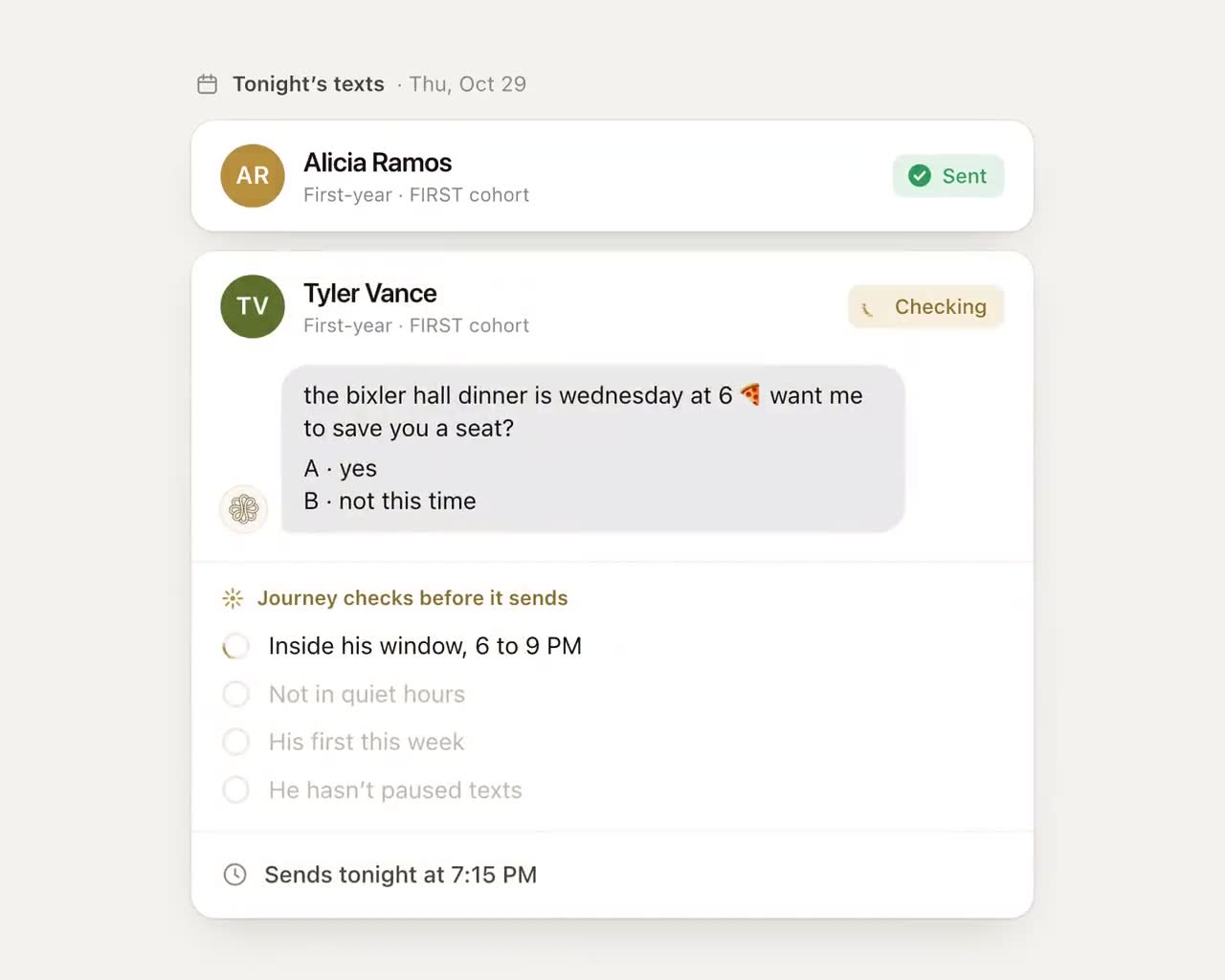
Before any nudge goes out, Journey checks that it's:
- inside the windows the student chose;
- outside quiet hours;
- outside the student's class times, once they've texted Journey a screenshot of their timetable;
- the only text Journey starts with that student that day (a limit added in October 2026);
- within the few-a-week budget;
- going to a student who hasn't texted STOP or PAUSE;
- complete, with no unfilled placeholder such as a missing first name;
- not a repeat of something the student already received (also October 2026).
And when a student reacts to a text with a tapback, a heart or a thumbs-up, Journey no longer replies to it. A reaction ends a conversation; it doesn't start one. There's more on these checks in Every Nudge Is Checked Before It Sends.
Timing beats volume
Rules of thumb for when each kind of text lands, inside the windows the student chose:
| Kind of nudge | When | Why |
|---|---|---|
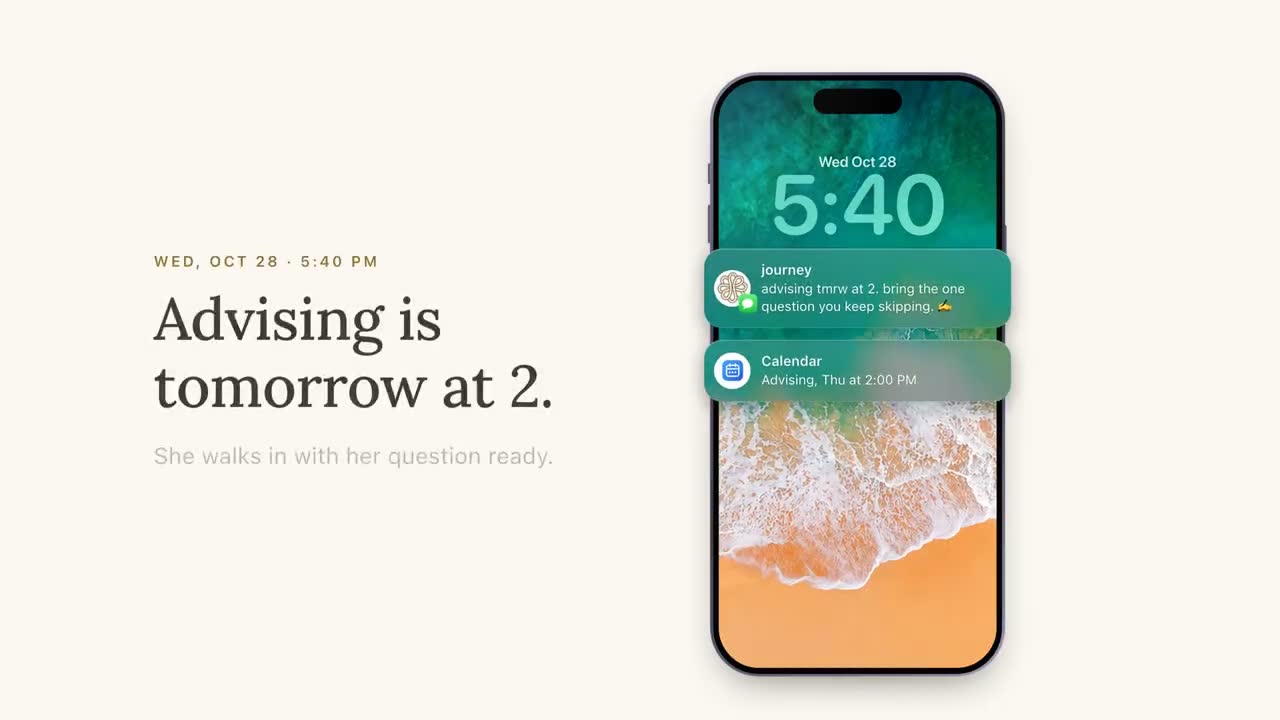
| An event | 2 to 4 hours before it starts | Late enough to remember, early enough to change plans |
| A reflection | Friday or Sunday | When the week has room to look back, or ahead |
| Focus or a study plan | Morning | Before the day fills up |
| Anything at all | Never in quiet hours | A text at 1 AM teaches a student to silence you |
Notice what the five moments have in common. Each text arrives because something is about to happen, or just did. None of them is a reminder that Journey exists.
Quiet hours
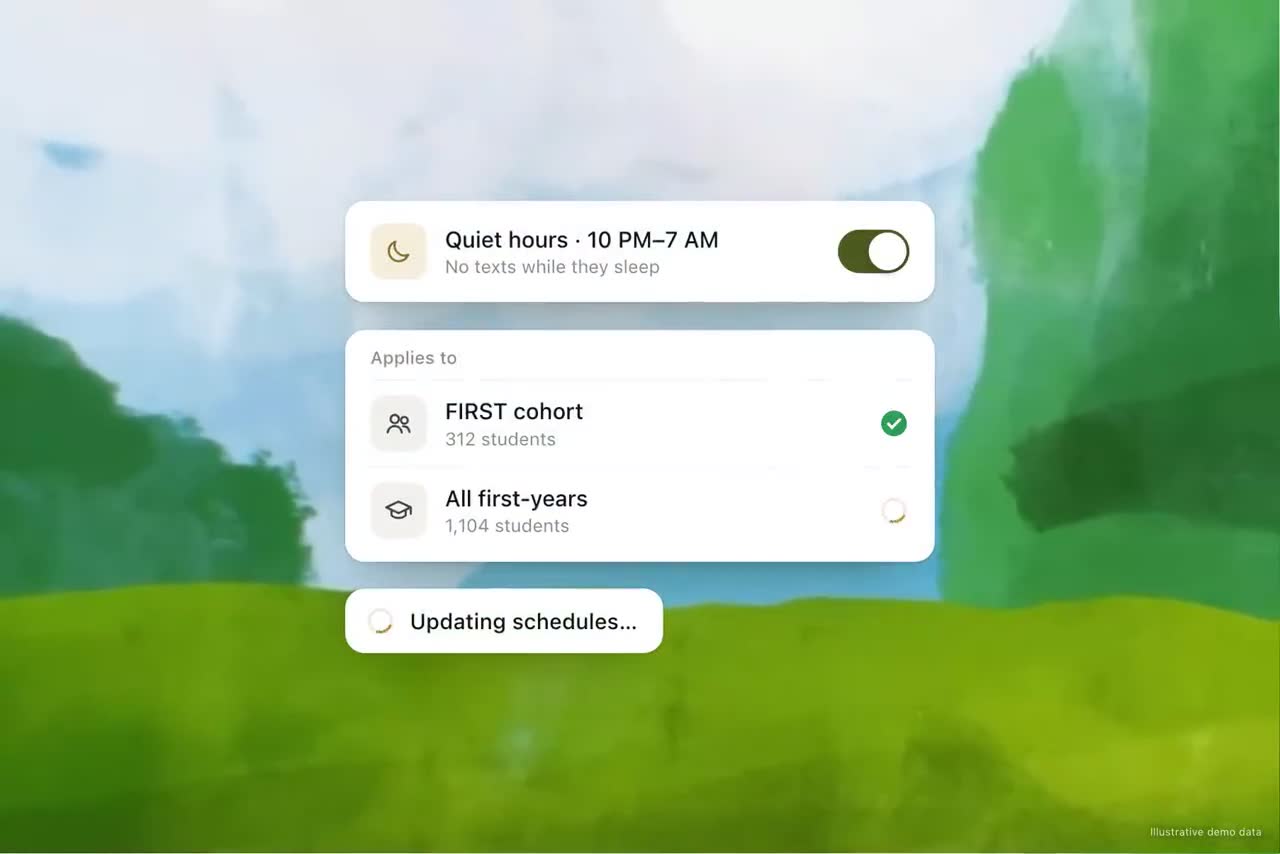
Quiet hours are honored: a nudge that would land overnight waits for morning. It sounds like courtesy, and it is, but it's also strategy. A student woken at 1 AM by a reminder about a career fair probably won't go to the fair. They're more likely to mute the number, and then the next text, the one about the hold on their account, goes unread.
STOP, PAUSE and the student's own say
Students can text STOP at any time to opt out, or PAUSE to take a week off. STOP is standard, and every texting program should honor it the first time, with no "are you sure?" PAUSE is the one we'd tell any campus to copy. Finals, a family emergency, a week when everything is too much: a student who can take a week off doesn't have to quit to get some quiet. Our guide to consent, opt-out and quiet hours covers the rest of the rules.
If you run texting for your campus
- Count per student, not per office. Five offices each sending "just one a week" is five a week.
- Set a campus-wide budget. Decide how many unprompted texts a student gets in a week, across everyone, and give one person the calendar.
- Tie every text to a moment. If you can't name what's happening in the student's week that makes this text useful today, it can wait, or go by email.
- Keep nights quiet, deadlines included. A midnight deadline gets its text at dinnertime.
- Watch replies and opt-outs by message type. A recurring text nobody answers is spending attention the important texts need. Retire it.
A few texts a week sounds like restraint, and it is. It's also how each text keeps getting read.
Frequently asked questions
How often should a university text students?
From any one sender, a few times a week at most, no more than one unprompted text a day, and never during quiet hours. Each text should be tied to something happening in the student's week. Replies to a student's own messages don't need to count against that budget.
Why do students stop responding to university texts?
Usually because the sender texts whether or not it matters, so students learn the texts can wait and stop opening them. Too many offices texting separately, texts at night and messages with no clear moment behind them all speed that up.
What time of day should you text college students?
It depends on the message. Event reminders work best a few hours before, reflection prompts at the end or start of a week, and focus or study nudges in the morning. Nothing should go out during quiet hours overnight.
How often does Journey text students?
Journey sends a few texts a week, inside the windows the student chooses, with no more than one text a day that Journey starts, and quiet hours honored. Students can text STOP at any time to opt out, or PAUSE to take a week off.