Nudge Theory in Higher Education: What the Research Says

Nudge theory for higher education: choice architecture, just-in-time support, implementation intentions, the Fogg model, self-determination and belonging, what research says nudges can and can't do, and the ethics.
Key takeaways
- A nudge changes how a choice is presented to make a good option easier, without removing any option. It has to be easy to ignore.
- Nudges work best when they're personal, timed to when the student can act, small, from a sender she recognizes, and two-way.
- Text reminders that worked in smaller, targeted studies showed no effect when sent in national FAFSA campaigns, so relevance and follow-up matter more than volume.
- Nudges can't fix structural barriers like a balance a student can't pay. Removing sludge, the friction in campus processes, is often worth more.
- Ethical nudging is transparent, built on the student's own goals, easy to refuse and restrained in frequency.
Most students don't lack intentions. They mean to start the lab report early, book advising before registration, go to office hours after the first quiz and get ten minutes of sun before the weather turns. What they lack is the right prompt at the moment they could act, and a path short enough to take.
That gap between meaning to and doing is what nudge theory works on, which is why it has found a home in higher education. Below are its core ideas in plain terms, what the research says nudges can and can't do for college students, and the ethics of nudging people you're responsible for.
What nudge theory is
Nudge theory comes from behavioral economics, and its best-known statement is Richard Thaler and Cass Sunstein's 2008 book Nudge. Their central point is that there's no neutral way to present a choice. The order of options, the default, the timing and the effort each path takes all shape what people do, whether anyone designed them or not. They call this design choice architecture.
A nudge, in their sense, changes the architecture to make a good choice easier without taking any option away or changing the incentives much. A mandate isn't a nudge. A fee isn't a nudge. Putting the healthy food at eye level is, and so is a reminder, a simpler form, a sensible default, or a plan made in advance. A real nudge also has to be easy to ignore. If the student can't say no, it's something else.
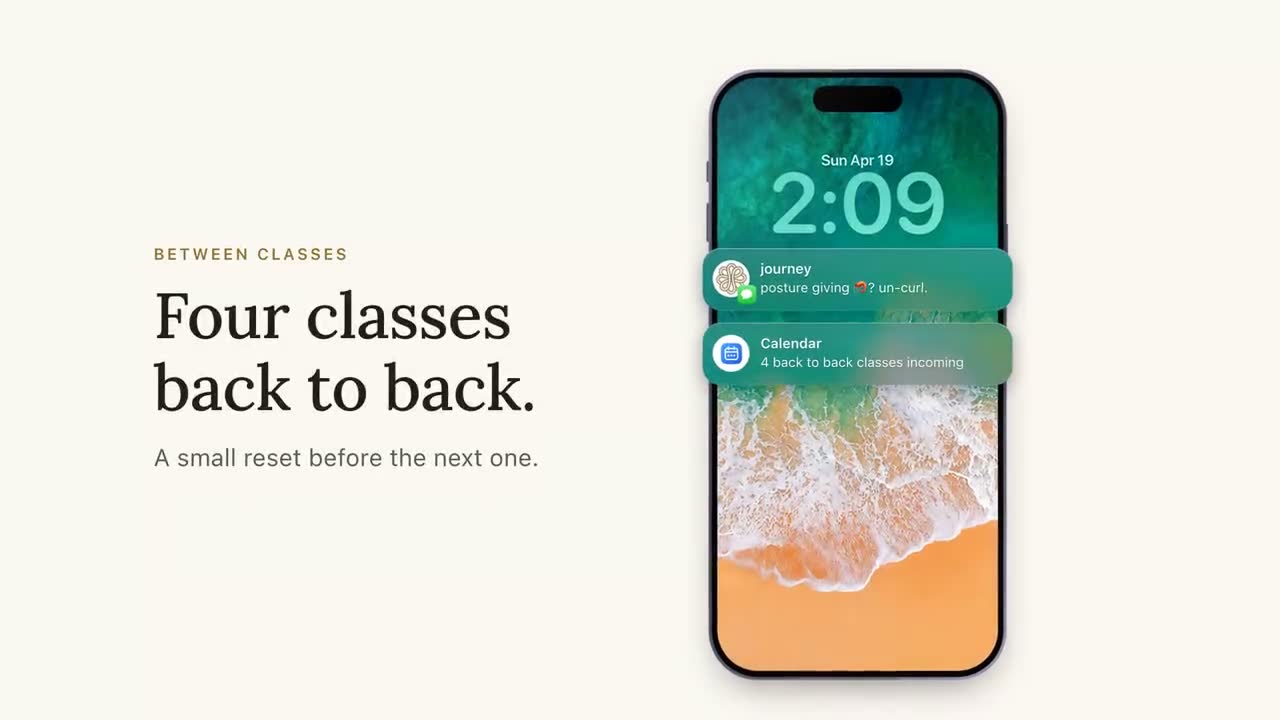
In higher education, the nudges are familiar once you see them: an advising appointment already booked that the student can move, a pre-filled form, a reminder before a deadline instead of a notice after it, a one-tap link in place of "log in to the portal".
The ideas behind a good nudge
Several other bodies of research explain when a nudge works and when it's just noise.
Just-in-time adaptive intervention
From health research, the idea is to deliver support when a person needs it and can actually take it in, adapting to their changing state and context instead of a fixed schedule. For a student, that means a study nudge the evening before an exam, inside a window she chose, not a generic reminder at 9 AM on Monday. On this view, timing is part of how the support works.
Implementation intentions
An implementation intention is an if-then plan: "when I get back from practice on Tuesday, I'll do 25 minutes on the lab report before dinner." Studies going back to the 1990s, since pooled in large reviews, have found that people who make a plan in this form follow through on an intention more often than people who hold the intention alone. A good nudge often asks for one: "when, and where?" rather than "study more".
The Fogg behavior model
BJ Fogg's model says a behavior happens when motivation, ability and a prompt arrive at the same moment. A prompt that comes when motivation is low, or when the action is too hard, fails. The practical lessons are to make the action smaller (ability) and to send the prompt when the student can act on it. Lecturing students to raise their motivation is usually the weakest lever.
Self-determination theory
Self-determination theory holds that people are most motivated when three needs are met: autonomy (it's my choice), competence (I can do this) and relatedness (I'm connected to others). For nudging, autonomy is the one to watch. Messages that feel controlling can backfire, while ones built on the student's own goals and choices tend to be welcomed. So letting students choose what they're working on, and how they're spoken to, does real work.
Sense of belonging
Research on belonging suggests that a student's sense that she fits, and that early struggles are normal and temporary, matters for whether she stays. One large test, a randomized trial across 22 colleges and universities published in 2023, gave incoming students a short online exercise built on that message before classes began. It raised full-time completion of the first year mainly for groups that had historically progressed at lower rates, and only where those students had real opportunities to belong on campus. A nudge toward an event can't create belonging; it can get a student through the door of something that does.
Motivational interviewing
From counseling, motivational interviewing works by drawing out a person's own reasons for change rather than supplying them. In a text, that looks like asking before advising: "what's the one thing you'd most like to get done this week?" The answer is more motivating than anything you could have written.
What the research says about nudging college students
Nudges have been studied in education for well over a decade, and the honest summary has two halves.
The encouraging half: some of the best-known studies texted students about specific tasks with deadlines, and gave them a way to get help. In one line of work, high school graduates headed to college got personalized texts over the summer about the paperwork due before the first day, with an invitation to text a counselor back, and more of them enrolled that fall. The problem they targeted is called summer melt: students who are admitted and plan to go, then never arrive. The gains were largest for students from low-income families and those who would be the first in their family to attend. In another study, first-year community college students who got texts about refiling the FAFSA were more likely to stay enrolled into their second year. The same texts made no difference at four-year colleges, where persistence was already high.
The sobering half: when FAFSA reminders went out in national and statewide campaigns reaching more than 800,000 students, a later trial found no effect on aid or enrollment, whatever the framing, timing or channel, and even with one-on-one advising on offer. A five-year study of nearly 25,000 students on three university campuses tested online and text-message interventions, including coaching, and found some gains in study time and mental health but none in grades or other academic results. And across more than a hundred trials run by two US government nudge units, in many policy areas, the average effect was much smaller than in published academic studies of nudges.
Put together, the research points to nudges that are personal (built from what this student said she wants), timely (when she can act), small (one action), from a sender she recognizes, and two-way (a reply leads to help). Strip those away to reach more people more cheaply, and the effect tends to go with them.
What nudges can't do
Nudges help people do what they already want to do. They don't change what people want, and they don't remove real barriers.
- A reminder can't pay a balance. A student with a hold she can't afford needs aid, a payment plan or emergency funds, not a better-worded text.
- A nudge can't fix a required lab scheduled at 8 AM for a student who works until 2.
- A nudge isn't counseling. When a student is struggling with her mental health, the job is to get her to a person.
- A nudge can't make a course easier. It can get her to tutoring before the exam instead of after.
Treating a structural problem as a motivation problem is a common misuse of nudging, and students can tell.
Sludge, the other half of the work
Thaler and Sunstein have both written about the opposite of a nudge, which has come to be called sludge: friction that makes it harder to do what's in your own interest. Campuses produce a lot of it without meaning to. A hold that can only be cleared in person between 9 and 4. A form that asks for information the university already has. A link that goes to the portal's home page. An appointment system that needs three logins.
Removing sludge is often worth more than adding nudges, and the two go together: a nudge pointing a student down a sludgy path has wasted her trust. Before launching any outreach, walk the path yourself on a phone.
The ethics of nudging students
Universities nudge students already, through every default and deadline. The question is whether they do it openly and in the student's interest. A few principles hold up:
- Transparency. The test is whether you'd be comfortable showing a student exactly why she got this message and how it was timed. It's a version of what Thaler and Sunstein call the publicity principle. If you wouldn't, don't send it.
- The student's goals, not only the institution's. Nudges toward things the student said she wants are on firm ground. Nudges that serve only the institution deserve more scrutiny.
- Easy to refuse. One word to stop, one to pause, honored the first time. No guilt, no false urgency.
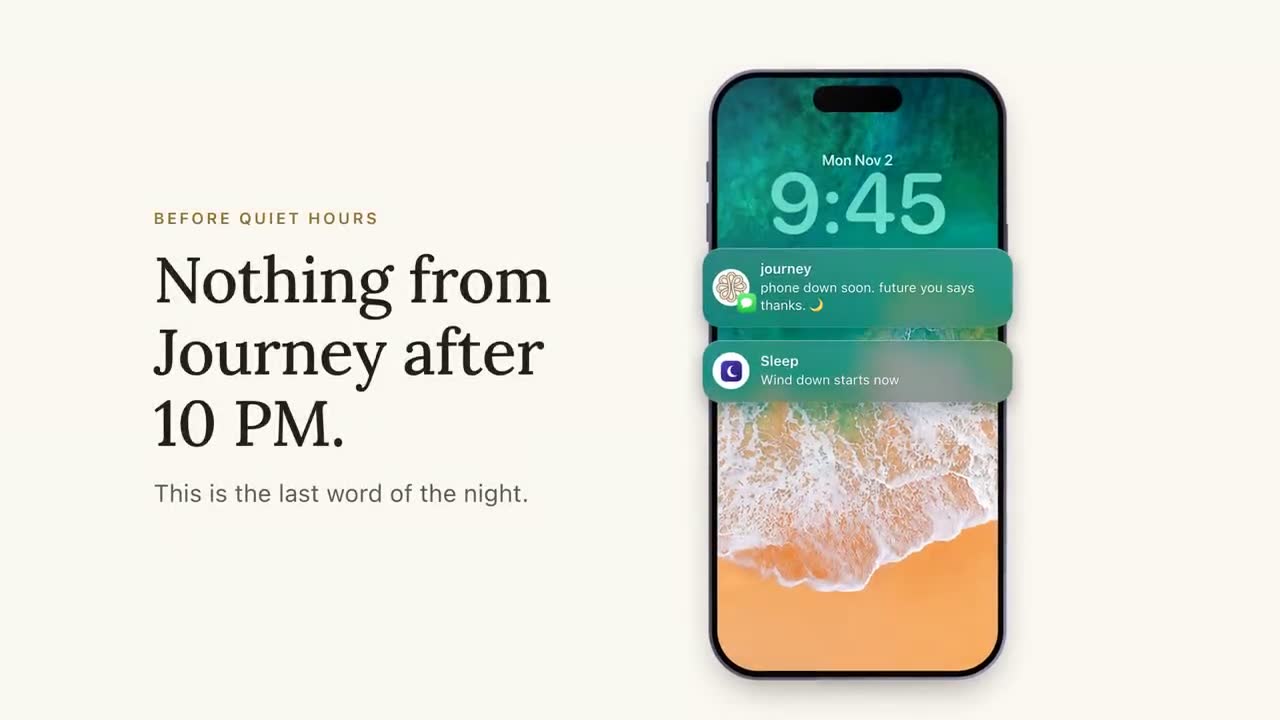
- Restraint. A few messages a week, never in quiet hours. Attention is the student's, not yours.
- Privacy. Using a student's data to time a message is different from exposing it. Keep the detail out of the text and out of staff view unless there's a reason.
How Journey applies the research
Journey was built on these ideas, and each one shows up as a specific design choice.
| Idea | What it looks like in Journey |
|---|---|
| Choice architecture | Questions with lettered choices; one-tap links to book with campus offices |
| Just-in-time adaptive intervention | Nudges sent inside the windows each student chooses, the evening before the hard day, never in quiet hours and never during a class once she texts her timetable |
| Implementation intentions | Nudges and replies that pin one action to a time, like a 25-minute block tonight |
| Fogg behavior model | One small action per text, sized to tonight |
| Self-determination theory | Students rank their own goals, change timing, frequency or focus in plain words ("only 2 nudges a week"), and hear each change said back; STOP and PAUSE work the first time |
| Motivational interviewing | Asking before advising; building on the student's own words |
| Sense of belonging | Event invitations matched to what students said they care about |
And the restraint is built in: a few texts a week, inside the windows the student chooses, no more than one proactive text a day, and any message the student already received is held rather than sent again.
The measure we care about most is whether Journey made it easier for students to do what they already meant to do. In a paired survey of 19 students, the share who said Journey made it easier to do what they already wanted to do rose from 14% in the fall to 71% in the spring. That's a small paired sample, reported descriptively rather than as a controlled result, and the research page sets out its limits alongside the findings.
Questions to ask before you send a nudge
- Does the student already want this, in her own words?
- Is this the moment she can act on it?
- Is the action small enough to do from a phone in a few minutes?
- Is the path behind the nudge free of sludge?
- Can she say no, or stop, in one word?
- Will a person or a good answer be there if she replies?
- Would we be comfortable if she saw exactly why she got it?
Seven yeses and you have a nudge. Fewer, and you may have a reminder that will be ignored. For more on the craft, read how we write a nudge, and for putting it into a term's plan, the complete guide to texting college students.
Frequently asked questions
What is nudge theory in education?
Nudge theory, from Richard Thaler and Cass Sunstein's 2008 book Nudge, holds that how a choice is presented shapes what people do. In education, a nudge makes a helpful action easier, such as a timely reminder, a one-tap booking link or a pre-filled form, without forcing anyone.
Do nudges work for college students?
Research suggests they can, especially targeted text reminders about specific tasks with deadlines, paired with a real way to get help. Large, generic campaigns have often shown little or no effect, so personalization, timing and follow-up matter.
What is an example of a nudge in higher education?
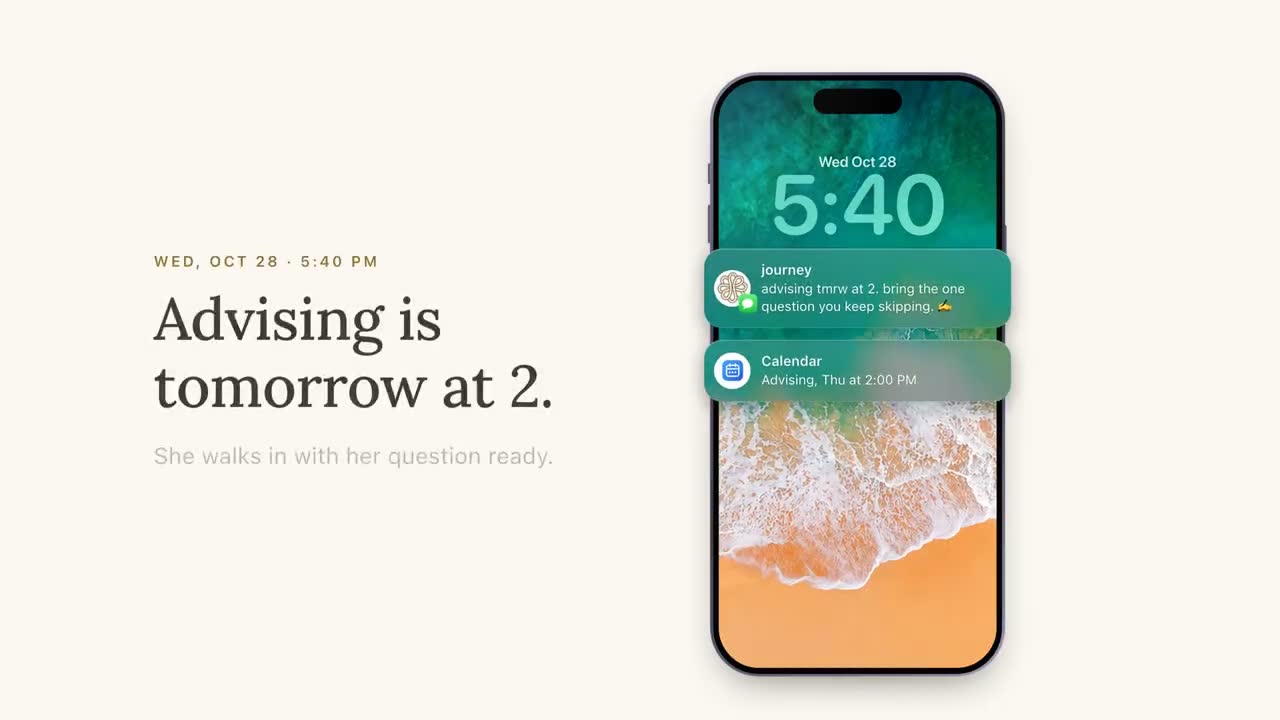
A text the evening before registration opens that mentions the student's hold and links straight to where it can be cleared. Or an advising appointment already booked that the student can move, instead of a request to book one.
Is it ethical to nudge students?
It can be, when it's transparent, serves goals the student holds, is easy to refuse and is used sparingly. A useful test is whether you'd be comfortable showing a student exactly why and when she got the message.
What's the difference between a nudge and sludge?
A nudge makes a good choice easier. Sludge is friction that makes it harder, like a hold that can only be cleared in person or a form that asks for data the university already has. Removing sludge often helps more than adding nudges.