Early Alert Systems in Higher Education: What Works in 2026

What an early alert system is, where alerts come from, why most stall between the flag and the student, and the habits that make them work: same-day text outreach, owners set by the reply, follow-through and faculty feedback.
Key takeaways
- An early alert system has four parts: the flag, the routing, the outreach and the record. Most stall at the outreach, when an email goes to a student who never opens it.
- Faculty flags are one source among several. The student's own reply often explains what attendance and grades only hint at.
- Alerts work when the student hears the same day by text, the reply decides the owner, someone checks back after the referral, and the professor hears what happened.
- Open the first faculty alert window in week three or four. A short form early beats a thorough one after midterms.
- When alerts arrive in bulk, contact every student the same day and use triage only to decide who gets a person first.
Most early alert systems are good at collecting flags and weak at everything that comes after. Faculty get the reminder that progress reports are open. A few flag a dozen students; many flag none. The flags land in a queue, an email goes to each student, and by midterms the advising office is sorting through hundreds of alerts trying to work out which still matter.
An early alert system in higher education is meant to catch students while there's still time to recover. What decides whether early alerts work is what happens in the days after a flag: how fast the student hears about it, in what channel, from whom, and whether anyone follows up.
What an early alert system is
An early alert system is the process, and usually the software, that lets faculty and staff flag a student showing signs of trouble so someone can reach out before the trouble becomes a failing grade, a withdrawal or a student who doesn't come back. It has four parts, whether or not anyone has drawn them:
- The flag. A professor, an advisor, an RA or a data feed says "this student, this concern".
- The routing. The flag goes to an office or a person.
- The outreach. Someone contacts the student and offers help.
- The record. What happened gets written down where the team can see it.
On many campuses the software is a module inside a student success platform. On others it's a web form that feeds a shared inbox. Either can work. Neither works if the outreach step is an email the student never opens.
Where early alerts come from
Faculty flags are the classic source, but they're one of several, and each catches something the others miss.
| Source | What it catches | Usually available | Blind spot |
|---|---|---|---|
| Faculty flags | Missed classes, low scores, a student who seems off | Weeks 3 to 8, when someone remembers | Depends on which professors participate |
| Attendance | A student who has stopped coming | From week 1, where attendance is taken | Large lectures and online courses often don't track it |
| LMS activity | No logins, missing submissions | From week 1 | Activity isn't learning, and some courses barely use the LMS |
| Grades | Low quiz, exam or midterm scores | Week 4 onward | Often arrives after the cheapest fixes have passed |
| Holds and balances | Money trouble before it blocks registration | Any time | Often never reaches advising |
| Residence life | Roommate trouble, a student who never leaves the room | Any time | Commuters and off-campus students are invisible |
| Self-report | Work hours, family, money worries, how the week is landing | Whenever you ask | Only as good as the reply rate |
The last row is the one many systems lack. A student who works three nights a week and keeps missing an 8 AM lab will show up in attendance data as "absent". She'll show up in her own reply as "i work till 2 and can't make 8am labs", which is a problem an advisor can actually solve. For more on reading these signals together, see how to identify at-risk students before midterms.
Why most early alerts stall
Alerts stall in the same six places.
- The flag is late. If the first wave of alerts comes after midterms, the withdrawal deadline is close and the student is already far behind.
- The flag is vague. "Concerned about this student" gives the person reaching out nothing to say.
- The outreach is an email. It comes from an office the student hasn't heard of and asks them to make an appointment. The students most likely to be flagged are the least likely to answer it.
- Nobody owns it. The alert routes to "advising" or copies three offices, and each assumes another acted.
- "Contacted" counts as done. The case closes when the email goes out, not when the student gets help.
- Faculty never hear back. A professor who flags five students and hears nothing about any of them flags fewer next term.
Alert volume makes all of this worse. A system that generates hundreds of alerts in week six, with the same few advisors working them, turns into triage by whoever has time, and the quiet students wait the longest.
Triage when alerts arrive in bulk
Progress-report weeks produce alerts in bulk, and working them in the order they arrived means a serious case can wait behind thirty simple ones. Contact every flagged student the same day by text; use triage to decide who gets a person first.
| Tier | Examples | Response |
|---|---|---|
| A person, today | Any safety concern, "thinking of leaving", flags from two or more sources | A call or meeting the same day, through your escalation path where it applies |
| Text today, then route | A single academic flag, a missed exam, a hold that blocks registration | A same-day text; the reply sets the owner |
| This week | Attendance-only flags from large lectures, light LMS activity | A check-in within the week; escalate if a second signal appears |
The tiers should move with the student. A low-tier flag becomes a high-tier one the moment the reply says so.
What makes early alerts work
The campuses that get value from early alerts tend to do four things, whatever software they run.
Reach the student the same day, by text
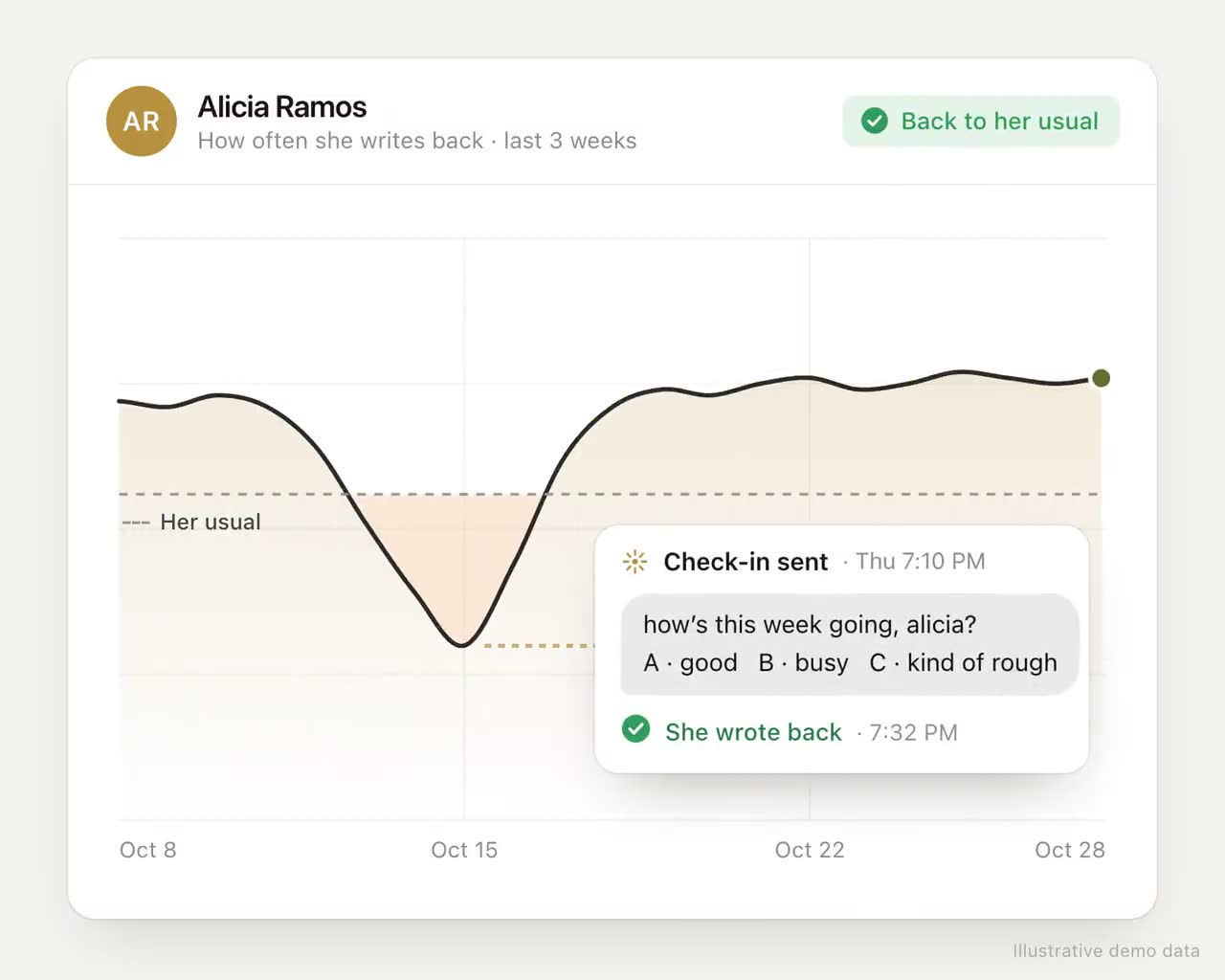
Hours matter more than days here. Send a short text the day the flag arrives, from a sender the student recognizes, asking one question they can answer with a letter. A text that asks "how's bio going?" and offers three lettered answers, from fine to not great, gets replies that "please schedule a meeting with your success coach" never will.
Let the reply decide the owner
The flag says what the professor saw. The reply says what's actually going on, and that decides who should own it. Missed labs can be about the material, a work schedule, a car that died or a roommate. Route by the reply, to one named person.
Follow through after the referral
A suggestion to visit tutoring isn't help until the student goes. Check back after the appointment time, and if it didn't happen, try again with an easier path. Our playbook for closing the loop on every early alert lays out the steps and the statuses to track.
Tell the faculty member what happened
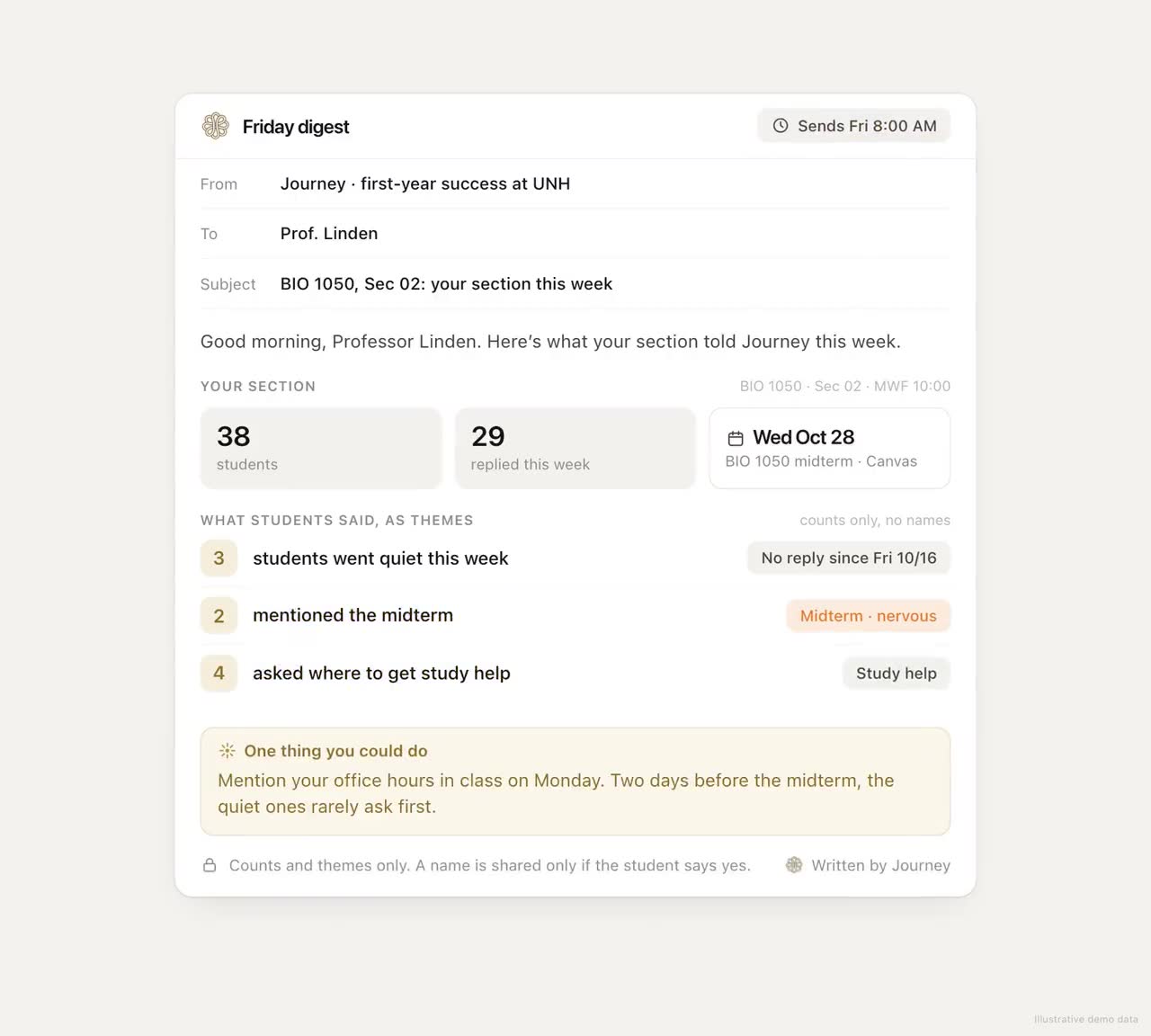
One line, no private detail: "she's connected with tutoring and her advisor." It's the cheapest thing in the whole process and the one that keeps professors flagging. We cover the faculty side in faculty early alerts professors will actually send.
An early alert calendar for the term
Timing is half the design. A sketch for a fifteen-week semester:
| Week | What to collect | What to do with it |
|---|---|---|
| 1 to 2 | No-shows, students not registered for a full load, students with no LMS login | A same-week text asking whether anything is in the way |
| 3 to 4 | The first faculty progress report, a self-report pulse check | Text every flagged student within a day; route by reply |
| 5 to 6 | First exam and quiz scores in gateway courses | Tutoring and office hours offers, timed before the next exam |
| 7 to 8 | Midterm grades, students who've gone quiet | Advisor conversations for anyone with two or more signals |
| Before the withdrawal deadline | Students failing a course | A person, not just a text, to talk through withdraw or stay |
| Before registration | Holds, students not yet advised | Clear holds early; book advising |
If your first faculty alert window opens after week five, moving it earlier is probably the single biggest change you can make. A shorter form in week three beats a thorough one in week seven.
Designing an alert form faculty will use
Faculty participation rises and falls with effort. A form that takes three minutes per student gets used for the worst cases only.
- Checkboxes for the common concerns (attendance, missing work, low scores, seems to be struggling personally), with an optional comment.
- Bulk flagging from the class roster, so ten students take one minute, not ten.
- A plain statement of what will happen next: "the student gets a text today; you'll hear back when it's resolved."
- No requirement to diagnose. The professor reports what they saw; the reply tells you why.
Handing the outreach and follow-up to Journey
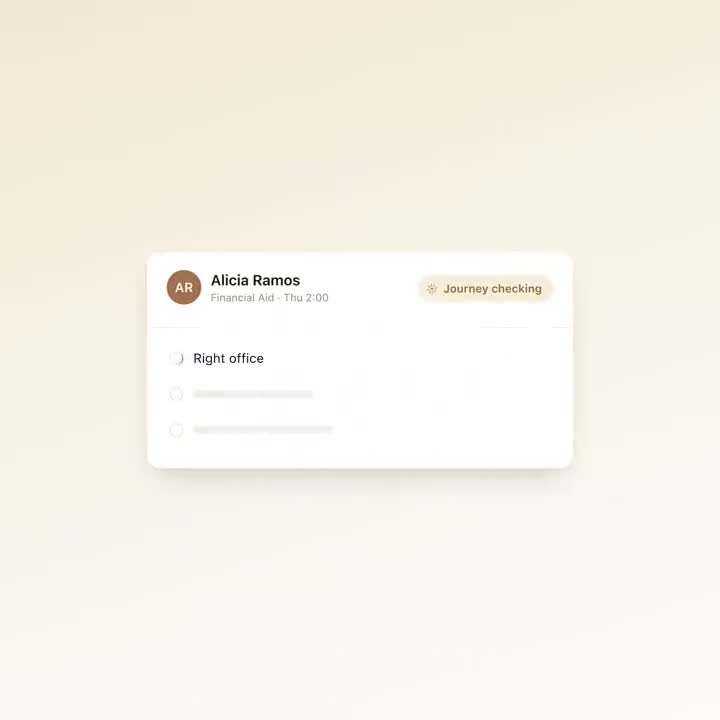
Journey takes the two steps where most alerts stall: reaching the student and following up. When a flagged student is added to Journey, from your alert platform's export or by a staff member, a check-in can go out that day in the voice she chose at onboarding. Journey reads her reply for what's really going on and how quickly a person should see it, and sends her to the office that can help with a one-tap scheduling link. A follow-up asking whether she went can be drafted by AI and approved by your staff in Slack before it's sent. Safety language goes straight to the people your campus names, and a student who says she's leaving the university is flagged to staff. Your team works from a short list of who needs a person, with each student's themes rather than transcripts.
Your early-alert platform stays the system of record. Journey reads alerts from it where it offers an API or an export, and where it offers neither, Journey can work through its web screens with a dedicated account and only the permissions you grant, each run recorded for review. Writing outcomes back into the alert platform and booking the student straight into the tutoring center's calendar exist only in our demos so far. Today the student gets a booking link, and staff note the outcome in the student's record in Journey. If you run Navigate360, Navigate360 and Journey covers how the two fit.
What to measure, and what to ask a vendor
Measure these weekly through week eight:
- Hours from flag to the student's phone. Not to an inbox.
- Reply rate on alert outreach. If it's low, change the channel or the wording before you blame the students.
- Share of alerts with a recorded outcome. "Resolved", with what happened, not "contacted".
- Faculty participation by week. The count of professors flagging, not just alerts. A drop after week four usually means they've stopped believing anything happens.
- Alerts per student. Students flagged by three professors are telling you something none of the individual flags says.
And ask any vendor:
- How fast does a flagged student hear from us, and through what channel?
- Who owns the alert after the student replies?
- What checks that a referral turned into an appointment?
- How do faculty hear back?
- What happens to an alarming reply on a Saturday night?
The answers will tell you whether you're buying a better form or a better outcome.
Frequently asked questions
What is an early alert system in higher education?
It's the process and software that let faculty and staff flag a student showing signs of trouble, so someone can reach out while there's still time to recover. It usually includes a flag, routing to an office or person, outreach to the student and a shared record of what happened.
Why don't early alert systems work?
The software is rarely the problem. Flags come late or vague, outreach goes by an email the student doesn't read, nobody owns the alert, 'contacted' counts as resolved, and faculty never hear back, so they stop flagging.
When should faculty submit early alerts?
As soon as there's something to see, ideally in a first progress report around week three or four, before the first exams in gateway courses. Alerts that arrive after midterms leave little time before the withdrawal deadline.
How do you get faculty to use an early alert system?
Make the form take under a minute, with checkboxes and bulk flagging from the roster, tell faculty what will happen next, and send a one-line update when each case is resolved. Professors keep flagging when they see that flags lead somewhere.
What should an early alert program measure?
Hours from flag to the student's phone, reply rate on alert outreach, the share of alerts with a recorded outcome, faculty participation by week, and how many students are flagged by more than one source.