Consent, Opt-Out and Quiet Hours: Texting Students Responsibly

How to text students responsibly: opt-in records you can show later, honoring STOP and every other way students say it, quiet hours students would choose, sensible frequency, and the TCPA and carrier rules in general terms.
Key takeaways
- Strong consent is specific, recent and recorded: the student opts in from their own phone, and you keep the exact words they saw.
- Under FCC rules in effect since April 2025, words like stop, quit, end, cancel and unsubscribe revoke consent. A student who texts STOP should get one confirmation and then silence.
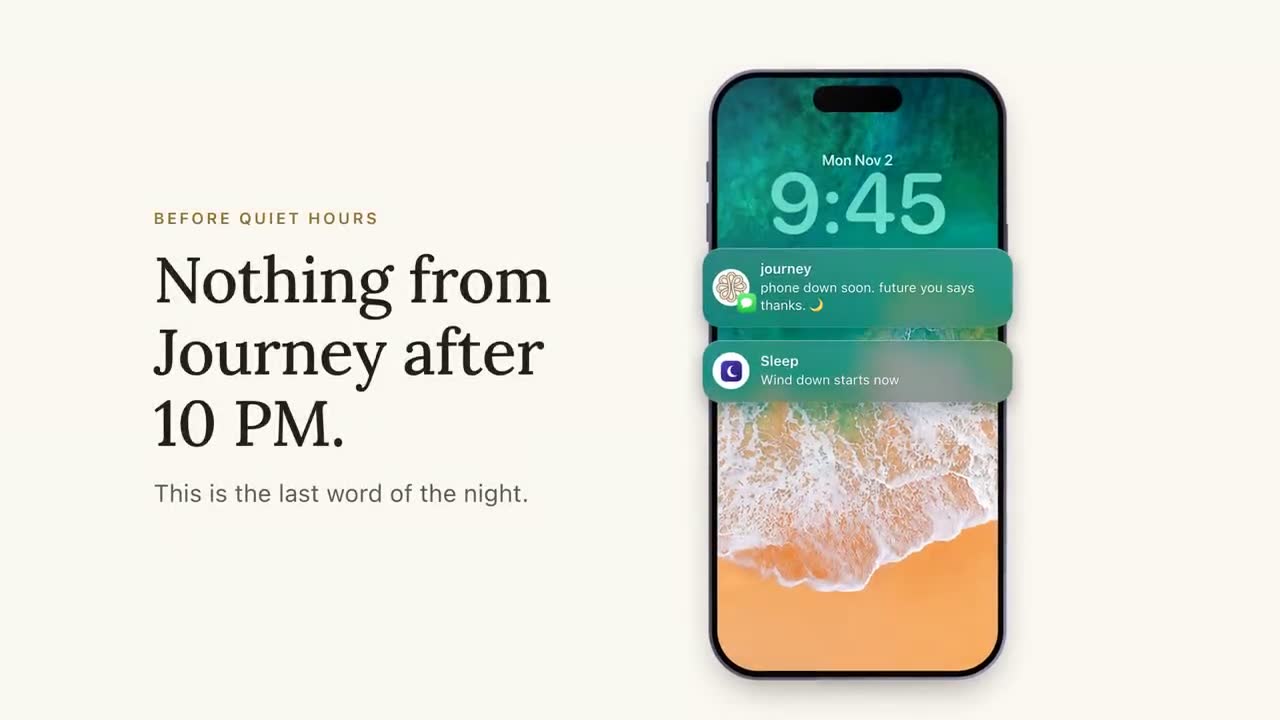
- Quiet hours cover the texts you start. A student who writes at 1 AM can still get an answer.
- Most opt-outs come from the total, not one text: cap texts across every office, and no more than one proactive text a day.
- The TCPA, state laws and carrier registration all apply in ways that depend on your program. This is general information, not legal advice; ask your counsel.
The quickest way to lose a student's phone number is to text them at 6:40 on a Saturday morning about a webinar. They reply STOP, and now the text about their registration hold in November never arrives either. Every office that texts students shares one fragile thing: the student's willingness to keep reading.
Texting students responsibly comes down to four habits: get consent you can show later, honor every way a student says stop, keep texts out of the hours students sleep and study, and send fewer messages than you'd like to. This guide covers each in practical terms, with the legal and carrier rules described in general terms. It is not legal advice. Texting law varies by message type and by state, and it changes, so check your program with counsel.
Get consent you can show later
"They gave us their number on the admissions form" is how many campus texting programs start, and it's a weak foundation. The number may be a parent's, may be years old, and the form probably didn't say the student would get texts from five offices. Better consent is specific, recent and recorded.
The strongest pattern is to have students opt in from their own phone: a link or a keyword at orientation, a reply to a welcome text, a checkbox in an onboarding flow they complete on the phone they'll be texted on. That confirms the number belongs to them and gives you a record. Whatever the method, keep these for every student:
| Record | Why it matters |
|---|---|
| The phone number and the date and time of opt-in | Shows when consent began, and for which number |
| The exact words the student saw | Consent is only as broad as what they were told |
| How they opted in (form, keyword, reply) | Shows the method if anyone asks |
| The program and sender name | Students should know who is texting them |
| What they were told about frequency and how to stop | Sets the expectation you'll be held to |
| Every opt-out, pause and opt-back-in, with dates | Shows you honored them |
The words students see at opt-in matter more than any other text you'll send. An illustrative version, to adapt with counsel:
That one paragraph names the sender, sets the frequency, promises quiet hours and explains how to stop. A HELP reply should name the program and give a way to reach a person.
When a student changes numbers, treat the new number as a new opt-in. Phone numbers get reassigned, and the person holding a student's old number did not agree to hear about anyone's financial aid.
The rules, in general terms
The TCPA
The Telephone Consumer Protection Act is the main federal law on calls and texts in the U.S. In broad terms, it restricts calls and texts sent with certain automated technology unless the recipient has given prior consent, and it sets stricter consent requirements for marketing messages. How it applies to a particular campus program depends on what the texts say, how they're sent and how the numbers were collected. Several states have their own texting and telemarketing laws, some stricter than federal rules. This is squarely a question for counsel.
Revoking consent
Under FCC rules that took effect in April 2025, people can revoke consent by any reasonable means, and replies such as "stop", "quit", "end", "revoke", "opt out", "cancel" and "unsubscribe" are treated as revocation. The rules also set an outer limit of ten business days to honor a request. Treat that as a ceiling, not a target. A student who texts STOP should get one confirmation and then silence from that program.
Carrier registration
Separately from the law, U.S. mobile carriers expect business texting to be registered. For ordinary ten-digit numbers, that's 10DLC registration, which describes who is sending, what kind of messages and how people opt in and out. Toll-free numbers and short codes have their own approval processes. Carriers also expect senders to follow the wireless industry's messaging guidelines, published by CTIA, on consent, opt-out and HELP replies, and they can filter or block traffic that doesn't. Your vendor should handle registration, but ask to see how your program is described, because that description is the promise carriers hold you to.
Hours
Federal telemarketing rules bar telephone solicitations before 8 AM or after 9 PM at the recipient's location, and some states are stricter. Most student success texts aren't solicitations, but those hours are a sensible outer boundary. Students' own quiet hours, below, should be narrower.
Honor every way a student says stop
Students can text STOP at any time to opt out, or PAUSE to take a week off. Whatever platform you use, STOP should always work, and so should the other ways students actually say it:
- The standard words: STOP, END, CANCEL, QUIT, UNSUBSCRIBE, and the others the FCC named
- Plain language: "please stop texting me", "take me off this", "i don't want these"
- "wrong number" or "who is this", which may mean the number has changed hands
- Lowercase, typos and extra words around them
A clear STOP should end texts immediately, without a person deciding. Ambiguous replies should go to a person who checks, rather than either being ignored or treated as a STOP the student didn't mean. And an opt-out has to hold: no "one last important reminder" through the same program next week. If something truly can't wait, use another channel your policies allow.
A softer option helps too. A student who's overwhelmed in finals week may not want to quit, just to breathe. A pause keyword that stops texts for a week, then resumes, keeps the door open without asking them to choose all or nothing.
Quiet hours students would choose
Quiet hours are the window when no proactive text goes out. A common default is something like 10 PM to 8 AM, but the better question is when your students sleep and study. A useful starting set:
- Overnight: nothing proactive late at night or early in the morning. A nudge that would land at 11:30 PM waits until morning.
- Class times: if you have schedules, don't text during the student's classes.
- Weekends: non-urgent texts wait for a weekday.
- The student's own windows: the times they told you they'd like to hear from you.
One distinction keeps quiet hours from becoming a wall. A student who texts at 1 AM has started the conversation; answering them is different from waking them. Decide which replies go out at any hour (answers to their questions, and always crisis resources), and keep quiet hours for the texts you initiate.
How often is too often
Opt-outs often have less to do with any single text than with the total. The usual culprit is five offices each sending "just one" in the same week. A few practical limits:
- A few texts a week in total, across every office using the same channel
- No more than one proactive text in a day
- A shared calendar of campus-wide sends, so registration week isn't also survey week and event week
- No repeats: if a student already got the message, it doesn't go again because a second campaign included them
Watch opt-outs by message. If one text produces a spike, it was probably too long, too generic, too early in the morning or one too many that week.
Let students set the terms
The simplest way to text responsibly is to ask students what they want, early, and keep honoring it. During onboarding, ask when they'd like to hear from you, what they want help with and what tone suits them. Then let them change it by text, in their own words: "can you text later in the day", "less about events pls".
How Journey paces its texts
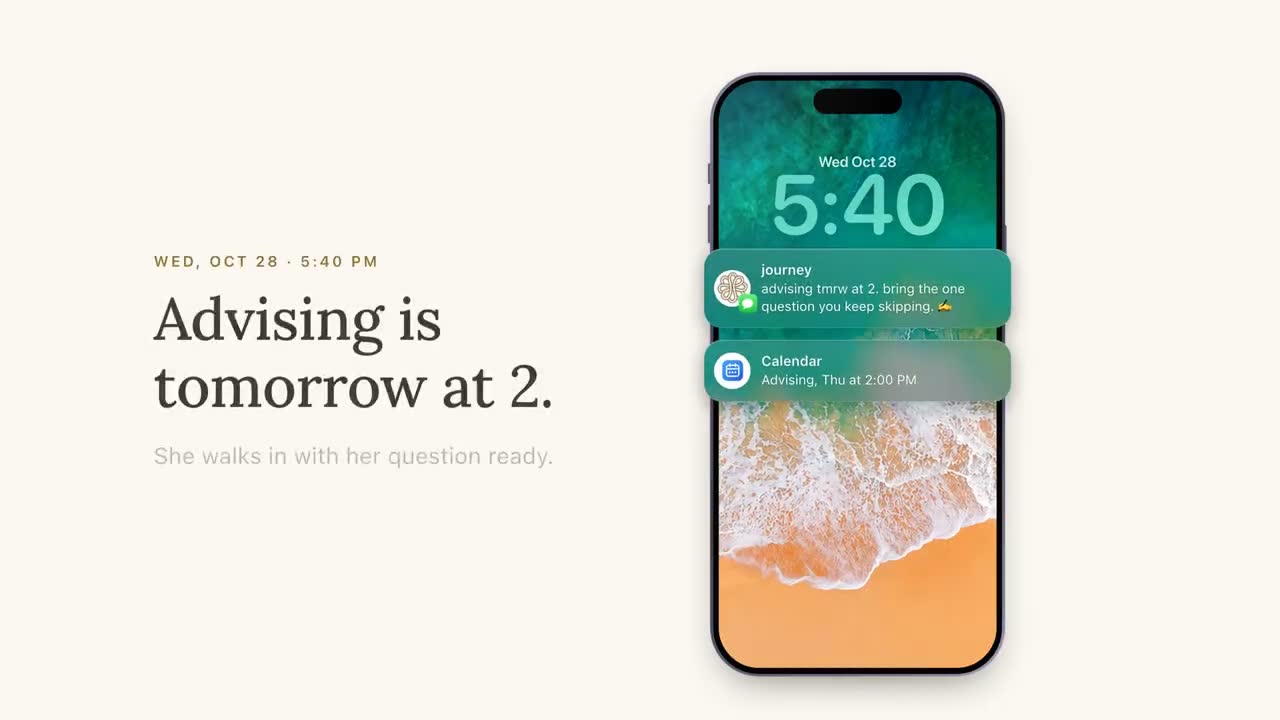
Students choose their goals, the events they care about and the voice Journey texts in during an onboarding that takes about 90 seconds, and they pick the windows they want to hear from us in. Journey sends a few texts a week, inside the windows the student chooses, honors quiet hours and sends no more than one proactive text a day. Since October 2026, a check holds any queued nudge a student has already received, and Journey no longer replies to a tapback reaction. Students change their nudges in plain text, with no menu: "can my nudges come at 7pm", "only 2 nudges a week", "pause my nudges for a week". Each change is said back so they can adjust it, and a student who texts a screenshot of their class timetable gets no nudges during class from then on. Students can text STOP or PAUSE whenever they like.
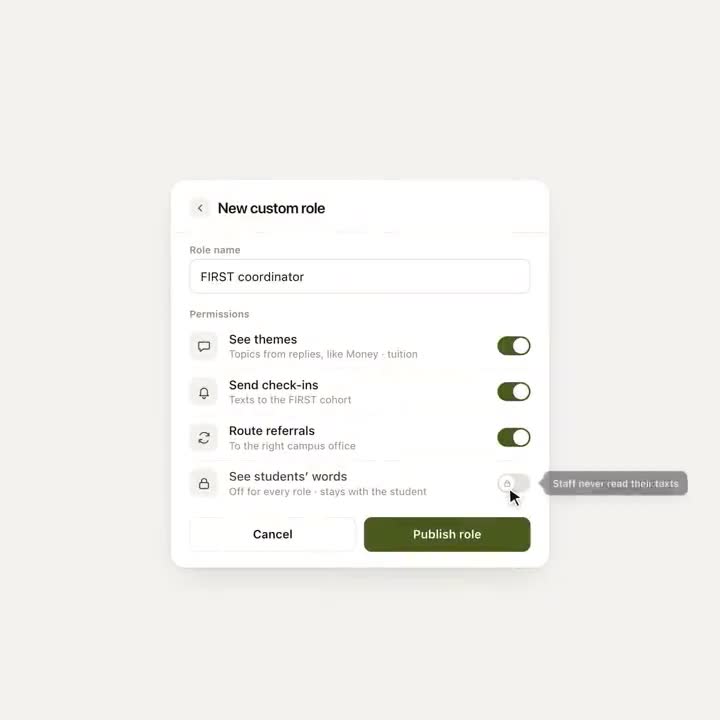
A settings screen where staff switch quiet hours on for a whole program isn't shipped. Quiet hours themselves are already honored.
A checklist before the first send
- Consent. Students opt in from their own phones, and you can show the words they saw.
- Counsel. Your general counsel has reviewed the program against federal and state texting rules.
- Registration. Your vendor has registered the sending numbers, and you've read the program description.
- Opt-out. STOP works immediately, other stop words are caught, and ambiguous replies go to a person.
- Hours. Quiet hours and class times are set, and only replies go out overnight.
- Frequency. A cap across offices, and a shared calendar of campus-wide sends.
- Preferences. Students can change when and how often by text.
Responsible texting is what keeps the channel open for the text that matters most, the one about a hold, a deadline or a counselor's opening, weeks from now.
Frequently asked questions
Do we need consent to text students?
In most cases you should have it, and federal law can require it depending on how messages are sent and what they say. The safest practice is an opt-in from the student's own phone, with a record of what they agreed to. Ask your counsel how the TCPA and state laws apply to your program.
What words should opt a student out of texts?
STOP at minimum, plus the words the FCC has said count as revoking consent, such as quit, end, revoke, opt out, cancel and unsubscribe. Plain-language replies like "please stop texting me" should be honored too, and ambiguous ones checked by a person.
What time should colleges stop texting students?
Many programs avoid proactive texts from around 10 PM to 8 AM, plus class times and weekends for anything non-urgent. Federal telemarketing rules set 8 AM to 9 PM as an outer limit for solicitations, and some states are stricter.
How many texts a week is too many for students?
A few a week in total, across every office using the channel, with no more than one proactive text in a day. Watch opt-outs by message: a spike usually means a text was too long, too generic or one too many that week.
Do colleges need 10DLC registration to text students?
U.S. carriers expect business texting from ordinary ten-digit numbers to be registered through 10DLC, and toll-free numbers and short codes have their own approval processes. Your texting vendor usually handles it, but ask to see how your program is described.