What Students Text at 11 PM

The after-hours questions a first-year cohort actually texted, what our early answers got wrong, and the campus details a university has to gather and keep current for a late-night answer to help.
Key takeaways
- Most after-hours student questions are logistics: dining and gym hours, bus passes, wifi on a new device, the RA, work-study, fall break.
- Early on, too many of Journey's answers sent students to Student Affairs or the university website. That was honest, but it wasn't help.
- An answer is only as good as the campus details behind it, and many of those details aren't published anywhere a model can read.
- Give every detail an owner and a fallback contact, and recheck it the week before classes, the week before each break and the day of any announced change.
Most of what students text a university after hours isn't a crisis, or even a problem. It's logistics: when the dining hall closes, whether the bus pass is ready, how to get a new laptop on the wifi. The questions are small. Getting them wrong is not, because a student who gets a useless answer at 11 PM stops asking.
Below are the questions one first-year cohort actually texted Journey after hours, what our early answers got wrong, and what a university has to gather, and keep current, before an answer at 11 PM is worth sending.
The after-hours questions students actually ask
Here's a sample from that cohort's threads, in the students' own words, with one club's name taken out. We've grouped them, because the grouping is the useful part.
| Kind of question | What students texted | What a good answer needs |
|---|---|---|
| Getting around | "how do i know if my bus pass is ready to pick up", "how do i use my bus pass" | Where passes are picked up, how a student knows it's ready, how it works on the bus |
| Food | "when does the dining hall close today", "where can i find the dining schedules", "do we get free meal swipes each semester" | Today's hours, weekends and breaks included, and the meal plan's actual rules |
| Hours | "what time is the gym open", "when does the campus store close", "when does the convenience store close today" | Current hours for each place, by day of the week |
| Finding things | "where is the library, exact location", "where are the tutors", "where is [a club] located on campus" | Building, floor and room, plus a map link |
| Residence life | "how do i contact my RA", "can i go to an event in a different residence hall" | How and when RAs are reached, and the visiting rules |
| Tech | "how do i log onto the campus wifi on a new device" | The network, the steps, and the help desk's hours |
| Work | "are there work study jobs on campus" | Where jobs are posted and who to ask about eligibility |
| Calendar | "when is fall break, and how long is it", "what events are happening today" | The academic calendar by date, and today's events |
| Policy | "is it against policy to smoke weed in your dorm room" | The housing policy, stated plainly, and where to read it |
Notice what's missing. Nothing here needs judgment, a counselor or an exception. A front-desk worker could answer every one in under a minute, if the front desk were open. The last question deserves a word of its own: students may ask it by text because they'd rather not ask their RA. The right answer is the policy, without a lecture, and a link to where it's written.
What our early answers got wrong
 Journey
Text Message
when does the dining hall close today
A real Journey thread, shortened, with details changed so the student can't be identified.
We're not showing the answer that question got, and the reason is the point of this note. Early on, too many of Journey's answers to questions like this one ended by sending the student to Student Affairs or the university website. That was honest. Journey didn't have the hours, and it said so instead of inventing them. But it wasn't help. A student texting at 11 PM has often tried the website already, and Student Affairs is closed. One answer to a meal-swipe question pointed to a federal financial aid page, which is the kind of miss that teaches a student not to ask again.
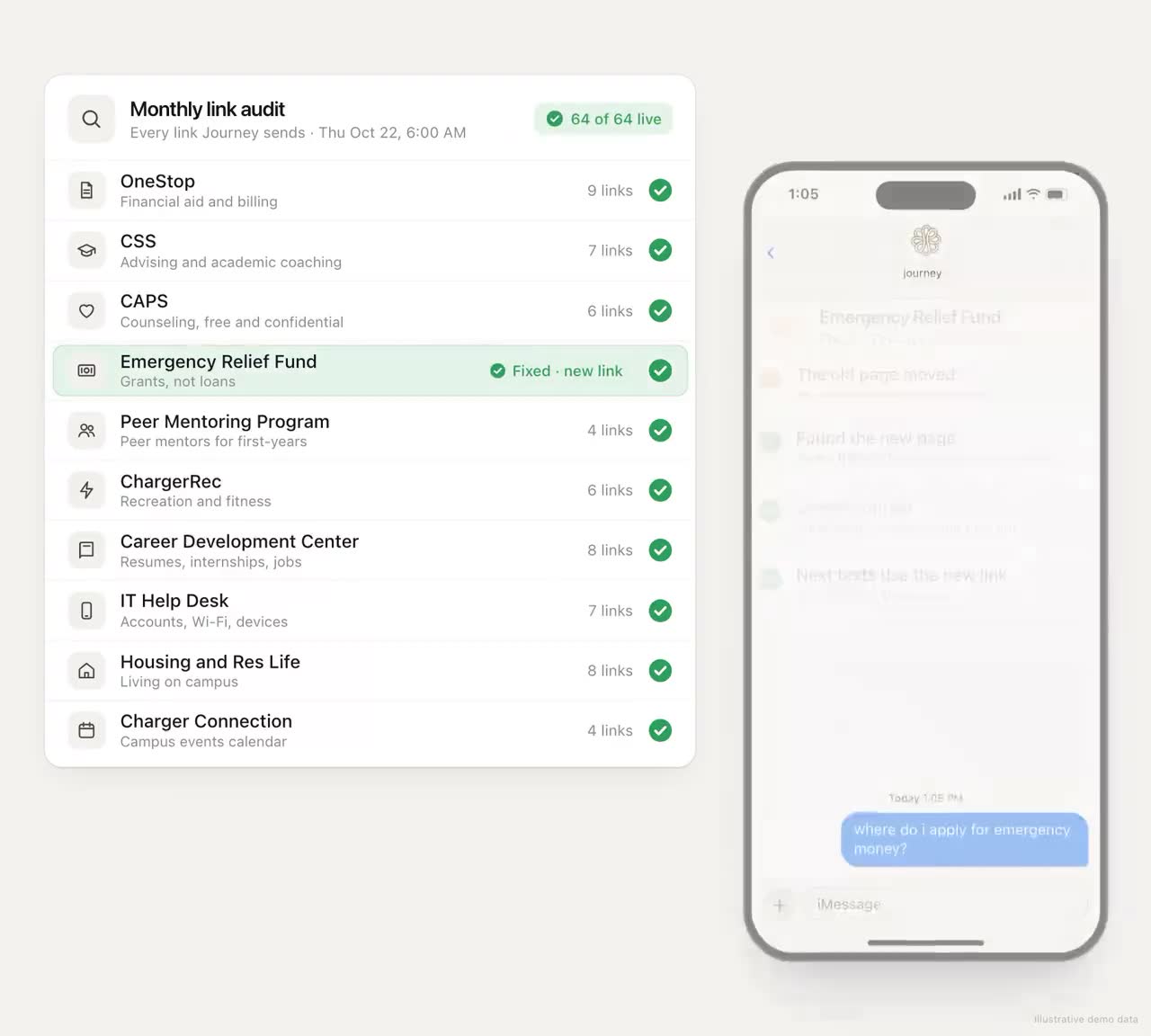
The lesson wasn't really about the model. It was about what the model had to work with. An answer is only as good as the campus details behind it, and on many campuses the details students ask about aren't published anywhere a model can read. The bus pass process can live in an email from the transportation office. Saturday dining hours change for break week, and the change goes up on a sign. The wifi steps for a new laptop sit in a help-desk ticket template.
What a good after-hours answer looks like
JourneyText Message
Sat 7:12 PM
when does the dining hall close on saturday
tonight it's open till 8. sunday brunch starts at 10:30. if you miss it, the convenience store in the student center is open till midnight.
ok bet
An illustrative thread with a fictional student and made-up hours. The answer is the hours, not a link to go find them.
It answers the question asked, for the day asked, and it anticipates what the student needs next: somewhere to eat if they miss it. The "ok bet" gets no reply, by design; a thanks or an ok doesn't need one. When the answer isn't known, the honest version still helps: Journey doesn't know, here's who does, and here's when they open. "Check the website" fails that test even when it's true.
Why most of setup is gathering campus details
This is why we ask for about eight hours of staff time to set up a 100-student pilot, most of it gathering the campus resource details Journey can't find publicly. It's the least glamorous part of a pilot, and it decides whether students keep asking.
Journey gathers what a campus already publishes. The rest comes from the offices that own it, and the trick is to ask each office for the answer to the question students actually send, not for a link to its page. Ask dining services for "hours" and you get the fall schedule as a PDF. Ask "when does the dining hall close on a Saturday during break week?" and you get the answer.
What to gather before the first night of the term
| Detail | Usually owned by | Goes stale |
|---|---|---|
| Dining hours by day, break and holiday hours, meal plan and swipe rules | Dining services | Every term, and before each break |
| Gym, campus store, convenience store and library hours | Each facility | Every term, and before each break |
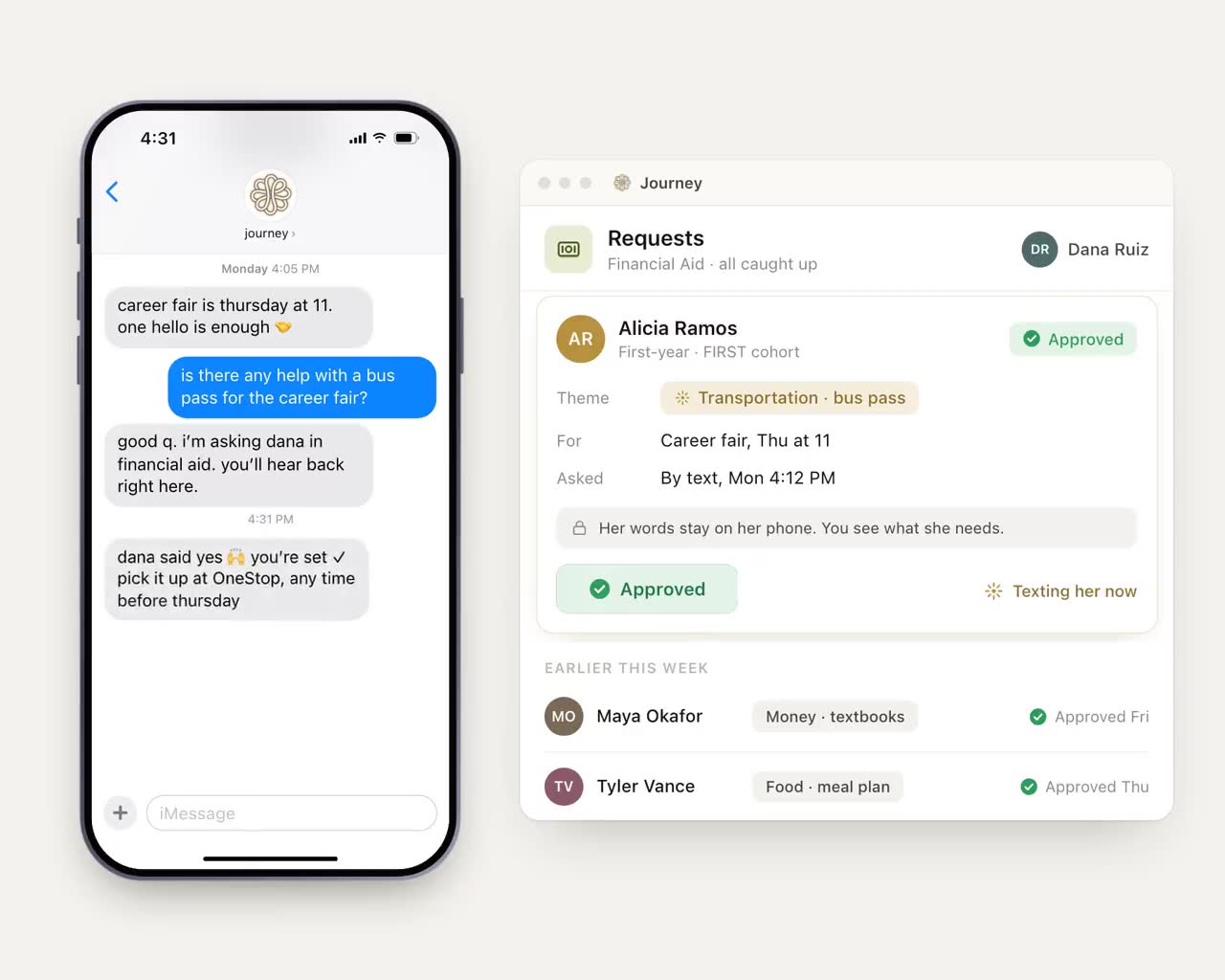
| Bus or transit pass: how to get one, how to know it's ready, how to use it | Transportation or parking | Every term |
| Wifi on a new device, and the help desk's hours | IT | When the network or sign-in changes |
| How to reach an RA, and the rules for visiting other halls | Residence life | Every term, as staff change |
| Tutoring and academic support: where, when, how to book | The tutoring center | Every term |
| Work-study and campus jobs: where they're posted, who to ask | Financial aid or student employment | Every term |
| Breaks, add/drop and the last day to withdraw | The registrar | Every year, and whenever a date moves |
| Housing and conduct policies students ask about | Residence life and the dean of students | Every year |
| Where clubs meet, and what's on today | Student activities | Weekly |
For every line, also write down who to contact when the answer isn't enough, and when that person is reachable. Our playbook on building a campus knowledge base goes further into the format.
Keeping it current every term
Campus details go stale on a schedule, which is the good news: you can check them on one too.
- The week before classes. Hours, locations, the new academic calendar, and any office that moved over the summer.
- The week before each break. Dining, library and gym hours change, and students ask about them the night before they leave.
- The day of any change you'd announce. If an office would email students about it, the answers need it the same day.
Give each line of the table an owner, by name, and put the checks on that person's calendar. A resource base with no owner is accurate for about one term.
Answering from the campus resource base
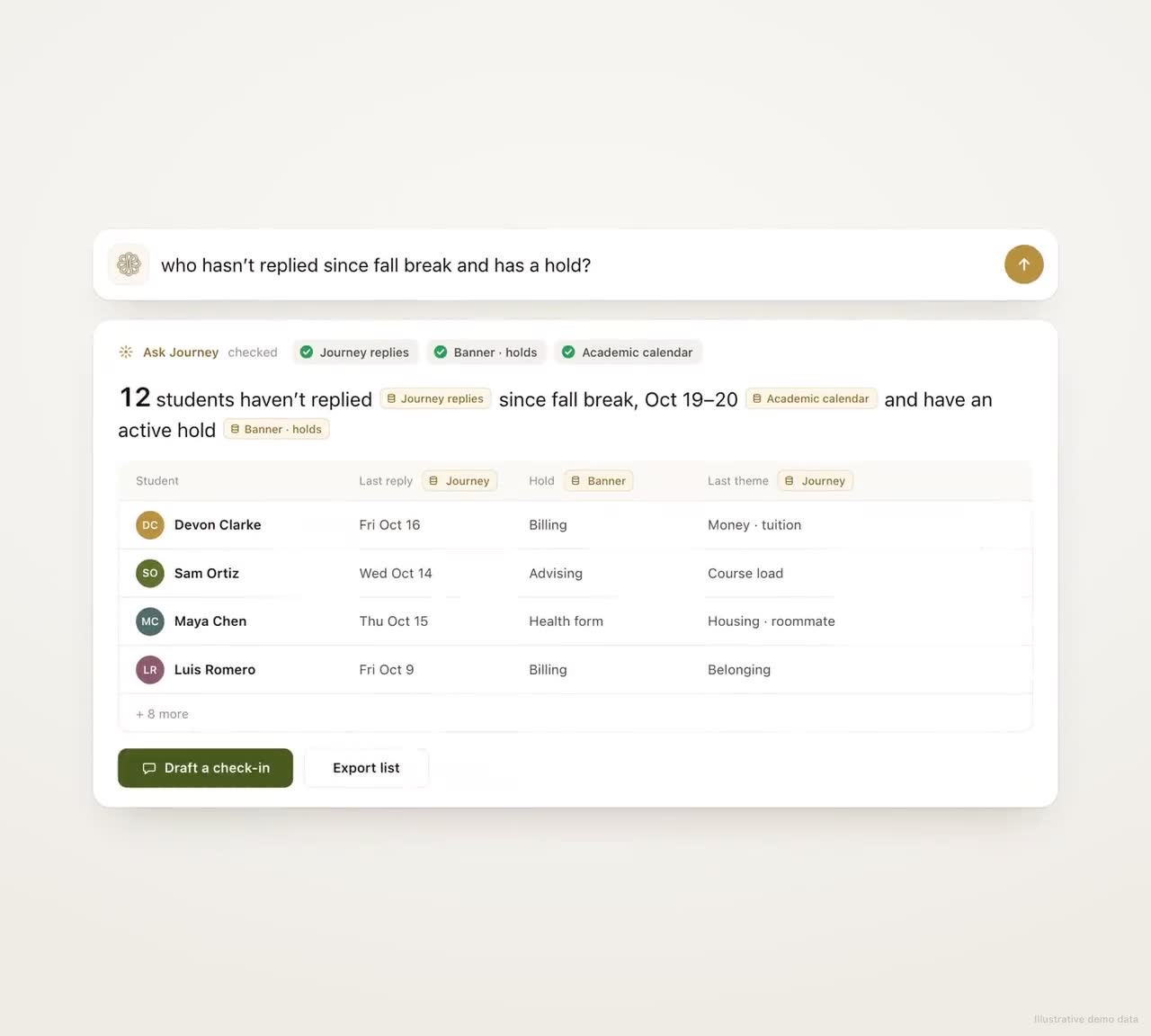
Students can text Journey any question about campus, and the answers come from the resource base gathered at setup: hours, locations, offices and links. Where Journey doesn't know, it says so and points to a person. Pulling tonight's events and the last day to drop straight from live campus calendars, with each answer showing its source, appears in our demos but isn't live yet. Today the answers are only as current as the table above, which is why we spend most of setup on it.
The questions will keep arriving at 11 PM. The answers get written weeks earlier, by the offices that own them, and checked again before every break.
Frequently asked questions
What questions do college students ask after hours?
Mostly logistics: when the dining hall or gym closes, how to pick up or use a bus pass, how to get a new device on the campus wifi, how to reach an RA, whether there are work-study jobs and when fall break is. Few need judgment. Nearly all need a current, campus-specific detail.
How can a university answer student questions at night?
Through a channel students already use, backed by campus details that are specific and current: hours by day, locations down to the room, and who to contact when the answer isn't enough. An answer that sends a student to a closed office or back to the website doesn't help.
What should a campus knowledge base for students include?
Dining, gym, store and library hours by day and by break; transit pass steps; wifi steps; how to reach an RA; tutoring locations and booking; where campus jobs are posted; the academic calendar; and the housing policies students ask about. Each item needs a named owner and a fallback contact.
How often should campus resource information be updated?
On a schedule: the week before classes, the week before each break, and the same day as any change an office would announce to students. Without a named owner for each item, the information tends to go stale within a term.
How much staff time does it take to set up Journey's campus answers?
Plan on about eight hours of staff time to set up a 100-student pilot, most of it gathering the campus resource details Journey can't find publicly. That work is what lets Journey answer with the actual hours or steps instead of a link.