Nobody Explains the Bursar: The Money Questions Students Text

Credit balances, holds and aid that carries over: real threads about the money questions students are embarrassed to ask, what a credit balance actually is, and how to route each question with what to bring.
Key takeaways
- Money questions are among the most embarrassing for students to ask, and "not dumb, nobody explains that stuff" matters as much as the instruction that follows it.
- A credit balance means more came into the account than it owes. The difference is the student's, and it usually sits there for an ordinary reason nobody has asked about.
- A hold hurts at registration, not on the day it appears, so the first question is which office placed it and what clears it.
- A useful referral names the office and what to bring: go to student accounts with your statements for each term and ask them to issue the refund.
Plenty of students meet the word "bursar" for the first time on their first bill. It sounds like an office from another century, and what comes out of it (statements, holds, disbursements, credit balances) assumes the reader already knows how money moves through a student account. Most first-years don't, and plenty of juniors don't either. They're also questions many students are embarrassed to ask out loud, and a text lets them ask without standing at a counter.
Here's a real thread from October about money sitting on an account.
 Journey
Text Message
October
question about the bursar. there's money sitting on my account and i don't get it
what's the bursar piece? a) refund timing b) an amount that looks off
a. it says credit balance. i think it happened last year too
so you've got a credit balance sitting there. ask them to issue the refund, not just leave it on the account. one stop can help too.
sorry if that's a dumb question
not dumb, nobody explains that stuff. bring the statements for each semester it happened so you can ask about all of them at once.
A real Journey thread, shortened, with details changed so the student can't be identified.
The line that mattered most
The practical advice is good. The first reply narrows a vague worry to two choices, so the student only has to pick one. Then it says what to ask for (issue the refund, don't leave it on the account) and what to bring (the statements for every semester it happened), so the problem gets solved in one visit instead of two.
But the line that mattered most is "not dumb, nobody explains that stuff." The student apologized for asking. A student who apologizes for a question is a student who almost didn't ask it, and who may not ask the next one. The reply answers the apology as directly as it answers the question. It also happens to be true.
What a credit balance is, in plain words
A credit balance means more money has come into a student's account than the account owes. Aid, loans or payments arrived above the term's charges, and the difference belongs to the student. The school normally refunds it, by direct deposit or whatever refund method the student set up. When federal aid creates the balance, federal rules set how quickly it has to be paid out, unless the student has authorized the school to hold it toward later charges. Student accounts or financial aid can explain how that works on your campus.
So a balance that sits there term after term usually has an ordinary reason: a refund method that was never set up, an authorization the student doesn't remember giving, or nobody asking. Student accounts can say which. The student's whole job is to ask, statements in hand.
Holds, the money question with a deadline
JourneyText Message
August
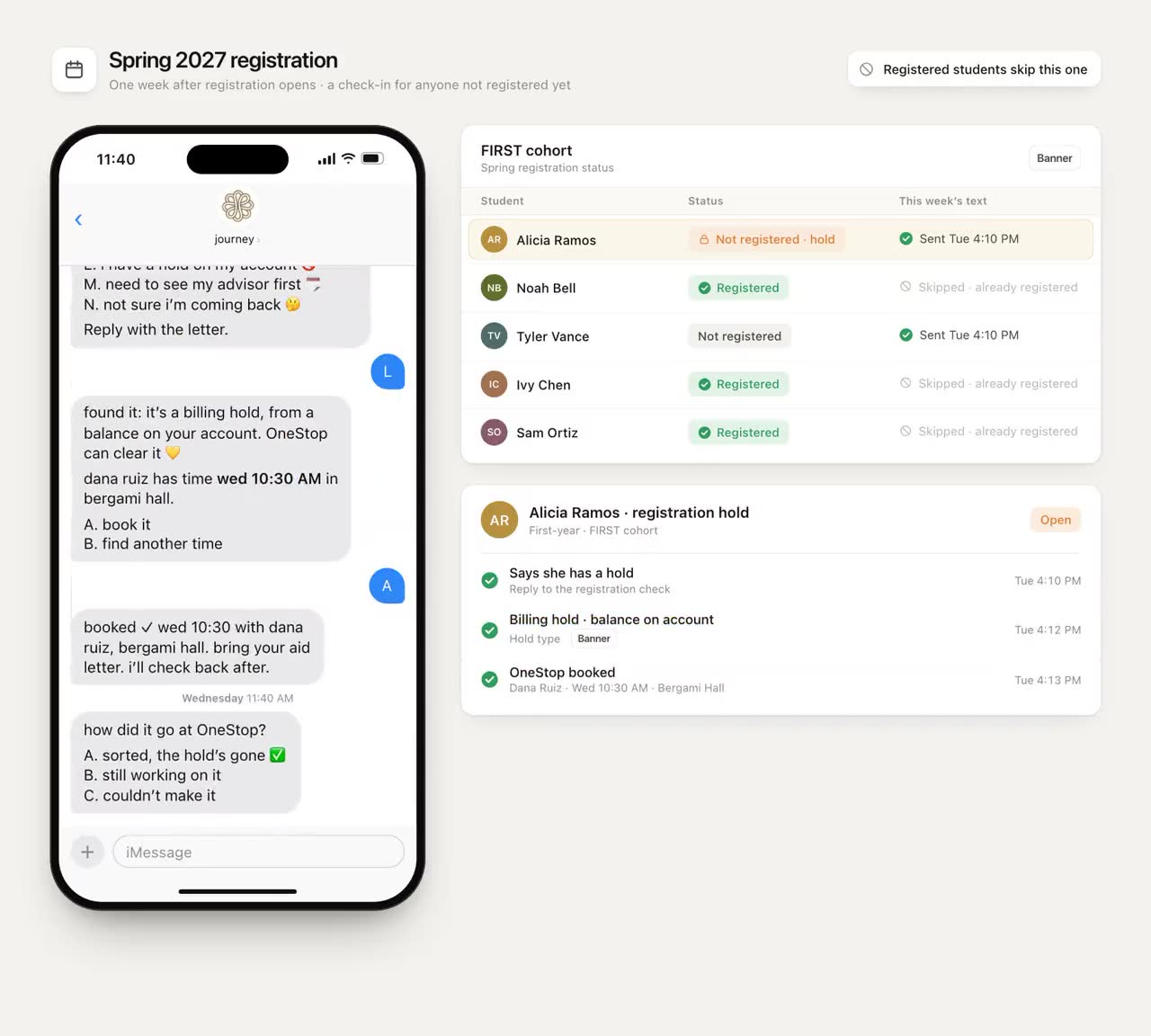
i made a plan for the semester. still have a hold on my account though
that's a real plan, not just hype. the hold is the one piece that can bite you mid-semester. get ahead of it with one stop before it blocks registration.
A real Journey thread, shortened, with details changed so the student can't be identified.
A hold doesn't hurt on the day it appears. It hurts at registration, when it blocks the sections a student needs, often months after the unpaid fee or missing form that caused it. The reply gets the priorities right: credit the plan, then single out the one piece with a hidden deadline. Holds come from many offices, so "which office placed it, and what clears it?" is the first question. Our playbook on clearing registration holds covers the office side.
Study abroad, when money is the limiter
JourneyText Message
March
i want to study abroad but idk if i can afford it
money can be a real limiter here, and it's not on you. your next best move: meet with the study abroad office and ask for programs that count toward your major and are financial-aid friendly. then talk to student financial services about how your aid carries over and what scholarships you can stack.
A real Journey thread, shortened, with details changed so the student can't be identified.
Same shape. Name the constraint without shame ("it's not on you"), then two offices, in order, with the exact question to ask each. A student who assumes study abroad is for students with money never asks whether their aid travels with them. This one now has the two questions that answer it.
Route with what to bring
Every money question in these threads ends the same way: a specific office, and something specific to bring or ask. That last part is what most referrals leave out.
| When a student texts | Send them to | Tell them to bring or ask |
|---|---|---|
| "there's money on my account" | Student accounts, or a one-stop office | Statements for each term it happened; ask for the refund to be issued and how it will arrive |
| "i have a hold" | The office that placed it | The hold's name from the student portal; ask what clears it and how long it takes to lift |
| "my aid is less than last year" | Financial aid | Both award letters; ask what changed |
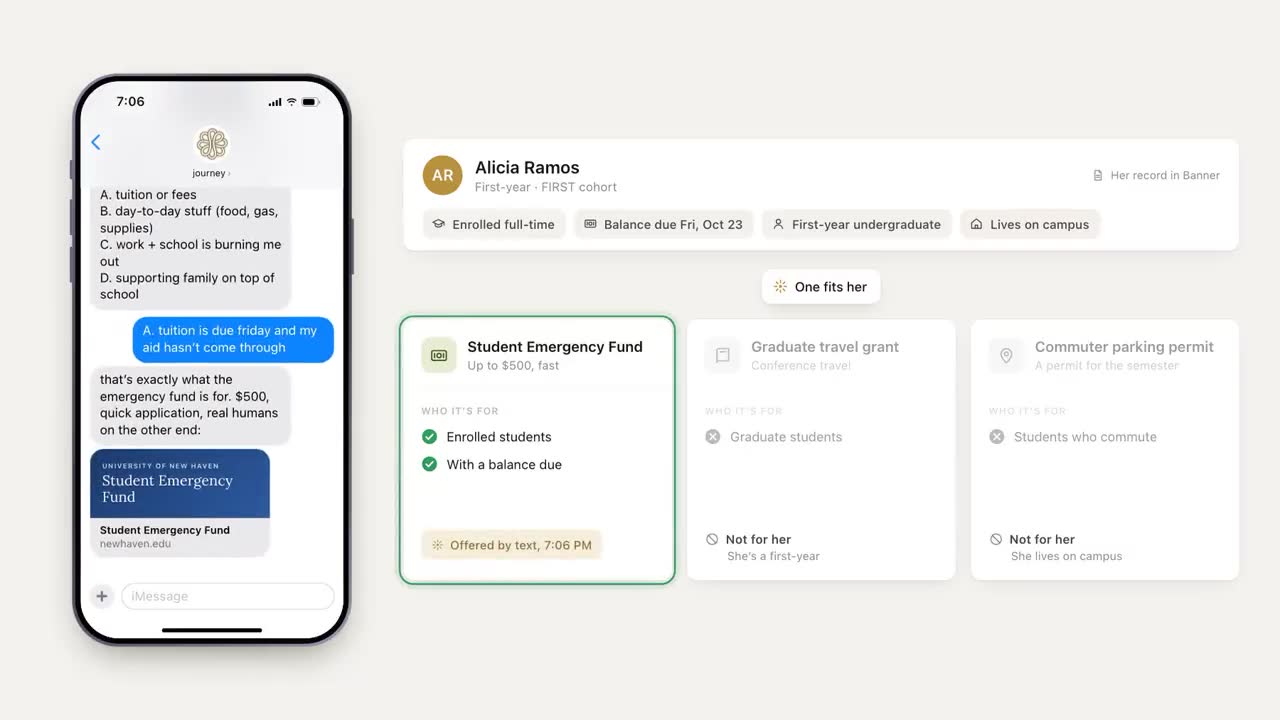
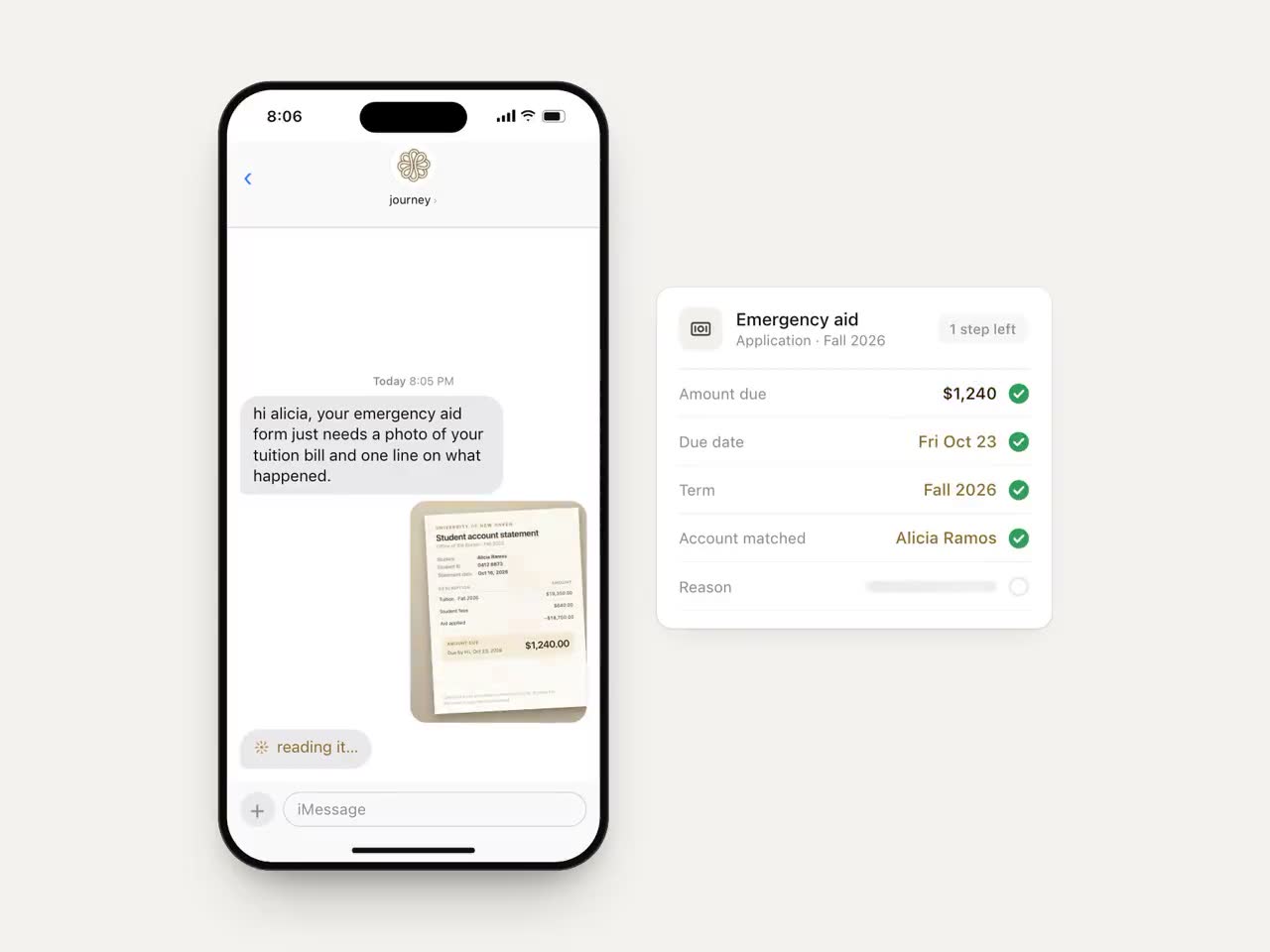
| "tuition is due and i can't pay all of it" | Student accounts | Ask about payment plans and emergency aid before the due date, not after |
| "can i afford to study abroad" | Study abroad, then financial aid | A short list of programs; ask how aid applies and which scholarships stack |
"Go to the one-stop office" is a referral. "Go to the one-stop office with your fall and spring statements and ask them to issue the refund" is a visit that can end with the problem solved. For the hardest version of the money conversation, see our guide to emergency aid.
What offices can do
- Publish a plain-language glossary. Bursar, credit balance, hold, disbursement, refund: one sentence each, on the student accounts page.
- Write "what to bring" for your five most common questions. Two lines each. It saves your staff the second visit too.
- Put those answers where students ask at night, including the resource base of any texting service you use.
- Say out loud that money questions aren't dumb. At orientation, on the website, at the counter. It sounds too obvious to say, which is why nobody says it.
Sending money questions to the money office
When a student's reply turns out to be about money, Journey points the student to the office that handles it, not to advising or counseling, with a one-tap link to schedule, and the theme shows on that student's record in the partner dashboard. Letting the office know directly, so staff expect the student before they walk in, isn't live yet. Today the student arrives with the link and with what to bring.
Nobody explains the bursar. Somebody could, in five sentences, at the moment a student finally asks.
Frequently asked questions
What is a credit balance on a student account?
It means more money has come into the account, from aid, loans or payments, than the account owes for the term. The difference belongs to the student and is normally refunded, by direct deposit or another refund method the student sets up. Student accounts or the bursar's office can explain any balance that hasn't been paid out.
Why is there still a credit balance on my student account?
Common reasons are a refund method that was never set up, an authorization the student gave for the school to hold the balance toward later charges, or simply that nobody asked. Bring the statements for each term it happened and ask student accounts to issue the refund.
How do students clear a registration hold?
Find which office placed the hold, usually shown in the student portal, and ask that office what clears it and how long it takes to lift. Do it well before registration opens, because a hold blocks the sections a student needs.
Does financial aid apply to study abroad?
Often it can, depending on the program and the campus. Students should ask the study abroad office for programs that count toward their major and work with aid, then ask financial aid how their aid carries over and which scholarships they can combine.