What the University of New Haven Pilot Showed, and What It Didn't

What Journey's pilot at the University of New Haven found, what it looked like week to week, and what the numbers do and don't show.
Key takeaways
- The University of New Haven piloted Journey with about 80 students in 2025-26, and a smaller group of students continues with it in fall 2026.
- In the University of New Haven pilot of about 80 students, most of them first-years, 4 of the 79 on the spring 2026 roster were marked as not returning. The registrar has not yet confirmed enrollment for the rest, and there was no comparison group.
- In a typical week of the University of New Haven pilot, 74% of students replied to Journey, reacted to a message or tapped a link in it.
- The results come from one university, with no comparison group and small samples, and we publish the caveats alongside the numbers.
The University of New Haven piloted Journey with about 80 students in 2025-26, and a smaller group of students continues with it in fall 2026. Every student success leader eventually asks a newer vendor to show that its product has worked at a real campus. For a smaller company like ours, this pilot is the evidence we have, so we state it as narrowly as the records allow.
This note covers what the pilot found, what it looked like week to week, and what the numbers do and don't show. The full case study is on our results page.
What the pilot found
The pilot produced three findings. Each is stated here exactly as we report it everywhere else.
Who stayed
In the University of New Haven pilot of about 80 students, most of them first-years, 4 of the 79 on the spring 2026 roster were marked as not returning. The registrar has not yet confirmed enrollment for the rest, and there was no comparison group. This is the number that matters most to a retention office, and it's also the one that can bear the least weight, which we come back to below.
Who answered
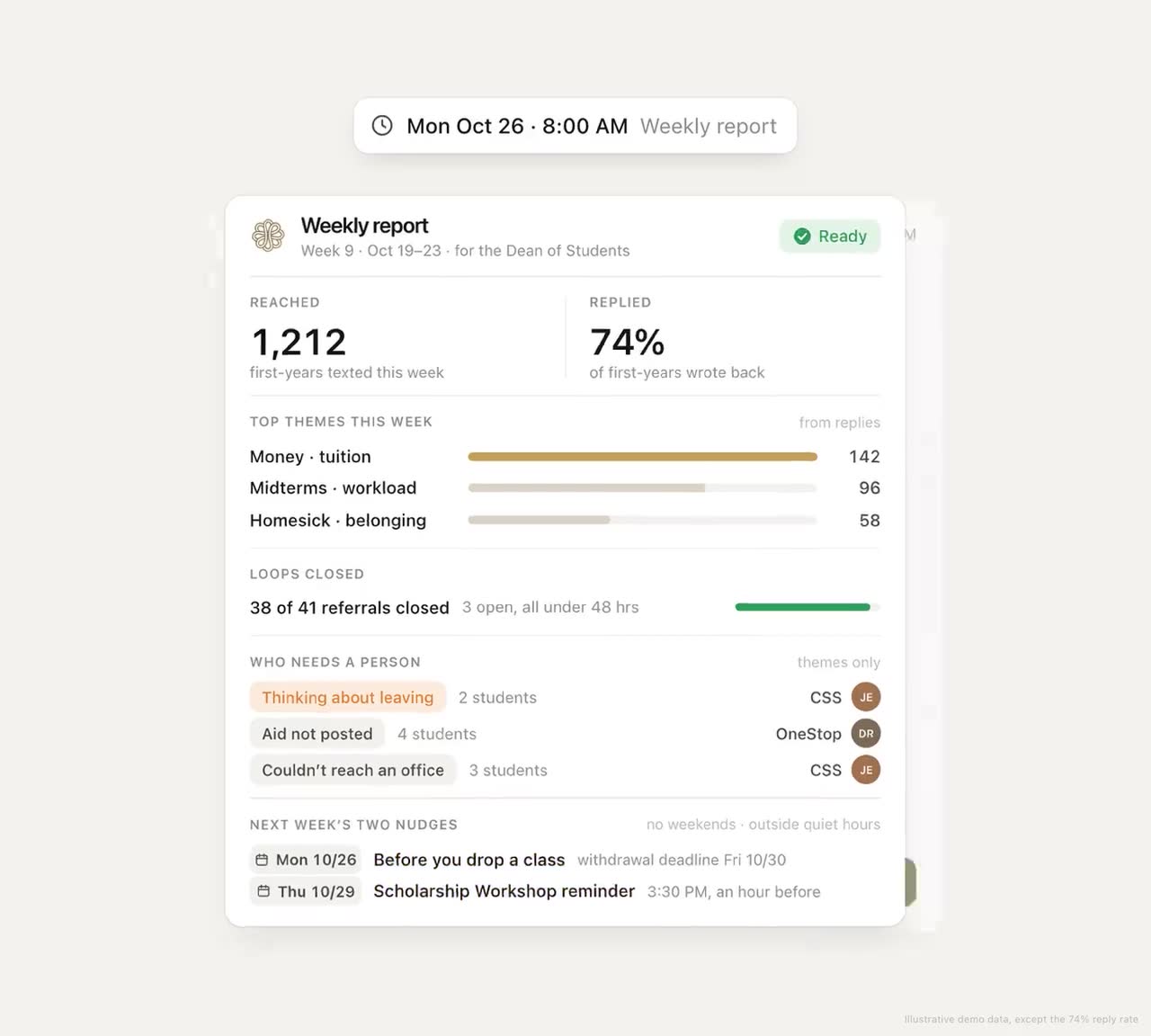
In a typical week of the University of New Haven pilot, 74% of students replied to Journey, reacted to a message or tapped a link in it. A retention program only works if students engage with it, and weekly engagement is the first number to fall when texts stop being useful.
What students said it did for them
In a paired survey of 19 students, the share who said Journey made it easier to do what they already wanted to do rose from 14% in the fall to 71% in the spring. It's a small sample, and we treat it that way, but it's the finding closest to what Journey is for: helping students do the things they already meant to do.
What the pilot looked like
The pilot cohort was mostly first-years. Nothing about it required an app for students or a new password for anyone.
| Who | What they did |
|---|---|
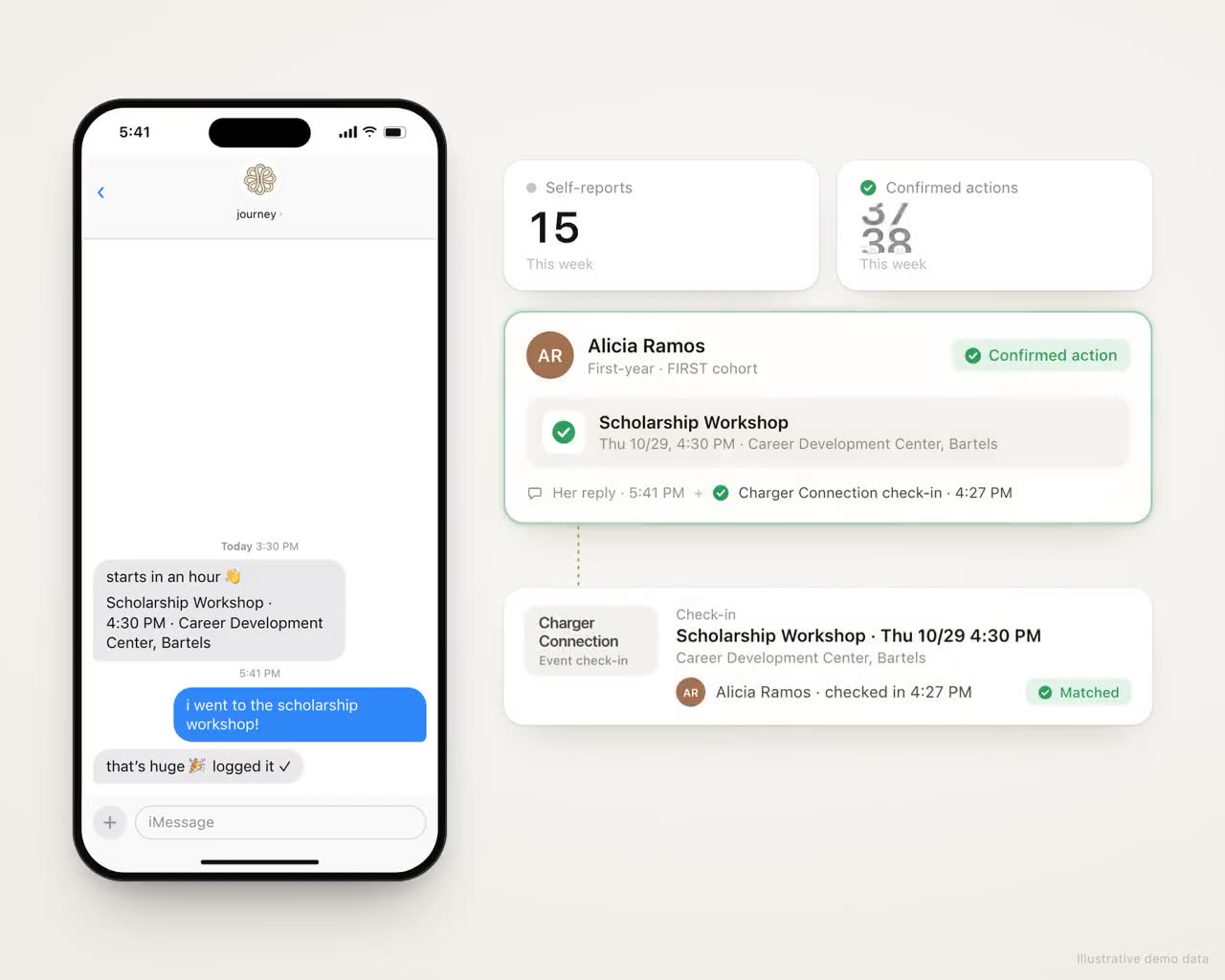
| Students | Joined by text, with nothing to download, and told Journey in a short onboarding what they were working on and when they wanted to hear from it |
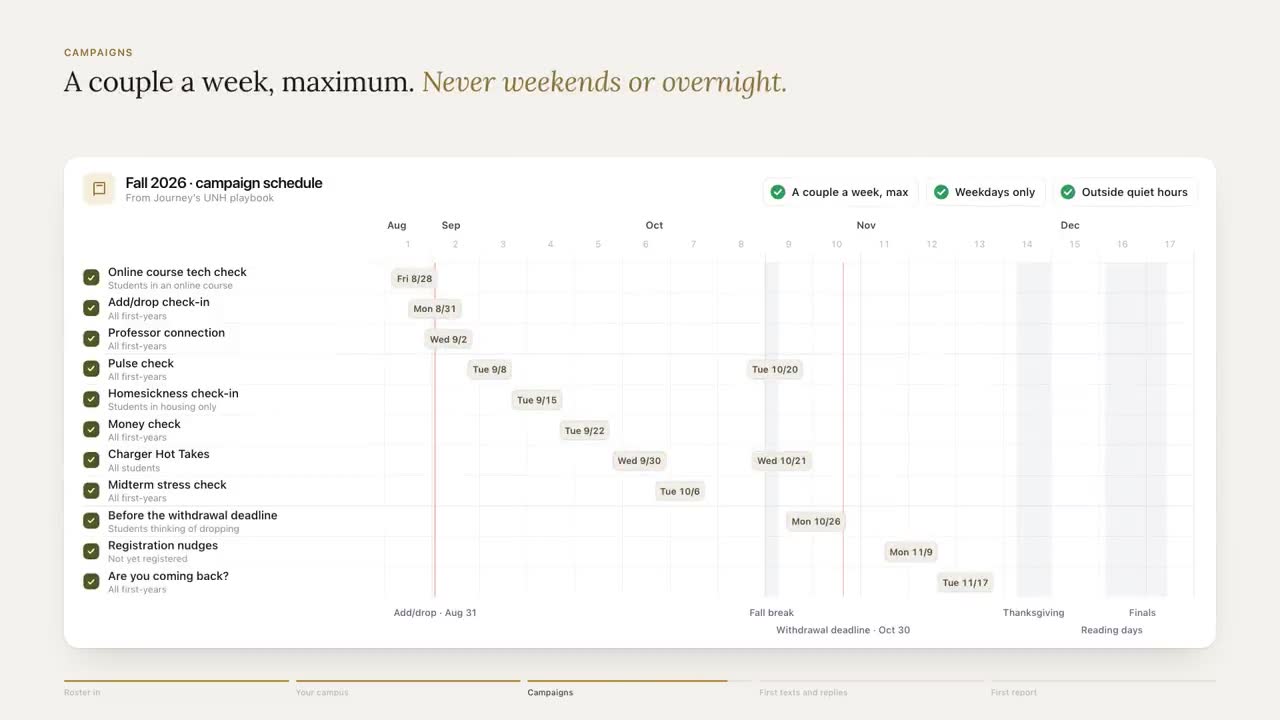
| Journey | Sent a few texts a week, inside the windows the student chooses, answered campus questions from a resource base built at setup, worked out what each reply was about and how soon it mattered, and sent one-tap scheduling links to campus offices |
| Staff | Worked from a short weekly list of students to reach, and made the handoffs only a person can make |
| Setup | about eight hours of staff time to set up a 100-student pilot, most of it gathering the campus resource details Journey can't find publicly |
Safety language in any reply went to people through the escalation path the university set. Journey is not a crisis line: when a message raises a safety concern, it surfaces the right human path (counseling, 988, the on-call staff your team names) and follows the escalation process set up with your campus.
What the numbers don't show
We'd rather you hear the limits from us:
- It's one university. A different campus, cohort or staffing model could see different results.
- There was no comparison group. Students stayed, but without a similar group outside the pilot nobody can say how many would have stayed anyway.
- Enrollment isn't confirmed yet. Most of the students counted as staying were inferred from the absence of a leaving signal. We've asked the registrar for the records.
- The samples are small. One pilot cohort, and an even smaller paired survey.
Our research page publishes the study with its small-sample caveats, including what didn't land. A vendor that only shows you the good numbers is asking you to find the caveats yourself.
What would change in a larger rollout
A larger rollout reuses much of what a pilot builds. The campus resource base (hours, locations, who to contact, links) is written once and reused across the cohort, though it needs checking every term as offices move and hours change. The bigger shifts are on the staff side: more students means a longer weekly outreach list, more offices receiving handoffs and more reason for each office to agree on who owns what.
That last part is the work we'd tell any campus to start early. A pilot can lean on a few committed people. A full cohort needs every office that receives a referral to know what Journey sends them and what they're expected to do next.
If you're building your own case
Your leadership will ask the same questions of your own pilot, so settle the answers before it starts. Decide:
- The comparison. The semester before, a matched group, or a similar cohort without the program. Pick it in advance, not after the results are in.
- The weekly engagement measure. Replied or acted, counted the same way every week.
- The outcome. Persistence to the next term for the cohort, counted by your institutional research office.
- What students say. The same short survey at the start and the end, so you can pair the answers.
Our guide to running a one-semester pilot goes through each step. And if you'd like to see what the University of New Haven saw, the case study is the place to start.
Frequently asked questions
Is there a case study of a texting program improving student retention?
There is a pilot, not yet proof. In the University of New Haven pilot of about 80 students, most of them first-years, 4 of the 79 on the spring 2026 roster were marked as not returning. The registrar has not yet confirmed enrollment for the rest, and there was no comparison group. Persistence among pilot students was high, but without a comparison group nobody can say Journey raised it. The full case study is on Journey's results page.
How did the University of New Haven pilot work?
Students, most of them first-years, joined by text, with nothing to download. Journey sent a few texts a week, answered campus questions and got students to offices with one-tap scheduling links, while staff worked from a short weekly list of students to reach.
How much staff time does a pilot like this take to set up?
Plan for about eight hours of staff time to set up a 100-student pilot, most of it gathering the campus resource details Journey can't find publicly. After setup, staff work from a short weekly outreach list.
What should we measure in our own retention pilot?
Choose the comparison group before you start, then track weekly engagement (replied or acted), persistence to the next term and a short survey at the start and end. Counting the same way every week matters more than the tool.